Online Players, Internet Predators, Cyberpaths, Dating Site Frauds, Cyberstalkers... whatever you call them - they need to be EXPOSED! Did they take your heart? your trust? Harass you? Tell your story... Share ideas for dealing with them... ('FAIR USE LAW' APPLIES TO ALL ARTICLES)
UPDATE
Showing posts with label online disinhibition effect. Show all posts
Tuesday, June 16, 2015
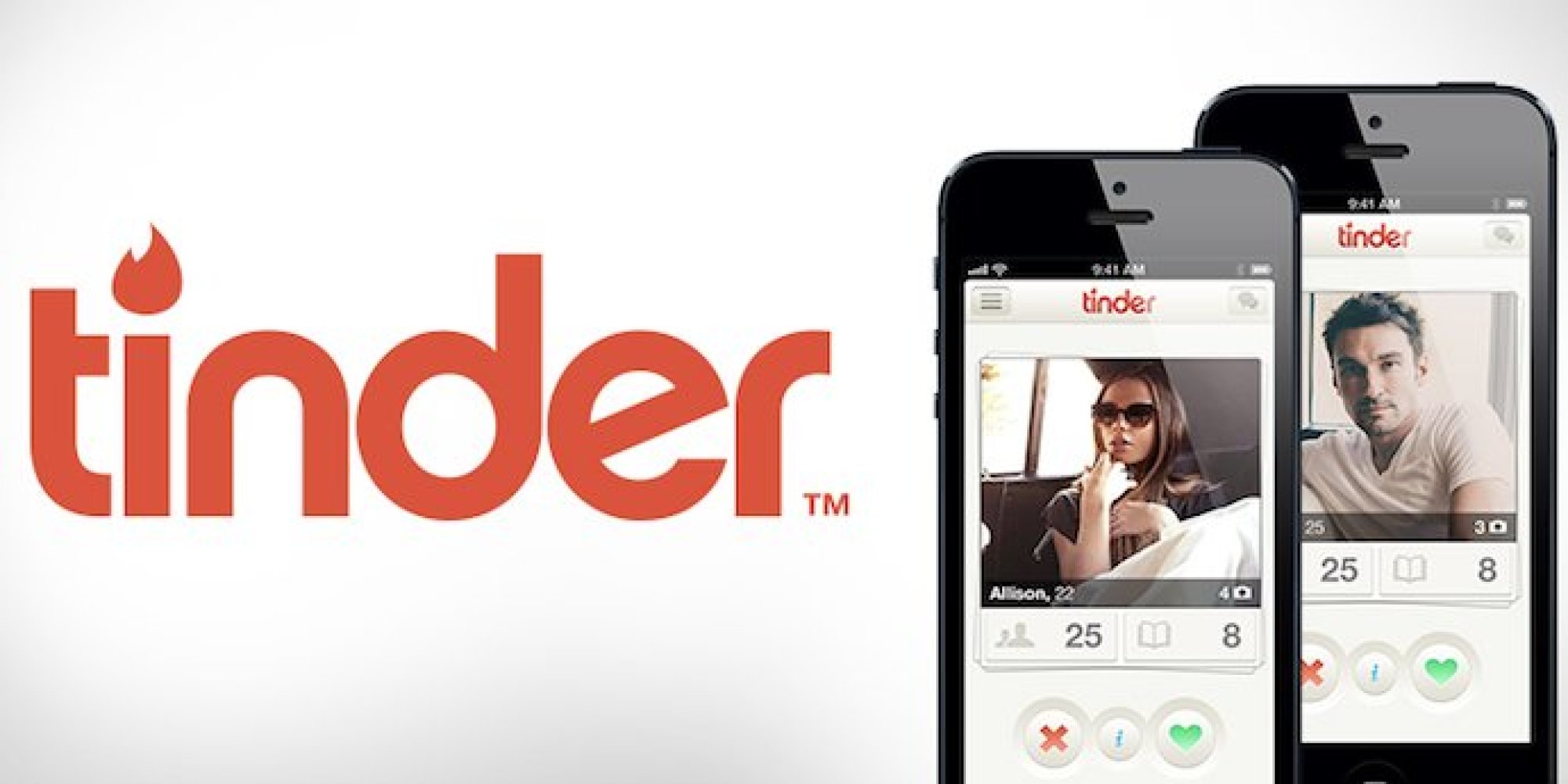
Beware of Scammers on Tinder
Have you grown tired of snuggling with your cat on Saturday nights while your friends are out enjoying couples bliss?
Then you’ve likely been on the hunt for a relationship. This can sometimes become a long and frustrating process.
If you’ve been looking for love in all the wrong places and decided to start an online search, beware. Romance scams have been cropping up again lately, and unsuspecting lonely hearts are being bilked out of thousands of dollars. The most recent version of this scam involves the mobile dating app Tinder.
Unfortunately, Tinder’s popularity has made it a magnet for scammers. The Better Business Bureau released a warning for consumers, alerting them to scammers who are using Tinder to spread malware or obtain money.
Instant attraction
The scam usually starts with you browsing for profiles, and then receiving an immediate response from a match as soon as you swipe right to communicate interest. After a lengthy messaging session (the fraudster is trying to get you buttered up so you’ll let your guard down), your potential suitor will then suggest texting instead of continuing to communicate through Tinder.
Trouble in paradise
And that’s when the trouble begins. Your new match may start telling you about a new service or product that you should try. The Better Business Bureau says the scammer will usually send a link with referral codes. This is done so that the spammer will receive payment for referring new customers. Then, you’ll be asked to download an app, but once you click on the link that was provided, your phone is infected with malware. Furthermore, some scammers will request personal information such as your address, pretending that they need this information so they can send you a romantic gift.
The Better Business Bureau gives these tips for spotting a Tinder Scam:
1. You receive a lighting-fast response
If you are a little suspicious of a fast response from a Tinder suitor, your instincts may be accurate. The Better Business Bureau says that some of the Tinder profiles are not real, but are in fact spam bots. If you get a message immediately after you are matched, proceed with caution.
2. The scammer pressures you to communicate outside of Tinder
Another red flag is if the new guy or gal fires off multiple messages and then tries to get you off Tinder as soon as possible. The spammer may suggest text or chat. The BBB says it is common for Tinder users to move on to a text conversation but that a spammer will make this suggestion almost right away.
3. You don’t have their attention
Be even more suspicious if the answers to your questions don’t make sense. This could be a sign that answers have been automated. The BBB suggests asking a few questions to see if the responses add up. If you get crazy answers, it’s time to shut the conversation down.
4. Their photo is too good to be true
Be leery of Tinder users who post glamour shots. Unfortunately, that toned hottie drenched in baby oil may not be the real deal. So if you’re drooling over your match’s photo, be prepared for disappointment. While we hope that’s not the case and you find your love connection, don’t be surprised if you end up with more than you bargained for — and not in a good way.
Sunday, December 16, 2012
WHY AN "ONLINE" RELATIONSHIP?
WHY AN INTERNET RELATIONSHIP?

Private investigators get asked this question frequently. In their experience, it seems that the internet is safer and easier to meet people in than the real world is. On line, you can be the person you want to be. Maybe better looking, richer, happier, etc., etc. and it's safe to be that person. Mike, who was a mechanic in the Navy ten years ago in real life becomes Mike the former "Navy Seal" on-line. Michelle, whose college roommate became a model in the real world "does some modeling" when chatting with her friends in cyberspace.
You can type things on the internet that you would never say in the real world. In short, it gives people a place to fill a lagging self-esteem or to compensate for the short comings of their real life. Or to simply prey on others for fun, sexual pleasure or money.
Trust develops because this is the person "you relate to" and it builds up as more time goes by. It then gets to the point where they begin to be even more honest, sometimes totally honest, and an internet affair becomes a real relationship or affair outside of cyberspace.
Does it really happen?
Absolutely. Too many of clients consult with P.I.s and state their disbelief that their loved one would be trolling for sex on the internet or having an on-line affair. The reality is that, like affairs at school, work, church, the health club or any other social environment, it usually happens quite innocently and grows.
People go online and get to know one another in this safe internet world and slowly it progresses into cyber sex and or a real life relationship. Do not underestimate this format for people meeting and growing close on the internet. Internet affairs happen daily, in every town across the country.
This sub-culture is comprised of men and women who use the computer to meet other people who want commitment free sex. They are attracted to the excitement of the affair. They like to type stories about fantasy and sex. They look for others who share this desire.
It is important not to stereotype these folks. They are not just "strippers" or the "dirty old man" wearing a trench coat. This is your neighbor, the soccer mom, the teller at the bank, your accountant, the person next to you at church, your coworker and potentially your partner.
This group uses the computer the same way those looking for true love do. They visit certain sites (not always dating sites - sometimes divorced persons, pen pal sites, parenting boards, class reunion sites, recovery sites or shared interests), e-mail, chat and instant message.
Friday, December 14, 2012
CONFLICT IN CYBERSPACE
How to Resolve Conflict Online
Have you ever noticed how conflict can get blown out of proportion online? What may begin as a small difference of opinion, or misunderstanding, becomes a major issue very quickly. Conflict can be difficult at the best of times, but what is it about online communication that seems to ignite “flaming” and make conflicts more difficult to resolve?
There are a number of reasons to explain why conflict may be heightened online. One is the absence of visual and auditory cues. When we talk to someone in person, we see their facial expressions, their body language, and hear their tone of voice. Someone can say the exact same thing in a number of different ways, and that usually effects how we respond.
For example, someone could shout and shake their finger at you, or they could speak gently and with kindness. They could stand up and tower over you, or they could sit down beside you. How you feel, interpret, and respond to someone’s message often depends on how they speak to you, even when it’s a difficult message to hear.
In online communications, we have no visual or auditory cues to help us to decipher the intent, meaning, and tone of the messenger. All we have are the words on a computer screen, and how we hear those words in our head. While people who know each other have a better chance at accurately understanding each others’ meaning and intentions, even they can have arguments online that they would not have in-person.
Projections and Transference
While many people are convinced that how they read an email is the only way it can be read, the truth is, how we read a text, or view a work of art, often says more about ourselves than it does about the message or the messenger.
All of our communications, online and in real-time, are filled with projections. We perceive the world through our expectations, needs, desires, fantasies, and feelings, and we project those onto other people. For example, if we expect people to be critical of us, we perceive other people’s communication as being critical - it sounds critical to us even though it may not be. We do the same thing online; in fact we are more likely to project when we are online precisely because we don’t have the visual or auditory cues to guide us in our interpretations. How we “hear” an email or post is how we hear it in our own heads, which may or may not reflect the tone or attitude of the sender.
We usually can’t know from an email or post alone whether someone is shouting, using a criticizing tone, or speaking kindly. Unless the tone is clearly and carefully communicated by the messenger, and/or we are very skilled at understanding text and human communication, we most likely hear the voice we hear, or create in our head and react to that. This is one of the reasons why controversial or potentially conflictual issues are best dealt with by using great care and explicit expressions of our tone, meaning, and intent.
Where do projections come from? They come from our life experiences - how we’ve been treated, how important figures in our lives have behaved, how we felt growing up, how we responded and coped, etc. All of us project or transfer our feelings and views of important figures in our lives onto other people.
To take a look at your own projections or transference with people online, think back to the last time you felt angry at someone online. What was it about them or their email that made you so angry? What did you believe that they were doing to you or someone else? How did you react internally and externally? Was your reaction to this person (whether spoken or not) influenced by someone or something from your past? While it certainly happens that people are treated with disrespect and anger online, if there are any parallels between this experience and any of your past experiences, it’s likely that how you felt and responded was coloured by your past. When our past is involved, particularly when we are unaware of it happening, we invariably project and transfer old feelings onto the present situation.
Disinhibition Effect
Conflict can be heightened online by what is known as the "disinhibition effect", a phenomenon that psychologist, Dr. John Suler, has written extensively about. Suler (2002) writes,
"It's well known that people say and do things in cyberspace that they wouldn't ordinarily say or do in the face-to-face world. They loosen up, feel more uninhibited, express themselves more openly. Researchers call this the "disinhibition effect." It's a double-edged sword. Sometimes people share very personal things about themselves. They reveal secret emotions, fears, wishes. Or they show unusual acts of kindness and generosity. On the other hand, the disinhibition effect may not be so benign. Out spills rude language and harsh criticisms, anger, hatred, even threats." (Suler, 2002)Suler (2002) explains that the disinihibition effect is caused by or heightened by the following features of online communication:
a) anonymity - no one knows who you are on the net, and so you are free to say whatever you want without anyone knowing it's you who said it.Tips for Resolving Conflict Online
b) invisibility - you don't have to worry about how you physically look or sound to other people when you say something. You don't have to worry about how others look or sound when you say something to them. "Seeing a frown, a shaking head, a sigh, a bored expression, and many other subtle and not so subtle signs of disapproval or indifference can slam the breaks on what people are willing to express." (Suler, 2002)
c) delayed reactions - you can say anything you think and feel without censorship at any time, including in the middle of the night when you're most tired and upset, leave immediately without waiting for a response, and possibly never return - in the extreme this can feel to someone like an emotional "hit and run".
d) the perception that the interaction is happening in your head - with the absence of visual and auditory cues you may feel as though the interaction is occurring in your head. Everyone thinks all kinds of things about other people in their minds that they would never say to someone's face - online, you can say things you'd otherwise only think.
e) neutralizing of status - in face-to-face interactions, you may be intimidated to say something to someone because of their job, authority, gender, or race. Because this is not visible to you online, you feel freer to say what ever you want to anyone.
f) your own personality style may be heightened online - for example, if your communication style tends to be reactive or angry, you may be more reactive or angry online.
What can be done to prevent unnecessary conflict in cyberspace? The following are tips for handling conflict online with respect, sensitivity, and care:
Don’t respond right away
When you feel hurt or angry about an email or post, it’s best not to respond right away. You may want to write a response immediately, to get it off your chest, but don't hit send! Suler recommends waiting 24 hours before responding - sleep on it and then reread and rewrite your response the next day.
Read the post again later
Sometimes, your first reaction to a post is a lot about how you're feeling at the time. Reading it later, and sometimes a few times, can bring a new perspective. You might even experiment by reading it with different tones (matter-of-fact, gentle, non-critical) to see if it could have been written with a different tone in mind than the one you initially heard.
Discuss the situation with someone who knows you
Ask them what they think about the post and the response you plan to send. Having input from others who are hopefully more objective can help you to step back from the situation and look at it differently. Suler recommends getting out of the medium in which the conflict occurred - in this case talking to someone in person - to gain a better perspective.
Choose whether or not you want to respond
You do have a choice, and you don’t have to respond. You may be too upset to respond in the way that you would like, or it may not be worthy of a response. If the post is accusatory or inflammatory and the person’s style tends to be aggressive or bullying, the best strategy is to ignore them.
Assume that people mean well, unless they have a history or pattern of aggression
Everyone has their bad days, gets triggered, reacts insensitively, and writes an email without thinking it through completely. It doesn’t mean that they don’t have good intentions.
On the other hand, some people pick fights no matter how kind and patient you are with them. They distort what you say, quote you out of context, and make all sorts of accusations all to vilify and antagonize you. Don't take the “bait” by engaging in a struggle with them - they'll never stop. Sometimes, the best strategy is to have nothing more to do with someone.
Clarify what was meant
We all misinterpret what we hear and read, particularly when we feel hurt or upset. It’s a good idea to check out that you understood them correctly. For example, you could ask, “When you said...did you mean...or, what did you mean by...?” Or, “when you said...I heard...is that what you meant?” Often times, what we think someone said is not even close to what they meant to say. Give them the benefit of the doubt and the chance to be clear about what they meant.
Think about what you want to accomplish by your communication
Are you trying to connect with this person? Are you trying to understand them and be understood? What is the message you hope to convey? What is the tone you want to communicate? Consider how you can convey that.
Verbalize what you want to accomplish
Here are some examples, “I want to understand what you’re saying.” “I feel hurt by some stuff that you said. I want to talk about it in a way that we both feel heard and understood.” “I want to find a way to work this out. I know we don’t agree about everything and that’s okay. I’d like to talk with you about how I felt reading your post.” “I hope we can talk this through because I really like you. I don’t want to be argumentative or blaming.’
Use “I” statements when sharing your feelings or thoughts
For example, “I feel...” versus “You made me feel...”
Use strictly feeling statements
Feeling statements include saying you felt hurt, sad, scared, angry, happy, guilty, remorseful, etc. In everyday conversations, we describe our feelings differently than this. For example, we say that we felt “attacked”, “threatened”, “unsafe”, or “punched in the stomach”. When the person we’re upset with is not present, or able to read our words, this is an understandable way to express the full depth of our feelings and experience. Generally though, these statements are not simply feeling statements because they contain within them unexpressed beliefs. For example, you believe that you were attacked by the person, not that it just felt that way. If you want to communicate with the person involved (or they can read your words), it is best to stick to simple feeling statements otherwise they will hear you as accusing them of attacking them and be angry or upset with you. Some people get confused why other people get upset with them when they think they are only expressing their feelings; usually in these cases there were unstated beliefs expressed which the person reacted to.
Choose your words carefully and thoughtfully, particularly when you’re upset
Do your best to keep in mind that the person will read your post alone. You are not physically or virtually present with them to clarify what you meant, and they can’t see the kindness in your eyes. They must rely entirely on your words to interpret your meaning, intent, and tone. This is why it’s important to choose your words carefully and thoughtfully. You can still be real and honest while being selective.
Place yourself in the other person’s shoes
How might they hear your message? To avoid unnecessary conflict or a lot of hurt feelings, it helps to take into account who you’re writing to. One person might be able to hear you say it exactly how you think it, and another person would be threatened by that style of communication. Think about the other person when writing your email or post. Do your best to communicate in a way that is respectful, sensitive, and clear to them. People often say, to do that feels like they’re being controlled and why shouldn’t they just write it the way they want to. Of course you can write it any way you want, especially online, but if you want to communicate with this person and have them hear and understand what you’re saying, it helps to think about how they will hear it.
Use emoticons to express your tone
In online communication, visual and auditory cues are replaced by emoticons, for example, smiles, winks, and laughter. It helps to use emoticons to convey your tone. Additionally, if you like the person, tell them! Having a conflict or misunderstanding doesn’t mean you don’t like the person any more, but people often forget that reality, or don’t think to say it. It may be most needed during a tense interaction.
Start and end your post with positive, affirming, and validating statements
Say what you agree with, what you understand about how they feel, and any other positive statements at the beginning of your email. This helps set a positive tone. End on a positive note as well.
The Paradox of Online Communication
Handling conflict constructively is hard at the best times, and it can be even harder online. It can take a great deal of effort, care, and thoughtfulness to address differences, tensions, and conflicts online. Paradoxically, some of the same things that contribute to heightened conflict online can contribute to peaceful resolutions as well. The internet is an ideal place to practice communication and conflict resolution skills. Just as the absence of visual and auditory cues, the anonymity, invisibility, delayed reactions, and neutralizing of status free us to say what ever negative thing we want, they can also free us to try new, and more positive communication styles and to take all the time we need to do that. As with any new technology, the internet can be used to enhance our personal growth and relationships, or to alienate us from each other. It’s our choice.
References:
Suler, J. (2002). The Online Disinhibition Effect. In The Psychology of Cyberspace (orig. pub. 1996), (article orig. pub. 1996)(Note from EOPC: REPORT REPORT REPORT anyone who stalks, flames, posts personal information and so on. Though it may be blown off - do NOT give up. Report in writing to:
- to site owner where the flame/ information was posted. Request removal.
- to the IP of the person who posted it (if known)
- to the owner of the platform where it is posted
- to the police precinct closest to the person who posted it
- to the FBI closest to the person who posted it
- file on IC3.gov (they currently have a 8-9 YEAR backlog)
- have people who know you write these places as well.
Labels:
argument,
bully,
conflict,
flame war,
flaming,
online disinhibition effect,
projection
Monday, October 22, 2012
THE ONLINE SUCCUBUS
My perfect lover became my worst nightmare.
By Sue Thomas
Cyberstalkers have been in the news again recently, but not much mention has yet been made of another unpleasant phenomenon haunting the Web: the emotional vampire. Making himself (or herself) quite indispensable, this person is your best friend, your most fantastic lover, the wonderful family you never had. For some, online relationships offer the chance not to find the love of your life but to get kicks from manipulating the emotions of others. In the worst cases, these individuals carry the deceit into real life.As we all know, e-mail gives those good with language the ability to wrap a relationship around with such intimate text that soon nothing else matters but an intense one-to-one filling every waking minute. You might pretend to be several different people to several different lovers, with some identities sustainable offline, others not.
Thus, when I first met my lover, he was a female grad student called Cindi. Also a professor in a virtual classroom. Also a man called Rhyys. Also a top-level university administrator. Also a cyborg called Plex. Also a devout Catholic. Also a sadist called Gandore. Also a devoted husband and father. Also a very sad, very frustrated small-town inadequate person with a need to exploit and control.
The story of what happened to me in cyberspace is, on the surface, pretty similar to the familiar tale wherein net user No. 1 pretends to be something s/he is not, thereby tricking net user No. 2 into falling in love with her/him. What's different in my case is, first, the number of people who were deceived; second, the fact that the perpetrator is a respectable, high-ranking academic who, one would think, has no need to pretend to be a female chemistry student wearing dangly earrings; and third, the fact that the man seems to prey specifically on artists and writers.
So what did this rather plain, little-traveled, only son of an upstate New York Polish grocer actually do to ensnare so many intelligent men and women? Well, he identified our creative passions and used them as a template to form himself into what we most desire. He is an emotional tourist warming his hands on the fires of other people's lives, focusing his attentions on artists and writers because their imaginations are so near the surface that it's easy to plunder them. For example, since I write about computer technologies, he did his research, read all of my books and articles and made himself into what he knew would fascinate me most: an ungendered cyborg. With another woman who writes vampire fiction he became a vampire slave master, a persona that, though pathetic, would probably raise hilarity among his students.
For more than three years I was mesmerized by him despite the open bewilderment of friends and family, who couldn't imagine what I saw in such a homely character. But none of us guessed the truth: that I had given three years of my life and promised the whole of my future to a sociopath who preys on others for his own gain without regard to the consequences for his victims.
Another description would perhaps be "succubus," a demon who assumes female form to have sexual intercourse with men in their sleep, though in his case, it is in order to have sex with men online. He is a shape shifter who molds himself into whatever is needed and constantly searches for new forms to take. Although a familiar type in the flesh, his ease in setting traps online makes him something new: a cybersuccubus. And the peculiarities of his practice make him very hard to accuse.
While I have no idea why he did what he did, I can at least outline the story.
In 1995 I began researching a novel set in the online community of LambdaMOO, a virtual space in which several people in different locations can talk to one another online by typing simultaneously, creating a constantly moving screen that shows short, abrupt sentences that manage to convey personalities and emotions at a surprisingly complex level. In a MOO (a multiuser domain that is object oriented), words are all you are -- and so the more adept your language, the more effective your presence.
In this setting, on a day in November 1995, I was type-talking with a female postgraduate student bearing the fanciful online name of Cindi and a description to match. ("A 5-foot-10 green-eyed redhead with a runaway imagination and a fuzzy idea of the line between virtual and real. She runs five miles or so every morning to make sure all the pizza she eats doesn't take up residence. Her hair is short enough that her earrings can dangle when she walks.") She introduced me to one of her friends, a middle-aged chemistry professor recently promoted to a powerful administrative position at his private Connecticut university. "All his students love him!" she told me enthusiastically. His online name was Rhyys.
I was briefly involved online with both of them, but the relationship with Rhyys soon became intense. We were talk-typing online several times a day until Christmas Eve 1995, when, in a slow and emotional ritual, we each typed our real-life names. After that, there was no going back. I already knew by then he was a devout Catholic, that he had been married for 20 years, that he had one small child, born late in the marriage. Of course, I should have turned away, but I did not. Instead, I opened my heart and he walked straight in. I'd never met him, never even heard his voice on the phone, but he felt like my lover, my brother, my best friend and my colleague all rolled into one. I was especially struck by his thoughtfulness. For example, he stated the need for some kind of message system in case either of us was taken ill. And who would tell Cindi, he asked? Something had to be worked out. He promised to give it some thought. A few days later he was begging me to trust him: "Just stay loving me," he wrote. "I will try with all I have to not let you down. Don't be scared of crawling under my skin, I won't crush you," he promised.
Looking back on it now, it's hard to explain exactly why I took any of that romantic tosh as seriously as I did. And why did I connect with him so strongly in the first place? All the usual manifestations of attraction were there -- the faster heartbeat, the heightened sense of that one other person, the erotic intimacy -- and yet there were no bodies. Nor was there any chemical or physical interaction beyond those we imagined, invented or role-played. But the fact is, despite the lack of all those usual signals, I fell for him long before I even heard his voice on the phone. I suppose I formed an idea of him through the "tone" of his voice -- the words he typed and the stylistic nuances of his phrases, plus a sense of his personality conveyed by what he actually said in those phrases. Our huge ability to imagine combines with an intense desire to find perfection and creates, as we say in England, a silk purse out of a sow's ear. But that moment of free fall in the weightlessness of anonymity can lead to a very painful crash to earth when you discover that the person you fell for was only exciting because you imagined him/her to be so.It's reminiscent of the famous experiment of biofeedback suits, when a couple (he in Paris and she in New York) were hooked up remotely with the intention that they would arouse each other via remote touching and mutual feedback. It seemed to work very well, to be enjoyable for both, and it was only later discovered that in fact the connection had failed right at the start and they never had been connected at all. In other words, they had been arousing not each other but themselves! In my case,
my lover's cliched phrases of love and passion created a facsimile of emotion that was as effective as the real thing, and the fact that they had never been connected to the truth was something it took me a while to discover.In July 1996, nine months after we first met online, he flew to England to meet me, and we fell instantly in love. That summer, I also went to his hometown in New England. But in September, he made an astounding confession: Not only had he been posing as a woman online all the time he had known me, but that woman was Cindi! While I was not shocked by the gender-bending (that is part of everyday life in cyberspace), I was very shocked by the lie. But I was in love with him, and I was used to Internet life, where people often try out new identities. And after all, I was writing a book about the subject. How could I really object to this new revelation? I was so steeped in the mysteries of the Web that my ardor overrode my caution, and I saw his duality not as deceit but as a marvelous bonus: two lovers for the price of one. He deleted Cindi from LambdaMOO, but her memory remained strong, especially when we met in real life and I stared into his pale eyes to see her looking back at me. We had always played around with gender boundaries, and Cindi's continued ghostly presence made everything somehow even more complete as we grew closer and closer. She was still part of us.
The powerful effect that Rhyys had on me was his apparent presence in my previous books. In my first novel, "Correspondence," a woman is transformed into a software virus permeating her cyborg lover's body. In my second, "Water," the main character imagines a man into existence with the power of her desire. In another, the characters are attracted to each other purely by the power of words, just like the text interface of MOOs where words are all you are. Thus, I felt that I had written this man several times already, and now here he was manifested in the sometimes-virtual, sometimes-real flesh.
My new novel turned into a mixture of invented and real online experience. Rhyys (not, of course, his real name) and I were leading a heady life, logged on for hours every night, type-talking endlessly, exchanging histories, exchanging intimacies. We experimented with programming new environments and other personas. I recorded our often bizarre interactions, writing them into my book, and if they sometimes seemed pretty strange, they were real for us even if nobody else would ever believe them. We exchanged genders. We invented new genders. We created virtual cyborg bodies and played in them. We built laboratories, caves and whole sequences of rooms, all programmed into the ever-changing textual interface of a MOO. By now, I was absorbed and obsessed by him: his imagination, his eroticism, his intensity. When we were together in the flesh and I looked into his face, I could see it shifting from male to female, from softness to hardness, from dream to reality. I could not get enough of him. He had become my only muse. I dedicated my novel to "My Beloved Technician." I wanted to be with him and write about him forever.
SOURCE - READ MORE HERE
Friday, June 29, 2012
Online Dating Ruins Real Human Interactions
Of course 'human interactions' aren't the only things online dating destroys.
Good article on Online Dating, online relationships and objectification. - EOPC
by Jennifer Stull
The human race is lazy. If everything is not right there at our fingertips in this technologically-run world then we want nothing to do with it and cast it aside. Does this pathetic lifestyle work when it comes to dating? Some of you may be thinking, "How can dating have anything to do with technology other than finding a date on a website?" Well, go figure, some creepy organization created the "Red Light Center," which is online dating, but taken to the literal level.
The Red Light Center describes itself by saying, "The downturn of the economy is affecting Americans all over the country. Skyrocketing gas and food prices has lead many Americans to stay in and 'party' in virtual worlds, such as Red Light Center, that let you date, socialize and partake in risqué activities without even leaving your house. Red Light Center has seen a 400% traffic increase since last year, with users totaling more than 2 million."
The idea is that you, as a member of the Red Light Center, make an avatar that represents who you are, find another avatar that seems compatible, and then go on a cyber date. Has society really reached this low of a social level where we do not even go out with real people in the real world?
Is it really more preferable to sit behind the security blanket of a computer screen and hope that the other pathetic dateless fool on the other side might be attracted to your avatar?
That is sick!
Technology has obviously ruined all intimacy within society. At this rate we might as well date, get married, and live our lives over the computer so that we may all turn into mind-numbed, fat, technology-run robots. Where is the human connection in this? Where is the spark between two people? It is impossible to make a real connection with a computer cartoon over computer dinner and computer sex. This is no way to live. The excuse that dating is too expensive and that it saves time and money to go on dates online is a cop out. Meeting another human being for coffee will cost no more than seven dollars and meeting someone in general for conversation is absolutely free.
If this is what the human race is moving towards then I am ashamed. I feel as if the only thing technology could not take away from us is the ability to interact, to look someone in the eye and really hear what he or she is saying. But, if every ounce of human interaction can be done over a computer screen then the line between reality and fantasy will become more and more blurred. Yes, I will admit I do spend a lot of time on Facebook, e-mail, and other various online activities, but I would trade all of that for a day out, face-to-face with my friends. We cannot be dependent on technology to guide us through life, because when a human being and an avatar begin to represent the same thing, social customs as we know them could disappear forever.
SOURCE
Good article on Online Dating, online relationships and objectification. - EOPC
by Jennifer StullThe human race is lazy. If everything is not right there at our fingertips in this technologically-run world then we want nothing to do with it and cast it aside. Does this pathetic lifestyle work when it comes to dating? Some of you may be thinking, "How can dating have anything to do with technology other than finding a date on a website?" Well, go figure, some creepy organization created the "Red Light Center," which is online dating, but taken to the literal level.
The Red Light Center describes itself by saying, "The downturn of the economy is affecting Americans all over the country. Skyrocketing gas and food prices has lead many Americans to stay in and 'party' in virtual worlds, such as Red Light Center, that let you date, socialize and partake in risqué activities without even leaving your house. Red Light Center has seen a 400% traffic increase since last year, with users totaling more than 2 million."
The idea is that you, as a member of the Red Light Center, make an avatar that represents who you are, find another avatar that seems compatible, and then go on a cyber date. Has society really reached this low of a social level where we do not even go out with real people in the real world?
Is it really more preferable to sit behind the security blanket of a computer screen and hope that the other pathetic dateless fool on the other side might be attracted to your avatar?
That is sick!
Technology has obviously ruined all intimacy within society. At this rate we might as well date, get married, and live our lives over the computer so that we may all turn into mind-numbed, fat, technology-run robots. Where is the human connection in this? Where is the spark between two people? It is impossible to make a real connection with a computer cartoon over computer dinner and computer sex. This is no way to live. The excuse that dating is too expensive and that it saves time and money to go on dates online is a cop out. Meeting another human being for coffee will cost no more than seven dollars and meeting someone in general for conversation is absolutely free.
If this is what the human race is moving towards then I am ashamed. I feel as if the only thing technology could not take away from us is the ability to interact, to look someone in the eye and really hear what he or she is saying. But, if every ounce of human interaction can be done over a computer screen then the line between reality and fantasy will become more and more blurred. Yes, I will admit I do spend a lot of time on Facebook, e-mail, and other various online activities, but I would trade all of that for a day out, face-to-face with my friends. We cannot be dependent on technology to guide us through life, because when a human being and an avatar begin to represent the same thing, social customs as we know them could disappear forever.
SOURCE
Monday, May 07, 2012
ONLINE ATTACKS

by Robin M.
Why So Many Feel Big When They Hide Behind A Screen
I’ve often joked that the internet is the last place that beating up women in public is still considered acceptable. Ask any woman who writes online, be it politics, women’s rights, often even parenting and more mundane social issues, and you will hear a nearly universal admittance that she has at some point been attacked for her views by at least one anonymous commenter. Not an “I disagree with you because x, y,z…” response, but a “You stupid bitch, why do you think you can write what you write.”
I used to be amazed by the vitriol. Then I was saddened. Eventually, though, I saw that as just another part of the territory when you open yourself up as a writer online.
I accepted it. We all pretty much accept it. That is the part that should make us all angry — our now inherent acceptance of the idea that if you write online, you will be harassed, especially if you are a woman.
As Nina Funell explains in this piece in the Australian, “The internet has absolutely changed the nature of public debate. The anonymity and the immediacy it gives people who want to indulge in abuse and hate… I don’t know if it actually makes it more or less dangerous [to have a public profile] but when you’re seeing a whole heap of hate speech written about you in separate forums, targeting you via email or in comments, I do know that it has a profound impact on your sense of safety…”
I’ve always been lucky to feel safe, despite opening a great deal of my private life online because of my writing about infertility and reproductive health. Although I have had my own share of comments, both with real names (I assume) attached or sent anonymously, I have learned to ignore them as simply a part of my work. I never stop to question why it should ever be a part of anyone’s “work” to deal with online harassment.
Once, things escalated beyond just comments and insults. It was a shocking realization of not just how exposed you actually do leave yourself online, but how free those who disagree with you feel it is allowable to step beyond the normal bounds of public and private life in order to “teach you a lesson” about how wrong you are about the things you believe.
I learned my lesson well. I learned that to allow someone to silence you online is to lose your power, and that when your personal life goes on line, you don’t go quiet, you identify it for what it is — an attack by someone who wants to intimidate you from acting on your beliefs. You must learn to change that attack into something that can become a positive for you, a chance to show your strength, expand your audience, whatever it is that they are trying to stop you from accomplishing.
The internet may always be the last place for attacks, especially attacks on women, to thrive. But we don’t have to accept it, we have to fight it.
Sunday, February 26, 2012
THE BAD BOYS OF CYBERSPACE

Getting Known Through Anonymity
Much has been said lately about how anonymity on the internet "disinhibits" people. Feeling relatively safe with their real-world identity hidden, they say and do things they otherwise wouldn't normally say or do in "real life." In some cases, that seems to be a good thing. People may be more honest, open, generous, and helpful. In other cases, however, the nasty side of a person gets unleased.
I'd like to give a slightly different spin to this "disinhibition through anonymity" concept. My basic premise is this: NO ONE WANTS TO BE COMPLETELY ANONYMOUS. No one wants to be totally invisible, with no name or identity or presence or interpersonal impact at all. Everyone wants and needs to express some aspect of who they are, to have others acknowledge and react to some aspect of their identity. In some cases, it's a benign feature of who you are. In some cases, not. Anonymity on the internet allows people to set aside some aspects of their identity in order to safely express others. Snerts need someone to react to and affirm their offensive behavior. This need is a bit different than simply catharting their frustrated drives, as the "eros-ridden" idea suggests. Snerts are trying to express some unresolved and warded-off feature of their troubled identity in an (often desperate) attempt to have it acknowledged. Unfortunately, they do it in a way that abuses other people. Under ideal conditions, they may be able to accept and work through those inner feelings and self-concepts that torture them. If not, they will continue to vent that ooze through their online snert identities, while safely dissociating it from their "real world" identity.
Does greater anonymity result in greater deviance? It's an interesting question. Because greater anonymity usually is associated with less accountability for one's actions, the answer would seem to be "yes." (snipped)
The higher prevalence of misbehavior among anonymous users may be more than just a "disinhibiting" effect. Rather than the anonymity simply "releasing" the nasty side of a person, the person may experience the anonymity - the lack of an identity - as toxic. Feeling frustrated about not being known or having a place in the group, the new user acts out that frustration in an antisocial manner. They need to feel that they have SOME kind of impact on others. It's not unlike the ignored child who starts acting "bad" in order to acquire attention from the parent, even if it's scolding and punishment. The squeakiest wheel. Humans, being humans, will almost always choose a connection to others over no connection at all, even if that connection is a negative one. Some snert guests may think (perhaps unconsciously) that their misbehavior is a justified retaliation against a community that they feel has stripped away their identity and alienated them. They reject because they feel rejected.
In rare cases, people who are well known in the community may become the trouble-makers. Social psychology has demonstrated that people with power and status often have "idiosyncrasy credit" - they are given a bit more leeway in violating some of the less critical rules of the community.
EXCERPTED FROM THIS ARTICLE
This is from a fascinating site on the Psychology of Cyberspace which can be read (which we STRONGLY recommend) in full here.) And many many thanks to OneofSeven from our sister site for once again, finding such a wonderful article!! - EOPC
Labels:
anonymity,
cyberpath,
exploitation,
lying,
online disinhibition effect,
stalking
Friday, December 23, 2011
Being 'Anonymous' Online Changes People's Behavior
Faceless communication online or over phone often turns nice people nasty
By Diane Mapes

(excerpts)
One minute, they’re nice, normal people. The next, they’re frothing at the mouse.
I, anonymous
Between out-of-control customers, vituperative online posters and road-raging drivers, it’s hard to find an individual who hasn’t succumbed to the siren song of faceless, consequence-free communication. Online boards are clogged with insults hurled by readers hiding behind deceptively mild screen names — (“I hope you rot in hell!” signed Kittyface) — and customer service reps endure blistering tirades from disembodied voices week in and week out.
These days there are a dozen ways to communicate without actually having to look somebody in the eye. As a result, not only have we developed an abrupt, abbreviated way to chat (IMHO), but our technological advances have spawned new psychological terms such as “online disinhibition effect” to explain our tendency to open up — in both good ways and bad — when we’re sitting in front of a screen.
In a February 2008 study published in the journal Psychological Reports, researchers found that out of four groups of participants, only those in the anonymous group took part in antisocial behavior — in this case defined as violating rules to obtain a reward.
...
McIntyre, the billing specialist from Houston, says the online news forums she’s participated in over the years have led her down many a dark and dysfunctional corridor.
A lot of this effect has to do with feedback — or lack thereof, says Wallace.
...
Interestingly enough, some folks are starting to retaliate.
Surreptitious tape recordings of outrageously bad customer behavior have started to pop up on YouTube in all their profanity-laced glory.
In 2004, comedienne Margaret Cho posted dozens of hateful e-mail messages she’d received in response to a monologue on her Web site, along with each sender’s full name and e-mail address. Shamed — and deluged with their own hate mail from Cho’s fans — some posters sent in abject letters of apology.
In the online world, abusive users hiding behind anonymous screen names are being outed, sometimes to huge public embarrassment as when Whole Foods chief executive John Mackey was unmasked as the sock puppet responsible for posting numerous attacks against competitors on a Yahoo! financial message board.
And media sites from Sacramento to Soho are stepping up their moderation of anonymous comments in an attempt to keep the incivility down to a low roar.
(please see our far right column for a few of the VICTIMS of Exposed Predators and how they fought back against smear and lies from the Exposed Predators)
By Diane Mapes

(excerpts)
One minute, they’re nice, normal people. The next, they’re frothing at the mouse.
“It’s mind-boggling the things people will say and even the things I will say,” says Catherine McIntyre, a 38-year-old medical billing specialist from Houston. “People who’d never say something horrible in real life will do it again and again and again online. It’s like the behavior of crowds, or those mass beatings where no one gets blamed because everyone’s at fault.”Sheri Pineda, a 59-year-old customer service representative at the Daily Breeze in Torrance, Calif., encounters the same bad behavior in the after-hours messages left by her newspaper’s subscribers.
“It’s appalling the way people talk,” Pineda says. “They’ll rant and rave and cuss at us with extremely foul language. And I think a lot them specifically wait until we close the phones. They’re looking to let it all out and then get on with their day. And then they’re surprised when I get back to them. They’re like, ‘You actually heard that?’ and will be embarrassed.”Hello. You have reached the split personality zone. Press 1 to melt down. Press 2 to hang up and act like a normal person again.
I, anonymous
Between out-of-control customers, vituperative online posters and road-raging drivers, it’s hard to find an individual who hasn’t succumbed to the siren song of faceless, consequence-free communication. Online boards are clogged with insults hurled by readers hiding behind deceptively mild screen names — (“I hope you rot in hell!” signed Kittyface) — and customer service reps endure blistering tirades from disembodied voices week in and week out.
These days there are a dozen ways to communicate without actually having to look somebody in the eye. As a result, not only have we developed an abrupt, abbreviated way to chat (IMHO), but our technological advances have spawned new psychological terms such as “online disinhibition effect” to explain our tendency to open up — in both good ways and bad — when we’re sitting in front of a screen.
In a February 2008 study published in the journal Psychological Reports, researchers found that out of four groups of participants, only those in the anonymous group took part in antisocial behavior — in this case defined as violating rules to obtain a reward.
“I definitely believe that anonymity affects the frequency of antisocial behavior among individuals to some extent, even when these individuals have a reasonable sense of morality — so-called ‘ordinary people,’” says study author Tatsuya Nogami of Nagoya University in Japan.
“In my personal opinion, people generally try to comply with social norms in everyday life, even when such compliance with norms and rules conflicts with their personal self-interests. However, if you can get what you want without receiving any punishment or negative evaluations from others, are you still 100 percent sure that you’ll always refrain from engaging in that kind of undesirable behavior?”Rage against the machine
...
McIntyre, the billing specialist from Houston, says the online news forums she’s participated in over the years have led her down many a dark and dysfunctional corridor.
“People get sucked in,” she says. “You can be whoever you want, you can put out there whatever you want, and there are no consequences. I even got sucked in and was mean to people. I consider myself better than that, but I did it too, and that bothers me. I guess it’s just the dynamic.”Rider University psychology professor John Suler wrote about this dynamic in his 2004 paper “The Online Disinhibition Effect.” In it, he describes both toxic disinhibition — angry, threatening behavior such as that seen in flame wars or cyberbullying — and benign disinhibition, in which people make overly personal revelations due to the intimate nature of the medium. (Think online daters who “fall in love” without ever meeting.)
A lot of this effect has to do with feedback — or lack thereof, says Wallace.
“The environment affects how you behave,” she says. “Any time you go to places where you’re not known — even if it’s a hotel in another city — you might be more aggressive. So when you construct an environment like the Internet or long-distance call centers with a help desk worker in Bangalore, you’re creating an environment that facilitates uncharacteristic behavior.Cherise Oleksak, a 35-year-old cable TV customer service representative from Fife, Wash., says dealing with people’s disinhibited side can definitely be a challenge. Some scream and rage; others get a little more, uh, personal.
You’re not getting those nonverbal cues that calibrate your behavior and give you feedback if you’re going off track. Those people who do customer service for Comcast probably need double doses of Zoloft.”
“You’ll get people who will turn into perverts,” she says. ”They’ll ask you out or ask you to do (FREE) phone sex. They’ll be like, ‘Can you read those pay-per-view adult movie titles out loud to me again?’”Robin Taylor, 42, a customer care representative from Nashville, Tenn., says she’s seen this split, as well.
...
“I guess they feel they can say whatever they want because they’re anonymous, but the funny thing is we have all their information: their name, their address, their phone number, even part of their Social Security number.Going public
Not that I would ever retaliate, but if we ended up with some psycho (employee), it could happen.”
Interestingly enough, some folks are starting to retaliate.
Surreptitious tape recordings of outrageously bad customer behavior have started to pop up on YouTube in all their profanity-laced glory.
In 2004, comedienne Margaret Cho posted dozens of hateful e-mail messages she’d received in response to a monologue on her Web site, along with each sender’s full name and e-mail address. Shamed — and deluged with their own hate mail from Cho’s fans — some posters sent in abject letters of apology.
In the online world, abusive users hiding behind anonymous screen names are being outed, sometimes to huge public embarrassment as when Whole Foods chief executive John Mackey was unmasked as the sock puppet responsible for posting numerous attacks against competitors on a Yahoo! financial message board.
And media sites from Sacramento to Soho are stepping up their moderation of anonymous comments in an attempt to keep the incivility down to a low roar.
“When we first started with online blogs and that sort of thing, people weren’t aware of how much the environment could affect their behavior, but now people are getting much more savvy about it,” Wallace says. “But the issue that needs to be considered now is there’s no privacy. People need to recognize that they just can’t send out these blogging responses and e-mails and expect their anonymity to be preserved. It probably won’t be.
Recording devices are everywhere and Web 2.0, with its user-generated content, greatly amplifies the Net’s power to expose and publicize.
“It also archives forever.”
(please see our far right column for a few of the VICTIMS of Exposed Predators and how they fought back against smear and lies from the Exposed Predators)
Friday, September 16, 2011
A Form of Partner Violence: Cyberstalking
Violence in intimate relationships is all too common -- just ask any cop who's responded to the calls. But younger generations who grew up with computer technology have more to worry about than a punch or slap. Cyberstalking is emerging as a form of partner violence that differs from traditional domestic abuse and is troubling in the ease in which it occurs.
Cyberbully stalking harassment In a study published this month, Kansas State University researcher Lisa A. Melander shines a light on how cyberstalking impacts college-age students. Gathering data in male-only or female-only focus groups, Melander found a range of cyber harassment, including sending unsolicited or threatening e-mails, posting hostile Internet messages and obtaining personal information about the victim without his or her consent.
The study found some differences in cyber harassment compared to face-to-face domestic violence. One, the conflict is quick and easy, so flare-ups occur in cyberspace when they might have blown over if people were only communicating in person. Two, matters that would typically be private become public very quickly -- meaning friends, relatives and others can be pulled into the situation and also suffer from the conflict. And, three, geographic location has no bearing on the situation. Victims can't always escape by changing their physical location.
Melander also found that, contrary to traditional violence where there is likely one abuser and one victim, cyberharassment can often involve both partners because of the back-and-forth that takes place. Moreover, when people communicate via computer they are less inhibited and don't have visual cues, such as facial expressions or tone of voice, to guide their interactions. That too can aggravate conflict that is being played out in cyberspace.
Melander concludes that computer technology "may change how relationship violence occurs among younger generations." A previous study suggested that about one-third of college students reported some form of computer-based harassment. But much more research is needed on the impact of the "darker side" of technology, she said.
The study is published in the June issue of the journal Cyberpsychology, Behavior, and Social Networking.
-- Shari Roan
Monday, August 10, 2009
Legal Perils of Social Networking
By Erika Morphy
There's something about the Web that makes some people just want to let it all out, compelling them to type things they'd hesitate to speak out loud. However, words on the Web can sometimes have real impact in the office -- and in the courtroom.
Web or no Web, talking trash about your employer can get you fired, libeling others can get you sued, and some lies are far from harmless.

Every blogger should know the story of Heather B. Armstrong, nee Hamilton. In February 2002 she was fired from her job for blogging about her job. Blogs were relatively new at that time, and they were on few employers' radars. Hamilton, though, crossed an invisible line -- one not explicitly defined by her employer -- and paid for it. She coined the term "dooce" as a label for anyone fired for blogging. Five years later, most people online know the drill: Don't blog about work, unless your employer approves. If you do, hide all identifying details that could lead back to you.
However, even following these basic guidelines, people can still get into trouble online, especially as social networks are now moving into the workspace. Indeed, even the social networks themselves may find themselves culpable for certain illegal acts, Jordan Hudgens, CEO of VidShadow, told the E-Commerce Times.
The social networks, of course, have their own legal resources to guide them -- or help them chart -- what is new territory. The law also provides businesses with some guidance about how to protect themselves against what is being said about them on these networks.
Nancy Bertrando, chair of the employment group for Greenberg Glusker, told the E-Commerce Times...[ ] of one client whose former employee was posting videos of himself talking about work on YouTube. He was bound by a confidentially agreement, however, and they were able to stop him from continuing.
Stretching Intent
Users of these sites, though, are basically on their own.
Another familiar story is that of Lori Drew, a woman charged with violating the Computer Fraud and Abuse Act by using a false identity on a social networking site to bully a teenage girl who'd recently had a falling out with Drew's daughter. The girl later killed herself.
One argument made in support of Drew is that this law's intent is being stretched to prosecute her. Federal authorities obtained an indictment against her using the Computer Fraud and Abuse Act because Drew supposedly provided false information to MySpace Latest News about MySpace as she set up the account with which she bullied the girl.
Friend of the court briefs filed on behalf of Drew point out that under that interpretation, the law could be used against anyone who lies on a social networking site.
This situation is perhaps the worst-case example of the dark side of social networking It also happens to be a perfect illustration of the vague legal lines that exist in cyberspace.
"There are a number of laws out there that can be potentially violated on a social networking site," Andrew Serwin, partner and chair of the Privacy, Security & Information Management Practice at law firm Foley & Lardner, told the E-Commerce Times. These range from cyber stalking laws to the CAN-Spam Act to even HIPPA (Health Insurance Portability and Accountability Act) in certain circumstances.
Job Related
However, the greatest legal risk people run by using social networks is still work-related, even six years after Armstrong was fired.
Another factor to consider is that these sites are potential gold mines for competitors, Tracy L. Coenen, a fraud investigator with Sequence Forensic Accounting, told the E-Commerce Times.
...Connecting [ ] becomes much easier when people link to their friends for all the world to see.
Twitter especially can be valuable in this way, she continued. "People aren't using nearly as much discretion as they should -- they will mention a project they are working on on Twitter. If a competitor is watching, it could pick up valuable nuggets of information."
ORIGINAL, IN FULL, HERE
There's something about the Web that makes some people just want to let it all out, compelling them to type things they'd hesitate to speak out loud. However, words on the Web can sometimes have real impact in the office -- and in the courtroom.
Web or no Web, talking trash about your employer can get you fired, libeling others can get you sued, and some lies are far from harmless.
Every blogger should know the story of Heather B. Armstrong, nee Hamilton. In February 2002 she was fired from her job for blogging about her job. Blogs were relatively new at that time, and they were on few employers' radars. Hamilton, though, crossed an invisible line -- one not explicitly defined by her employer -- and paid for it. She coined the term "dooce" as a label for anyone fired for blogging. Five years later, most people online know the drill: Don't blog about work, unless your employer approves. If you do, hide all identifying details that could lead back to you.
However, even following these basic guidelines, people can still get into trouble online, especially as social networks are now moving into the workspace. Indeed, even the social networks themselves may find themselves culpable for certain illegal acts, Jordan Hudgens, CEO of VidShadow, told the E-Commerce Times.
"Social media companies are always going to have to be careful about the conversations that go on their networks," he said. "Slander, illegal acts and copyright issues [are all potential risks] since user- generated content is by nature unpredictable."Social networks do their best to protect themselves legally, he said, and they will have to continue to do so even more as the Web gets more and more interactive.
The social networks, of course, have their own legal resources to guide them -- or help them chart -- what is new territory. The law also provides businesses with some guidance about how to protect themselves against what is being said about them on these networks.
Nancy Bertrando, chair of the employment group for Greenberg Glusker, told the E-Commerce Times...[ ] of one client whose former employee was posting videos of himself talking about work on YouTube. He was bound by a confidentially agreement, however, and they were able to stop him from continuing.
Stretching Intent
Users of these sites, though, are basically on their own.
Another familiar story is that of Lori Drew, a woman charged with violating the Computer Fraud and Abuse Act by using a false identity on a social networking site to bully a teenage girl who'd recently had a falling out with Drew's daughter. The girl later killed herself.
One argument made in support of Drew is that this law's intent is being stretched to prosecute her. Federal authorities obtained an indictment against her using the Computer Fraud and Abuse Act because Drew supposedly provided false information to MySpace Latest News about MySpace as she set up the account with which she bullied the girl.
Friend of the court briefs filed on behalf of Drew point out that under that interpretation, the law could be used against anyone who lies on a social networking site.
This situation is perhaps the worst-case example of the dark side of social networking It also happens to be a perfect illustration of the vague legal lines that exist in cyberspace.
"There are a number of laws out there that can be potentially violated on a social networking site," Andrew Serwin, partner and chair of the Privacy, Security & Information Management Practice at law firm Foley & Lardner, told the E-Commerce Times. These range from cyber stalking laws to the CAN-Spam Act to even HIPPA (Health Insurance Portability and Accountability Act) in certain circumstances.
Job Related
However, the greatest legal risk people run by using social networks is still work-related, even six years after Armstrong was fired.
"People have gotten nailed and lost their jobs when it has been discovered what they said on online industry forums," Ethan Horwitz, a partner with King and Spalding, told the E-Commerce Times.
"... [ ]One can always explicitly say they are not representing their employer, of course. The problem is, few people do. "With electronic communications, people tend to be sloppy," Horwitz observed. "They write things online that they would never put on real paper."So, besides exposing oneself to a potential libel or slander suit, a reckless commenter could also pave the way for a slander or libel suit against his or her company, he concluded.
There are also risks unrelated to work as well, he added, although "Lori Drew is definitely an exception. However, it is conceivable, if someone posts derogatory pictures or writes something that could, for example, keep someone from getting a job or getting into college, that they could be brought to court."Cyber Espionage a Growing Risk
Another factor to consider is that these sites are potential gold mines for competitors, Tracy L. Coenen, a fraud investigator with Sequence Forensic Accounting, told the E-Commerce Times.
...Connecting [ ] becomes much easier when people link to their friends for all the world to see.
Twitter especially can be valuable in this way, she continued. "People aren't using nearly as much discretion as they should -- they will mention a project they are working on on Twitter. If a competitor is watching, it could pick up valuable nuggets of information."
ORIGINAL, IN FULL, HERE
Friday, April 24, 2009
Kentucky Puts a Stop To ‘Cyberstalking’

Joined by Attorney General Jack Conway, Gov. Steve Beshear Thursday signed HB 315 sponsored by Rep. Johnny Bell and passed during the 2009 session of the Kentucky General Assembly. The new law includes measures to better protect Kentuckians from cyber crimes.
“This cyber-safety bill is a critical step toward protecting Kentuckians from the very real threats that come with 21st century innovations and toward helping to prevent further abuses of these technologies,” said Beshear. “Kentucky families will be safer because of this bill.”
Through this legislation it is unlawful to “cyberstalk,” which is defined as intentionally alarming, annoying, intimidating or harassing a person with no legitimate purpose through electronic communication. This bill also includes tougher regulations for sex offenders when they use electronic communication.
“House Bill 315 will bring Kentucky laws up-to-date with changes in technology,” Conway said.
“I would like to thank legislators for the bipartisan support of this bill and I appreciate Gov. Beshear signing the bill into law. ...I look forward to working with law enforcement officers and prosecutors to continue making Kentucky a safer place to live, work and raise a family.”
ORIGINAL ARTICLE
Saturday, April 11, 2009
Costume Designer Charged with Cyberstalking

By Donita Naylor and Tatiana Pina
The problem started with a poorly made SpongeBob costume, and ended with a cyberstalking arrest.
In between, Tracy Sisson says, were two years of harassment: prank calls, hangups, telemarketing calls and phony applications, as many as 60 a day.
In 2001, Sisson, 33, of Cranston, Rhode Island (U.S.) ordered the character costume, called a Yellow Cheese to avoid copyright infringement, and put $500 down on a costume resembling Bob the Builder, for her party rental business. But she was not happy with the quality of the Yellow Cheese, she said in an interview Wednesday, because of unsightly glue drips. When she called Bruna Puppets and Costumes, of Providence, to cancel the builder costume, owner Ann Bruno refused to return her deposit.
Sisson and her husband, Keith, own Absolute Fun Party Rentals and the Absolute Fun Party Center, in Cranston. She and Bruno, 59, met again in 2006 when Sisson was arranging mortgages at Able Financial Services and Bruno got a job there. Sisson told her boss that she felt uncomfortable working with Bruno and planned to leave. Bruno was laid off, she said.
Later that year, around September, Sisson told the police she began getting mysterious phone calls and Internet messages from companies indicating she had filled out applications. She had not. Her phone was ringing as she came home from the hospital with her third son. “I was walking in the door with my brand-new baby, and someone was calling for my husband.” It was a female voice, she said, and the caller hung up.
Was her husband having an affair while she was giving birth?
On Monday, the police charged Bruno, of West Warwick, with cyberstalking, a misdemeanor. She was issued a summons to appear at District Court, Warwick, on April 14.
Earlier that day, Sisson called the police from the Cranston Public Library, saying she recognized a woman at the computers who might be involved. Bruno wasn’t aware that two officers were standing behind her, a police report said. They watched as she typed Sisson’s name and business address onto an application.
Bruno told the police she was the victim, that she had received harassing phone calls and that applications were filled out in her name.
She said that Sisson had gotten her fired from her job.
Sisson’s business, operating a party center and renting items for home parties, started seven years ago. It’s a family operation, she said. Nieces and nephews appear as characters in costumes, her sister does face painting and temporary tattoos and her husband delivers water slides, moon-bouncers, tables, chairs and tents.
Bruno, who started designing fashions as a student at Cranston High School East, has a shop in the Silver Lake neighborhood of Providence. The shelves are lined with costume heads of bunnies, Mickey Mouse-like creatures and characters that Bruno has made, along with wigs, vinyl go-go boots and costumes she has sewn, such as a Southern belle. Bruno refused to comment.
Tracy Sisson said she started asking callers how they got her number and was told she or her husband had filled out cards at a home show or business expo. Neither had attended those shows, she said.
ARTICLE HERE
Typical - the cyberharasser plays VICTIM! Sounds like Angela Buer, Nathan Thomas, Dan Jacoby, Yidwithlid, Ed Hicks...
Sunday, July 13, 2008
"Get Anyone to Do Anything and Never Feel Powerless Again"

Psychological secrets to predict, control and influence every situation
[Chapter 9, Pages 42-43]By David J. Lieberman, Ph. D.
From the bedroom to the boardroom learn how to see clearly and easily evaluate information without being swayed by those with selfish interests and unkind intentions. The manipulator's bag of tricks is stocked with seven deadly tactics that can leave you jumping through hoops. The good news is that by knowing what they are, you can watch out for them, and...never be manipulated again.
These powerful manipulators are: guilt, intimidation, appeal to ego, fear, curiosity, our desire to be liked, and love.
Anyone who uses any of these tactics is attempting to move you from logic to emotion-to a playing field that's not so level. She or he knows that she or he can't win on the facts so they will try to manipulate your emotions with any one or a combination of the tactics below.
1. Guilt: "How can you even say that?
I'm hurt that you wouldn't trust me.
I just don't know who you are anymore."
2. Intimidation: "What's the matter can't you make a decision?
Don't you have enough confidence in yourself to do this?
3. Appeal to Ego: "I can see that you're a smart person.
I wouldn't try to put anything past you.
How could I? You'd be on me in a second."
4. Fear: "You know, you might [not get "it" if you go take a pee/act un-coach able] just lose the whole thing.
I sure hope you know what you're doing.
I'm telling you that you won't get a better deal anywhere else.
This is your last shot at making things work out.
Why do you want to risk losing out on being happy?"
5. Curiosity: "Look, you only live once.
Try it? You can always go back to how things were.
It might be fun, exciting - a real adventure.
"You never know unless you try and you regret never seeing what happens."
6. Our Desire to be Liked: "I thought you were a real player. And so did everyone else.
Come on, nobody likes it when a person backs out...this can be your chance to prove what you're made of."
7. Love: "If you loved me you wouldn't question me.
Of course I have only your best interests at heart.
I wouldn't lie to you. You know that deep down inside, don't you?
We can have a wonderful relationship if you'd only let yourself go and experience the wonders that the future will deliver to us."
Strategy Review:
Look and listen objectively--not only to the words but also to the message.The abusive maneuvers interfere with your ability to digest facts. When these emotions creep into your thinking, temporarily suspend your feelings and look at the messenger as well as the message.
If you hear anything that sounds like these manipulators, stop and reevaluate the situation. Don't ever act quickly and emotionally. Wait and objectively gather the facts so you don't become a hand puppet.
Subscribe to:
Posts (Atom)