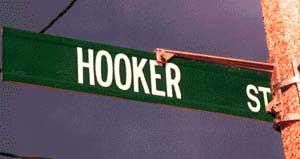
Woman Says Her Name, Number Posted Online Inviting Sex
That’s what a woman said happened after she ended a relationship a month ago.
She said her former husband sent her a text message telling her to check out Craigslist. When she did, she found her name, address and phone number on the Internet site, inviting people to drop by her home for sex.
So many people responded that she was forced to change her phone number, leave her home and now she is seeking a permanent restraining order against the 44-year-old man.
KMBC's Bev Chapman reported that people who use Craigslist know that it's a place to buy, sell, trade and meet people. For this woman, it's apparently a vehicle for revenge.
"I think it's insane," she said. "I feel like I'm losing my mind over the whole deal. I'm not safe. I'm constantly looking around."
The woman, who did not want her identity revealed, said that she just learned of the posting last weekend. Her ex-husband's post was under the Kansas City list page, in the column for personals, in the casual encounters section.
The posting was crude and explicit. It described her as fit, disease and drug-free.
"Within 45 minutes, I had 17 to 18 texts and phone calls," she said. One man even showed up at her home while a police car was parked in the driveway.
This was not the first incident with her ex-husband in the more than five years since their divorce. The couple reunited for three months last year, and ended it again a month ago.
"He goes through cycles," she said. "He loves me, he hates me."
The post was removed from Craigslist. The site's operators sent a message that said they believed the post was clearly harassment.
A spokeswoman for the Jackson County Prosecutor's office said they have seen a few cases of Internet harassment, but they can do nothing for the woman without a police report.
Our exposed predators: Dan Jacoby, Jeff Dunetz, aka YIDWITHLID, and others - did this SAME THING to their victims. Glad to see this woman's police department is taking this seriously. Many don't. - EOPC
Online Players, Internet Predators, Cyberpaths, Dating Site Frauds, Cyberstalkers... whatever you call them - they need to be EXPOSED! Did they take your heart? your trust? Harass you? Tell your story... Share ideas for dealing with them... ('FAIR USE LAW' APPLIES TO ALL ARTICLES)
UPDATE
Showing posts with label sex offenders. Show all posts
Thursday, December 24, 2015
Sunday, August 26, 2012
Match.com Can't Screen for Sex Offenders

By Benjamin Radford
One of the world's top dating websites, Match.com, announced that it would begin checking its members against a national sex offender registry. The announcement was made about a week after a class-action lawsuit was filed against the company by two women who claim men they met through the service sexually harassed them.
Whether an attempt to ward off future lawsuits or merely a publicity stunt, the measure is nearly worthless and in fact may do more harm than good by fostering a false sense of security. There are several obvious flaws with the plan.
The first is that users on social networking and matchmaking websites typically do not have their identities verified. Thus anyone (including convicted sex offenders ) can post whatever name they wish to use on the site and easily avoid triggering a match on registries.
Even if Match.com members' names were somehow verified, names are very common. A match with a name on a sex offender registry would also require a matching address to be sure it's the same person. Anyone can rent a post office box (or use a friend's mailing address) to easily avoid triggering an alert.
Second, even if the information provided to Match.com was completely accurate, it may not match what's on the nation's sex offender registries, which are notoriously unreliable. A 2010 study of Vermont's sex offender registry found that half of the entries sampled contained significant mistakes and wrong information, including two people who should not have been listed. Audits in other states, including Georgia and Texas, found that the registry information for offenders was often wrong, incomplete and outdated.
Third, statistics show that relatively few assaults are committed by convicted sex offenders. That is, a given person (adult or child) is far more likely to be sexually assaulted by someone who is not listed on any sex offender registry than a convicted sex offender. The vast majority of physical and sexual assaults are committed by friends, family and other loved ones, not a recently met stranger hiding a sex offense conviction. This is one of the fundamental flaws of Megan's Laws and other offender notification measures: They distract attention and resources away from the greater threat.
Even Match.com's president, Mandy Ginsberg, acknowledged that the new measures "remain highly flawed." The rules of safe dating have not changed in decades: Meet in a public place, tell a friend where you're going and don't give out personal information too early.
Benjamin Radford is deputy editor of Skeptical Inquirer science magazine and author of six books.
Another reason to NEVER USE ONLINE DATING!
Monday, July 02, 2012
Another Thank-You from a Reader!

I just wanted to thank you guys for doing what you do!
When I was 15 I became involved with someone I met via World of Warcraft. About 6 months later, my world was turned upside down.
You guys do an amazing job of capturing how online predators get what they want and it really helped me come to terms with what happened. 3 years later, the whole ordeal haunts me. While it was unfolding, I tried making my own site to help myself sort out my thoughts, it was nothing compared to your blog.
Reading what you post also helped me settle in my heart how it could happen and why, it also made me feel less alone enough to press charges.
3 years later, http://sexoffender.dsp.
I've never gotten around to telling you how much your site has helped so here it is.
Keep up the good work!
Labels:
cyberpath,
gaming,
mind games,
not credible,
online predators,
sex offenders,
thank you
Tuesday, January 31, 2012
Stalker Sending Men to My House for Sex ...was my Ex!
By NIKKI WATKINS
(U.K.) Amy Lees answered a knock at her front door and a man burst in, grabbed her by the throat and threatened to rape her. The sicko fantasist had been led to believe she was keen to take part in a sordid sex game. She fought him off — but he was just one of hundreds of strangers who kept turning up on her doorstep for months demanding that she had sex with them.
Traumatised Amy was the victim of a vicious internet stalker who had plastered her name, photos and home address on websites offering her up for weird role-play fantasies. And, shockingly, the stalker was her ex-boyfriend Khalid Hussain — who she had turned to for help when she felt besieged, scared and vulnerable in her home.
Amy has bravely waived her anonymity to tell her horrifying story to The Sun. She said: "For nine months I was stalked. It was the worst time of my life. I was trapped and frightened. I wouldn't wish that terror on my worst enemy. It was a truly horrifying experience."
Amy, a 31-year-old barmaid, first met care worker Hussain, 30, via a dating website in October 2009.
She said: "I had just come out of a relationship and wanted to have fun so I joined the site. I got chatting to Khalid. He seemed very kind and sweet. After a couple of weeks chatting on MSN and Facebook I invited him round for dinner. We chatted for hours and by the end of the evening we were a couple. He was very attentive and sent me bouquets of flowers every week."
But they began having arguments and split up quite regularly. Three months after their meeting, Amy ended the relationship. She said: "While we were apart I went on Facebook and noticed a friend request from a man called Simon. Although I didn't know him, I replied because I was flattered to get male attention. We started emailing and texting. He wanted a sexy picture so, stupidly, I sent him a picture of myself in underwear. As soon as I hit send, I regretted it."
The next day Simon put the picture on Amy's Facebook wall under the caption: "Here's my new girlfriend I'm going to f*** the a*** off her." Her voice shaking, Amy said: "I was shocked, took the photo down and texted Simon telling him to leave me alone. He texted back saying, 'I'm going to have my fun, you f***ing bitch, wait and see.' Seeking emotional support, I got back with Khalid and he was really supportive. I felt safer knowing he was there."
Days later Amy started getting texts from Simon calling her disgusting names. Amy said: "Things were terrible and I felt as if I needed somebody to be there for me — but Khalid was becoming very controlling. I knew I had to end things with him for good. "We parted as friends and stayed in touch. Every time I was contacted by Simon I'd tell Khalid, desperate for support."
Amy called the police about the harassment and they shut down her Facebook account while they investigated. But in February 2010 things took a menacing turn when men — often up to 20 a day — started arriving at her house wanting to have sex with her. Amy said: "When the first person came to the door asking me for sex I was so gobsmacked I just closed it in his face. But the second and third time it happened I knew it was probably down to Simon. I was so confused and vulnerable. I became petrified and would always check from my upstairs window who was at the door before I opened it. I kept a frying pan at hand, so I felt protected, and friends would stay over so I felt safer. The police were still involved but there seemed to be little they could do. I became a quivering wreck as the men knocked at the door and shouted obscenities through my letterbox. I hardly slept and every day became a battle. I became too weak and frightened to leave the house.
"About four months after the men started arriving, there was a knock on the door. I opened it a crack and saw a respectable-looking man in his forties. He grabbed me by the throat, said he was going to rape me and pushed me inside the house. I tried to fight him off and my friend, who was in my house at the time, ran to help me. The man realised his mistake and stepped away, whispering, 'I'm sorry. I thought I was talking to you on the internet. I thought this is what you wanted'.
"He ran out of the house and I managed to get his registration number and call the police. I put panic alarms supplied by the police all over the house and added a chain to the door. They also put a sign up on my door explaining that any internet directions to my house were a hoax."
The man was arrested but not charged because he had been talking to someone online who had set up a fake profile. That someone turned out to be Hussain — and he had set up many other profiles in her name. He had used photos from her Facebook account and given out her home address.
He was jailed for two years nine months in September last year after admitting harassment.
There were 53,000 cyber-stalking allegations recorded in 2009 and experts believe the actual number could be ten times this. New laws are set to be introduced to combat the crime.
Amy said: "The shock of knowing my ex-boyfriend was behind all of this left me feeling physically sick. He had written that I was into rape re-enactment along with numerous sordid sexual acts. It made me feel disgusted. He had seemed kind but all along he was evil and dangerous. I'm glad he is in jail and can't do that to anyone else — but if I had been the judge I would have given him life. I still find it very difficult to trust anyone. I sleep in the room with my four Staffordshire bull terriers and don't like going out on my own."
Amy is now making a fresh start, having found a new man. But she warned: "It is so important that cyber stalking is taken seriously because we are all at risk."
If you think you are being stalked, it is vital to act now.
For more information and to get help in the U.K. contact the Suzy Lamplugh Trust at suzylamplugh.org or 020 7091 0014
(U.K.) Amy Lees answered a knock at her front door and a man burst in, grabbed her by the throat and threatened to rape her. The sicko fantasist had been led to believe she was keen to take part in a sordid sex game. She fought him off — but he was just one of hundreds of strangers who kept turning up on her doorstep for months demanding that she had sex with them.
Traumatised Amy was the victim of a vicious internet stalker who had plastered her name, photos and home address on websites offering her up for weird role-play fantasies. And, shockingly, the stalker was her ex-boyfriend Khalid Hussain — who she had turned to for help when she felt besieged, scared and vulnerable in her home.
Amy has bravely waived her anonymity to tell her horrifying story to The Sun. She said: "For nine months I was stalked. It was the worst time of my life. I was trapped and frightened. I wouldn't wish that terror on my worst enemy. It was a truly horrifying experience."
Amy, a 31-year-old barmaid, first met care worker Hussain, 30, via a dating website in October 2009.
She said: "I had just come out of a relationship and wanted to have fun so I joined the site. I got chatting to Khalid. He seemed very kind and sweet. After a couple of weeks chatting on MSN and Facebook I invited him round for dinner. We chatted for hours and by the end of the evening we were a couple. He was very attentive and sent me bouquets of flowers every week."
But they began having arguments and split up quite regularly. Three months after their meeting, Amy ended the relationship. She said: "While we were apart I went on Facebook and noticed a friend request from a man called Simon. Although I didn't know him, I replied because I was flattered to get male attention. We started emailing and texting. He wanted a sexy picture so, stupidly, I sent him a picture of myself in underwear. As soon as I hit send, I regretted it."
The next day Simon put the picture on Amy's Facebook wall under the caption: "Here's my new girlfriend I'm going to f*** the a*** off her." Her voice shaking, Amy said: "I was shocked, took the photo down and texted Simon telling him to leave me alone. He texted back saying, 'I'm going to have my fun, you f***ing bitch, wait and see.' Seeking emotional support, I got back with Khalid and he was really supportive. I felt safer knowing he was there."
Days later Amy started getting texts from Simon calling her disgusting names. Amy said: "Things were terrible and I felt as if I needed somebody to be there for me — but Khalid was becoming very controlling. I knew I had to end things with him for good. "We parted as friends and stayed in touch. Every time I was contacted by Simon I'd tell Khalid, desperate for support."
Amy called the police about the harassment and they shut down her Facebook account while they investigated. But in February 2010 things took a menacing turn when men — often up to 20 a day — started arriving at her house wanting to have sex with her. Amy said: "When the first person came to the door asking me for sex I was so gobsmacked I just closed it in his face. But the second and third time it happened I knew it was probably down to Simon. I was so confused and vulnerable. I became petrified and would always check from my upstairs window who was at the door before I opened it. I kept a frying pan at hand, so I felt protected, and friends would stay over so I felt safer. The police were still involved but there seemed to be little they could do. I became a quivering wreck as the men knocked at the door and shouted obscenities through my letterbox. I hardly slept and every day became a battle. I became too weak and frightened to leave the house.
"About four months after the men started arriving, there was a knock on the door. I opened it a crack and saw a respectable-looking man in his forties. He grabbed me by the throat, said he was going to rape me and pushed me inside the house. I tried to fight him off and my friend, who was in my house at the time, ran to help me. The man realised his mistake and stepped away, whispering, 'I'm sorry. I thought I was talking to you on the internet. I thought this is what you wanted'.
"He ran out of the house and I managed to get his registration number and call the police. I put panic alarms supplied by the police all over the house and added a chain to the door. They also put a sign up on my door explaining that any internet directions to my house were a hoax."
The man was arrested but not charged because he had been talking to someone online who had set up a fake profile. That someone turned out to be Hussain — and he had set up many other profiles in her name. He had used photos from her Facebook account and given out her home address.
He was jailed for two years nine months in September last year after admitting harassment.
There were 53,000 cyber-stalking allegations recorded in 2009 and experts believe the actual number could be ten times this. New laws are set to be introduced to combat the crime.
Amy said: "The shock of knowing my ex-boyfriend was behind all of this left me feeling physically sick. He had written that I was into rape re-enactment along with numerous sordid sexual acts. It made me feel disgusted. He had seemed kind but all along he was evil and dangerous. I'm glad he is in jail and can't do that to anyone else — but if I had been the judge I would have given him life. I still find it very difficult to trust anyone. I sleep in the room with my four Staffordshire bull terriers and don't like going out on my own."
Amy is now making a fresh start, having found a new man. But she warned: "It is so important that cyber stalking is taken seriously because we are all at risk."
If you think you are being stalked, it is vital to act now.
For more information and to get help in the U.K. contact the Suzy Lamplugh Trust at suzylamplugh.org or 020 7091 0014
Wednesday, April 20, 2011
Match.Com Promises to Check for Sex Offenders
Match.com has decided to check members against a national registry of sex offenders following a lawsuit—though the company says the move is not in direct response to the suit.A California entertainment executive sued for the action earlier this month after she was allegedly attacked by a Match.com member with a history of sex assault convictions.
The president of the popular online dating site said executives had earlier considered such screenings, but concluded that the registries were "historically unreliable."
But now, she said," a combination of improved technology and an improved database enables a sufficient degree of accuracy to move forward with this initiative."
Still, she said the company's new policy was no substitute for subscribers remaining vigilant on dates: "We want to stress that while these checks may help in certain instances, they remain highly flawed, and it is critical that this effort does not provide a false sense of security to our members." The policy will be implemented in the next 60 to 90 days.
(SO WHY ARE YOU STILL USING ONLINE DATING!??? - EOPC)
_____________________________________
(opinion - response:)
Match.com, Don't Bother Screening Sex Offenders
The effort may do more harm than good
By Evann Gastaldo
In response to a lawsuit, Match.com announced it will start checking its members against a national sex offender registry—but that's not news worth getting excited about, writes Benjamin Radford on LiveScience. "There are several obvious flaws with the plan," including the fact that members can register for the dating site using a fake name and someone else's address to avoid being matched. Even if members' identities and addresses were somehow verified, sex offender registries themselves "are notoriously unreliable."
Besides, Radford points out, statistically speaking, a person "is far more likely to be sexually assaulted by someone who is not listed on any sex offender registry than a convicted sex offender."
So there are plenty of reasons why the cross-checking will be far from foolproof, but that won't prevent many women from having "a false sense of security" because of it, he concludes.
Labels:
assault,
fake,
match.com,
online dating,
sex offenders,
sex predator,
unrealistic
Tuesday, March 15, 2011
Internet Con Man Dupes Mothers into Abusing Their Kids

By JEFF KAROUB
(MICHIGAN, USA) In real life, Steven Demink didn't have children, a college degree or a lasting career. Online, prosecutors say, he presented himself as Dalton St. Clair, an attractive single father and psychologist — a fantasy image authorities say the Michigan man used to persuade mothers across the country to commit unspeakable acts on their children.
Demink, 41, of Redford Township, preyed on single mothers for more than a year, prosecutors say, convincing them to sexually assault their children as a form of therapy. After pleading guilty Monday to six charges related to the sexual exploitation of children, Demink faces 15 years to life in prison when he is sentenced in June.
Demink's alter-ego was a single father of a 14-year-old girl, prosecutors said, and he posted pictures of male models as his headshots. In some cases, court documents say, Demink promised the women a date if they followed through with his directions.
Since authorities arrested him in October, seven children were rescued and at least three mothers have been arrested. Prosecutors say all of the children are now safe.
Authorities say Demink chatted with mothers from New Hampshire, Florida, Idaho and elsewhere, persuading them to engage in sexual acts with their children and send images via e-mail or through a live web stream. The children ranged in age from 3 to 15.
Demink told U.S. District Judge Gerald Rosen that before his arrest, he worked as a car salesman for about six months and before that for about five years at a local bank. He said he completed a U.S. Customs and Border Protection training program in 2002 and worked for the Immigration and Naturalization Service for about a year. He attended college for about two years but did not earn a degree, he said.
As part of his plea agreement with prosecutors, seven charges against Demink were dropped.
In one case, Demink started online chats with an Oregon woman about the sexual development of her 8-year-old autistic son, according to the plea agreement. He told her to engage in sexually explicit conduct with her son as a way to teach him about sex, prosecutors say, and she did so while Demink watched on a web camera.
"Demink intimated to these women that the result of the therapy would be healthier children," the document said.
Federal agents were tipped off to his operation by the Teton County Sheriff's Office in Idaho, said Khaalid Walls, a spokesman for the U.S. Immigration and Customs Enforcement Office of Homeland Security Investigations. The mother of a woman who had been chatting with him called sheriff's officials in late 2009.
A Teton County Sheriff's Office report from December 2009 said the Idaho woman met "Daltonst28" on an online dating site called singleparentmeet.com. She told police she performed sex acts on her young son as directed by her online male friend.
The woman's mother, Eileen Schwab of Idaho, said she knows little of how Demink convinced her daughter to follow his orders. She said her daughter was "depressed and lonesome" after her divorce.
"I don't know how he wrangled her in," Schwab said. "She could have turned off the computer and gone the other way. He must have had a power over her."
Her daughter pleaded guilty last May to lewd conduct with a child under 16 and is currently in prison.
Another mother who was arrested was from New Hampshire and pleaded guilty in December to producing child pornography, which carries a possible sentenced of 15 to 30 years in prison. She is scheduled to be sentenced in March. A message was left seeking comment from Larry Dash, a federal defender representing her.
A woman from Lee County, Fla., also has pleaded not guilty to five counts and was being held without bond in Florida. She faces a May trial in federal court in Fort Myers, federal defender Martin DerOvanesian said.
Prosecutors say Demink also is linked to four other mothers in Indiana, Georgia, Illinois and Oregon but has not been charged with crimes related to those communications. Assistant U.S. Attorney Kevin Mulcahy said those cases can be considered during sentencing.
We are not naming the women to protect the identity of the children.
Demink's attorney, Timothy Dinan, said his client "has expressed a lot of remorse" for what he did and has taken responsibility by pleading guilty. Dinan said Demink's parents, who declined to be interviewed, are praying for their son as well as the victims and their families.
"It's a shame he couldn't ask for help," Dinan said.
Thursday, March 10, 2011
Internet predator approaches 1,000 girls on Facebook
(U.K.) A homeless man who approached more than 1000 teenage girls for sex on social networking site Facebook was yesterday jailed for having intercourse with an underage girl.Dylan Lewis, 21, who is originally from Bethesda, North Wales, admitted taking the fifteen year old to a B&B in Holyhead, Anglesey, where they had unprotected sex five times.
Mold Crown Court heard how he had met the teenager on the internet and that he had confessed to a probation officer that he had approached around 1,000 teenagers for sex.
Online targeting
The court heard that 15 of those he approached agreed to meet him at a B&B and stay overnight with him but that he had been too nervous to take matters further.
Prosecuting barrister Gordon Hennell told the court that the girl had changed from her school uniform into casual clothes, and that they then caught a bus to Holyhead where they found a B&B.
He said: 'He met her over the internet, he asked her to meet up with him. She was aware that he was 21 and he knew that she was 15 because her date of birth was on her Facebook profile.
'On Facebook he told her he loved her, that he wanted to make love to her, and she seemed to be under some peer pressure to lose her virginity,' Mr Hennell explained.
He added that on the night in question the Lewis had a swig of cider and offered some to the girl, but she declined.
'Sex was consensual but it was clear that he initiated it and that she went along with what he was suggesting,' he added.
Lewis admitted two charges of sexual activity with a child and was jailed for 27 months.
He was placed on the sex offender register for ten years and a ten year Sexual Offences Prevention Order (SOPO) was made under which he is banned from befriending any young people under 16. It also places constraints on his use of the Internet.
Judge Peter Heywood said that it seemed that Lewis had an interest in girls of that age and that he had targeted them in the past with a view to meeting them.
He added: 'You contacted her via Facebook, you and she met, she bunked off school and went to your home to change. You both then went off to look for somewhere to stay and ended up in a B&B in Holyhead. You then had sexual intercourse. That in my view is a serious offence that clearly passes the custody threshold. There was a significant difference in your ages.'
He said that Lewis' actions were 'disturbing' and 'a matter of significant concern' while adding that there were factors which could lead him to the view that Lewis was dangerous, a risk of committing further offences in relation to young girls.
But he told the court, the defendant did not meet the criteria for a sentence for public protection or an extended sentence. He said those options were not available to him.
However, the judge said he hoped that the SOPO would ensure that he did not commit such offences again and accepted that the girl had consented to what took place.
But he added that the legislation was there 'to protect young girls from themselves' stressing 'I accept that when intercourse took place between you, she was a willing partner. She was not coerced in to going with you. She did it of her own free will.'
The court heard that the girl had played truant from school and had been reported missing.
Paulinus Barnes, defending, said that while Lewis had previous convictions there was nothing of a sexual nature and argued that there was a disparity of age but it was not of a great magnitude and it had been an entirely consensual agreement.
Lewis did not accept that there had been any manipulation.
He said: 'They met on the Internet and both were keen to meet.'
The court also heard how Lewis had a sad and troubled background. There was no family in court to support him.
Lewis was not particularly mature but had led a rather solitary life, in and out of hostels, and was currently of no fixed abode, said Mr Barnes.
Labels:
coercion,
Facebook,
internet love,
luring,
online dating,
sex offenders,
sex predator
Saturday, July 11, 2009
DEBATE ABOUT ONLINE PREDATORS' RIGHTS HEATS UP IN CALIFORNIA
(unfortunately, many cyberpaths escape the law because people think the victims "should have known better." Cyberpaths should be punishable by law and be registered SEX OFFENDERS as well! They are predators - make no mistake about it - whether they prey on children or other adults) By Kenneth Todd Ruiz -- Staff Writer
However far registered sex offenders must live from schools and playgrounds, they're still only a click away from potential victims on the Internet.
Whether the threat of child predators turning to virtual hangouts such as MySpace or Facebook for victims is phantom menace or epidemic, a series of well-publicized incidents during the past year has set the stage for conflict over online freedoms as the government's appetite grows to police and regulate cyberspace.
Already scrambling to get ahead of regulatory efforts with its own policing, MySpace announced Wednesday it had deleted thousands of convicted offenders' profiles from the site, while rebuffing demands made a day prior by eight state attorneys general to turn over results of its own search for predators among its roughly 175 million accounts.
To hand over personal user information in response to a letter - without court order or subpoena - would violate federal privacy laws, MySpace representatives contended. This week's skirmish comes at a time some legislators' pen fingers are twitching.
Those lawmakers believe it's time to extend real-world demands for convicted abusers to their virtual lives by collecting their online identities and allowing - or requiring - Internet hosts to ban them from their sites.
"Under Megan's Law, we're supposed to keep 49 pieces of information, but we don't collect their e-mail addresses," said Assemblyman Anthony Portantino, D-Pasadena.Portantino recently introduced a bill into the Assembly that would force sex offenders to register their e-mail addresses and other online identities and make it a crime to lie about one's age online for the purpose of being a child predator.
First Amendment and Internet-rights advocates say Portantino's bill shares the same flaws as a more aggressive piece of national legislation that sputtered soon after being introduced late last year by Sen. John McCain, R-Ariz.
Describing the proposed law as "unnecessary, ineffective and unconstitutional," staff lawyer Kevin Bankston of the Electronic Frontier Foundation said the media has overblown the actual threat posed by registered sex offenders, creating a "moral panic."
"The ability to speak anonymously is actually a First Amendment right," he said. "Registered sex offenders who are determined to offend again can simply not register their e-mails, or register one e-mail and go get a free e-mail account and use that anonymously."Despite the ability to circumvent the process, Portantino said it would give law enforcement another tool for prosecution. Yet only one in 10 people arrested for Internet-related sexual assaults had prior arrests for sexually offending minors, according to research by the National Center for Missing and Exploited Children.
Law-enforcement efforts netted an estimated 1,000 arrests for Internet-related sexual assaults, according to the 2003 study by NCMEC. About 20 percent of those arrested were related or already acquainted with their victims.
Last year, a NCMEC survey found fewer minors were receiving unwanted sexual solicitations than five years earlier, despite the explosive rise in popularity of social-networking sites such as MySpace. Four percent of them, however, reported aggressive attempts to make offline contact.
Although Portantino's bill would make it a crime for offenders not to register their electronic identities, banning them would be left to the discretion of online hosts.
Screening out offenders collected in a national database would be mandatory under McCain's bill. MySpace representatives have said the site would embrace such legislation.
In December - the same month McCain's bill was introduced following widely publicized incidents of abuse - the company announced it had hired a security firm to cull sex offenders from its nearly 200 million profiles.
todd.ruiz@sgvn.com
HAT TIP TO SGVN FOR THIS!
CLICK HERE FOR ORIGINAL ARTICLE
Labels:
criminal,
online predators,
sex offenders,
social networking
Friday, November 21, 2008
Internet 'Sex Gang' Off to Jail
Two brothers who led an internet sex gang which made millions by exploiting trafficked women have been jailed.

The gang, which smuggled hundreds of Asian women into Britain to work as prostitutes, made at least £3.2m during its five-year span.
The women were charged up to £30,000 by the gang to repay their travel "debts".
Bordee Pitayatankul, 33, from Surrey, was jailed for 15 months. His brother Pongpoj, 31, from Paddington, was given 18 months at Southwark Crown Court.
Seven other members of the gang were also jailed.
It cannot be right in this day and age that women coming to this country should be, in effect, sold off like slaves
Gang members admitted to various offences including conspiring to launder money and plotting to control prostitution between 1 January 2005 and 21 April 2008.
Up to 70 women - some as young as 18 - worked from at least 20 brothels across London, including Bayswater, Kensington and Paddington, often going with dozens of customers a week to raise the money they were told they owed the gang.
The Oriental Gems website set up by the gang featured the women accompanied by a photo gallery showing them naked or semi-naked.
It also listed their sexual specialities with prices ranging from £150 for one hour to £1,500 for an overnight stay.
Passing sentence, Judge Christopher Hardy said: "It cannot be right in this day and age that women coming to this country should be, in effect, sold off like slaves to work in this or any other trade for free until their debt is expunged.
"Oriental Gems was exploiting on a grand scale both in the number of females on its books, or, more accurately, its website and the turnover in cash generated."
Police estimate that the business was making a "conservative" £800,000 a year at one stage, with the gang pocketing a minimum of £3.2m.
Although officers have seized £179,000 they are yet to trace huge "assets" thought to be hidden abroad.

The judge said authorities should decide whether those convicted should be deported.
Confiscation hearings will be held next year.
SOURCE
QUOTE FROM RELATED ARTICLE:
Readers, does/ did your Cyberpath see you this way? As free sex? Was he someone like Yidwithlid who saw prostitutes on his lunch hours and tried to further supplement his marriage with online sex with real (and vulnerable) women?
Or Dan Jacoby who turned his online 'support group' female friends into free porn shows and emotional toys to feed his out of control libido?
Or John Gash who used the net to find women all over the world for a free place to stay and free sex anywhere he went - while lying about love to every one of them.
Online you are NOTHING BUT AN OBJECT TO THESE MEN. And for many: a way to supplement a huge internet porn & sex habit. And you can be conveniently dumped with a click of a mouse!

The women were charged up to £30,000 by the gang to repay their travel "debts".
Bordee Pitayatankul, 33, from Surrey, was jailed for 15 months. His brother Pongpoj, 31, from Paddington, was given 18 months at Southwark Crown Court.
Seven other members of the gang were also jailed.
It cannot be right in this day and age that women coming to this country should be, in effect, sold off like slaves
Gang members admitted to various offences including conspiring to launder money and plotting to control prostitution between 1 January 2005 and 21 April 2008.
Up to 70 women - some as young as 18 - worked from at least 20 brothels across London, including Bayswater, Kensington and Paddington, often going with dozens of customers a week to raise the money they were told they owed the gang.
The Oriental Gems website set up by the gang featured the women accompanied by a photo gallery showing them naked or semi-naked.
It also listed their sexual specialities with prices ranging from £150 for one hour to £1,500 for an overnight stay.
Passing sentence, Judge Christopher Hardy said: "It cannot be right in this day and age that women coming to this country should be, in effect, sold off like slaves to work in this or any other trade for free until their debt is expunged.
"Oriental Gems was exploiting on a grand scale both in the number of females on its books, or, more accurately, its website and the turnover in cash generated."
Police estimate that the business was making a "conservative" £800,000 a year at one stage, with the gang pocketing a minimum of £3.2m.
Although officers have seized £179,000 they are yet to trace huge "assets" thought to be hidden abroad.

The judge said authorities should decide whether those convicted should be deported.
Confiscation hearings will be held next year.
SOURCE
QUOTE FROM RELATED ARTICLE:
I have used prostitutes several times, usually from websites, as otherwise I would not have had sex for years.Men Who Sleep with Prostitutes
These girls are all far more gorgeous (and youthful) than any woman I could go out with and offer a stupendous sexual experience - with none of the payback that I have had with girlfriends in the past.
Readers, does/ did your Cyberpath see you this way? As free sex? Was he someone like Yidwithlid who saw prostitutes on his lunch hours and tried to further supplement his marriage with online sex with real (and vulnerable) women?
Or Dan Jacoby who turned his online 'support group' female friends into free porn shows and emotional toys to feed his out of control libido?
Or John Gash who used the net to find women all over the world for a free place to stay and free sex anywhere he went - while lying about love to every one of them.
Online you are NOTHING BUT AN OBJECT TO THESE MEN. And for many: a way to supplement a huge internet porn & sex habit. And you can be conveniently dumped with a click of a mouse!
Labels:
dan jacoby,
john gash,
online sex,
prostitution,
sex offenders,
sexual violence,
trauma,
yidwithlid
Wednesday, August 20, 2008
Cyberstalker Arrested in Indiana
FORT WAYNE -- Police in Wabash arrested a man for cyber-stalking two sisters -- one of them underage -- and using their identities for sex for two years before he was discovered.

Prosecutors charged the man -- who worked at the family's church -- with felony stalking and misdemeanor harrassment.
Police say he created Facebook pages under the young women's names, then pretended to be them -- posting pictures of them, displaying their addresses and phone numbers, and even detailing their after-school activities and work places.
Using those fake identities, he had virtual sex with men around the world, using language so graphic, we can't share it with you.
The ruse was discovered by their pastor, who was compiling an Internet list of his congregation to take to his new position out of town.
And since their personal information was in cyber-space for two years, the young women now fear for their safety.
Haley Flanagan\Had Identity Assumed:

The best way to protect yourself and your children? Google your name and see what pops up. If there's anything fishy, call the police.
The man is scheduled to be in court August 20th.
But even if he's convicted of stalking and harrassment, he still wouldn't have to register as a sex offender, which would restrict his Internet use.
That's partly why the family is working with state and federal legislators to draft some stricter laws.
MAIN ARTICLE - CLICK HERE TO LEAVE YOUR COMMENTS

Prosecutors charged the man -- who worked at the family's church -- with felony stalking and misdemeanor harrassment.
Police say he created Facebook pages under the young women's names, then pretended to be them -- posting pictures of them, displaying their addresses and phone numbers, and even detailing their after-school activities and work places.
Using those fake identities, he had virtual sex with men around the world, using language so graphic, we can't share it with you.
The ruse was discovered by their pastor, who was compiling an Internet list of his congregation to take to his new position out of town.
And since their personal information was in cyber-space for two years, the young women now fear for their safety.
Haley Flanagan\Had Identity Assumed:
" Me and my sister have both taken a self-defense class. We carry Mace on our keychains with us. And I don't go anywhere by myself."Cindy Flanagan\Daughters Had Identities Assumed:
"These laws need to have some teeth to them, and not just a general law. They need to be substance, they need to be basic enough that it's okay if the Internet changes that they can still apply it to whatever the new technology would be."

The man is scheduled to be in court August 20th.
But even if he's convicted of stalking and harrassment, he still wouldn't have to register as a sex offender, which would restrict his Internet use.
That's partly why the family is working with state and federal legislators to draft some stricter laws.
MAIN ARTICLE - CLICK HERE TO LEAVE YOUR COMMENTS
Labels:
cybersex,
Facebook,
google yourself,
identity theft,
sex offenders,
stalker,
stolen identity
Saturday, August 02, 2008
Do a Criminal Search on Them!
Confirm your worst suspicions about the one that got away

“Do you really know who people are?” That’s the slogan for pay site PeopleFinders.com's freshly launched (and totally free!) companion site, CriminalSearches.com. Do you want to know? Everybody has something to hide — so the cliché goes. That’s where CriminalSearches.com comes in.
Totally free and possibly the most intuitive Web site of its sort, CriminalSearches.com painstakingly culled and standardized the disparate record-keeping practices of counties, municipalities, cities and states to provide an almost-instant snapshot of neighborhoods and people with criminal records.
Parents may favor the comprehensive Sex Offender section of the site, which includes photos and details of offenses with its record returns. Meanwhile, privacy advocates are apoplectic. What’s more, critics decry such sites as yet another attack on America’s privacy — not to mention potentially disastrous inaccuracies, incorrect or incomplete information provided by the original record keepers.
Still, nobody’s talking about the totally awesome aspect of this whole criminal record compilation. Why settle for Google stalking your ex when you can confirm your worst suspicions by looking them up on CriminalSearches.com? Who wants to read about happy marriages and job satisfaction on Facebook?
Do it! Do it now! CriminalSearches.com your ex!
That Power Point presentation can wait an extra minute. If you’ve ever questioned for one second the direction your life’s taken — or even if you haven’t — it may do wonders for your self-assurance. I myself never doubted ditching that age-inappropriate bad boy once I finally extracted myself from that unfavorable situation in my late teens. For years however, I did beat myself up for the length of time it took me to finally see the light. But two seconds on CriminalSearches.com washed away any remnants of self-recrimination that may’ve been lurking.
My ex Loser’s name returned almost-immediate confirmation that getting out of that relationship — not to mention that state — was the right choice, even if it took me longer than I’d prefer. There, under Loser’s name, corresponding birthday and county of residence was an early conviction that occurred before we became involved, one of which I was previously aware.
(Sad to say, at the time, his run-in with Johnny Law was part of the attraction – that’s before I wised up and started finding my dates in music magazine classifieds, under “Guitarist Available.”)
In the years since I ended my acquaintance with Loser, there were a couple of shocking additions to Loser's record — most appalling, a record of child abuse/neglect accompanied on the same date with a creepily oblique “O” offense for “Other.” (CriminalSearches.com conveniently color codes offenses with letters for quick reference: Red “S” for sex offense, purple “V” for Violent, etc.)
My inner Sherlock piqued but stomach nauseous, I chose not to pay the $40 to get further details from the affiliated PeopleFinders.com. Instead, I called a friend and insisted she do the same. Always game for a good Internet scavenger hunt, she inserted the name of a former beau she knew for a fact had some sort of police record related to owning a pet wolf that mauled some dude — and fully expected to see his name pop up with the specified “O” icon.
Nothing.
So I turned to my sister. Seeing as we share a genetic predisposition for bad seeds, I felt certain she’d get some positive returns in the ex department. Instead, she decided to search for herself.
What she found was a woman of a similar name living in an entirely different state and a list of that woman’s traffic offenses — yet no acknowledgement of my sister’s identity let alone her own speeding ticket legacy. Disappointed, she made what some might consider a risky move and looked up her husband — fully expecting to find his own collection of traffic offenses.
Again, nothing.
So she tried Charles Manson and came up with many — but none that appeared to be THE Charles Manson. So she tried some more recent notorious criminals of somewhat less renown, (who, along with Charles Manson, she never, ever dated) and found their records straight away.
Then she was on to her ex-husband, a man we lovingly refer to as “Wingnut.” Alas, nothing. A search for our other sister’s husband also proved an exercise in futility as we’re unsure of his birthday and he shares a ridiculously common name. She then moved on to her neighbor, of whom she’d heard rumors of a youthful indiscretion. But again, there were so many people who shared his name, the search was inconclusive.

My sister reasoned that she could probably find out his birthday and search again, but by then, she was bored. What’s more, he's good guy and also a friend so she wasn’t so sure she really wanted to know what he did in his younger years. Which, given omissions and possibilities of incorrect or misinterpreted information, is probably the best policy when using such sites. Consider it like your horoscope — for entertainment value only.
Like my friend, who we’ll call “Grumpy.” He checked up on each member of his family just for giggles and learned that his buttoned-down uncle got busted for drug possession in 1979.
“Wow!” Grumpy reported. “I love this Web site.”
ORIGINAL

“Do you really know who people are?” That’s the slogan for pay site PeopleFinders.com's freshly launched (and totally free!) companion site, CriminalSearches.com. Do you want to know? Everybody has something to hide — so the cliché goes. That’s where CriminalSearches.com comes in.
Totally free and possibly the most intuitive Web site of its sort, CriminalSearches.com painstakingly culled and standardized the disparate record-keeping practices of counties, municipalities, cities and states to provide an almost-instant snapshot of neighborhoods and people with criminal records.
Parents may favor the comprehensive Sex Offender section of the site, which includes photos and details of offenses with its record returns. Meanwhile, privacy advocates are apoplectic. What’s more, critics decry such sites as yet another attack on America’s privacy — not to mention potentially disastrous inaccuracies, incorrect or incomplete information provided by the original record keepers.
Still, nobody’s talking about the totally awesome aspect of this whole criminal record compilation. Why settle for Google stalking your ex when you can confirm your worst suspicions by looking them up on CriminalSearches.com? Who wants to read about happy marriages and job satisfaction on Facebook?
Do it! Do it now! CriminalSearches.com your ex!
That Power Point presentation can wait an extra minute. If you’ve ever questioned for one second the direction your life’s taken — or even if you haven’t — it may do wonders for your self-assurance. I myself never doubted ditching that age-inappropriate bad boy once I finally extracted myself from that unfavorable situation in my late teens. For years however, I did beat myself up for the length of time it took me to finally see the light. But two seconds on CriminalSearches.com washed away any remnants of self-recrimination that may’ve been lurking.
My ex Loser’s name returned almost-immediate confirmation that getting out of that relationship — not to mention that state — was the right choice, even if it took me longer than I’d prefer. There, under Loser’s name, corresponding birthday and county of residence was an early conviction that occurred before we became involved, one of which I was previously aware.
(Sad to say, at the time, his run-in with Johnny Law was part of the attraction – that’s before I wised up and started finding my dates in music magazine classifieds, under “Guitarist Available.”)
In the years since I ended my acquaintance with Loser, there were a couple of shocking additions to Loser's record — most appalling, a record of child abuse/neglect accompanied on the same date with a creepily oblique “O” offense for “Other.” (CriminalSearches.com conveniently color codes offenses with letters for quick reference: Red “S” for sex offense, purple “V” for Violent, etc.)
My inner Sherlock piqued but stomach nauseous, I chose not to pay the $40 to get further details from the affiliated PeopleFinders.com. Instead, I called a friend and insisted she do the same. Always game for a good Internet scavenger hunt, she inserted the name of a former beau she knew for a fact had some sort of police record related to owning a pet wolf that mauled some dude — and fully expected to see his name pop up with the specified “O” icon.
Nothing.
So I turned to my sister. Seeing as we share a genetic predisposition for bad seeds, I felt certain she’d get some positive returns in the ex department. Instead, she decided to search for herself.
What she found was a woman of a similar name living in an entirely different state and a list of that woman’s traffic offenses — yet no acknowledgement of my sister’s identity let alone her own speeding ticket legacy. Disappointed, she made what some might consider a risky move and looked up her husband — fully expecting to find his own collection of traffic offenses.
Again, nothing.
So she tried Charles Manson and came up with many — but none that appeared to be THE Charles Manson. So she tried some more recent notorious criminals of somewhat less renown, (who, along with Charles Manson, she never, ever dated) and found their records straight away.
Then she was on to her ex-husband, a man we lovingly refer to as “Wingnut.” Alas, nothing. A search for our other sister’s husband also proved an exercise in futility as we’re unsure of his birthday and he shares a ridiculously common name. She then moved on to her neighbor, of whom she’d heard rumors of a youthful indiscretion. But again, there were so many people who shared his name, the search was inconclusive.

My sister reasoned that she could probably find out his birthday and search again, but by then, she was bored. What’s more, he's good guy and also a friend so she wasn’t so sure she really wanted to know what he did in his younger years. Which, given omissions and possibilities of incorrect or misinterpreted information, is probably the best policy when using such sites. Consider it like your horoscope — for entertainment value only.
Like my friend, who we’ll call “Grumpy.” He checked up on each member of his family just for giggles and learned that his buttoned-down uncle got busted for drug possession in 1979.
“Wow!” Grumpy reported. “I love this Web site.”
ORIGINAL
Labels:
assault,
criminal,
criminal searches,
ex con,
prison,
record,
sex offenders
Thursday, May 24, 2007
Behind the Curtain of the MySpace Legal Drama
The super-popular MySpace Latest News about MySpace social networking site has been buffeted by a storm of negative press over the actions of several state attorneys general and their recent requests for sex offender information.
The whole mess has unfolded like a bad soap opera -- and it must be particularly baffling for MySpace, because it has invested a significant amount of resources and technological effort to ensure that sex offenders can't use MySpace to lure or harass anyone.
For instance, last year MySpace realized it didn't have a good way of finding and eliminating registered sex offenders from its membership. The company looked for a product but didn't find anything it thought was good enough. So it launched its Sentinel SAFE project with Sentinel Tech Holdings. Because e-mail Email Marketing Software - Free Demo registration legislation has only been enacted in a few states, Sentinel SAFE uses a range of informational factors, aggregated from a maze of state sex offender registries, to identify registered sex offenders and delete their profiles.
MySpace says that the program, conceived in late 2006, was implemented on May 2, 2007, after an extensive period of development and testing.
MySpace Gets Slapped
Then, last week, eight state attorneys general sent MySpace a letter asking the social networking site to turn over the names and addresses of convicted sex offenders with profiles, including details about how many sex offenders MySpace has identified, how many profiles have been removed and what steps the site has taken to purge them. It also requested that law enforcement officials and users who communicated with the offenders be alerted.
This move was particularly puzzling, because MySpace, like any large Internet-based company with subscribers, has worked with attorneys general in the past through normal, legal channels -- namely, through subpoenas.
"Because this is what federal law commands, when you request subscriber information from a Web site or an online provider, you must send a subpoena. It doesn't have to be a court-ordered subpoena; it can be an administrative subpoena, but you have to call it a 'subpoena' to confirm that you have the right to subpoena documents," Ken Dreifach, a partner with the law firm Sonnenschein Nath & Rosenthal, told TechNewsWorld."It's kind of law enforcement's way of saying, 'We have this authority.' And that's all that Congress wanted, but Congress was very, very clear that is has to be a subpoena. When you request information from an eBay (Nasdaq: EBAY) Latest News about eBay, a Yahoo (Nasdaq: YHOO) Latest News about Yahoo, a MySpace, all of which are companies that deal with prosecutors on a daily basis for issues large and small, it is commonly understood that you have to have the word 'subpoena' at the top of the piece of paper."
Tough Spot
While MySpace was already working on developing a means of identifying and removing sex offenders from its service, the attorneys general were asking MySpace to provide information without a subpoena, which is essentially illegal under the Electronic Communications Privacy Act.
"A lot of Web sites and service providers, in their terms of use, attempt to obtain a pre-consent to the release of [user] data, typically upon law enforcement request," Alan L. Friel, an attorney with law firm Kay Scholer, told TechNewsWorld."Those of us who craft terms of use, we generally will draft that advanced consent so our clients at least have a position so they can claim it's within their discretion. But that's an issue that's not legally resolved," he added. While MySpace's terms of use may have technically allowed the company to turn over some information, its ultimate legality is still hazy.
Indeed, both the current MySpace Terms & Conditions document and the MySpace Privacy Policy are sufficiently vague to leave MySpace some legal elbow room.
Dangers Remain
Still, there are risks. If MySpace had decided to comply with the original letter from the state AGs -- the one without a subpoena -- the social networking site ran the risk of providing information illegally, which could then get sex offenders off the hook.
"If they turned the data over, and it could be argued that they were coerced or acting as an agent of the government, then in fact a great deal of evidence, everything arising from that, could be suppressed," Dreifach explained. "It is bad practice for companies not to follow procedural law, and it's bad practice for government enforcers to encourage companies not to follow procedural law, because as we all know, from watching "Law & Order," this is how evidence gets suppressed and bad guys get away."

Why then did state attorneys general, well-versed in legal procedure, not provide a subpoena in the first place?
"They may not have had grounds for a subpoena. To get a subpoena, to get a warrant or court order, for compelling the information, you have to have sufficient grounds -- you can't go on a fishing expedition," Friel noted.
After MySpace refused to comply with the letter, as it believed it was legally bound to refuse, Connecticut Attorney General Richard Blumenthal took the issue public and published a note on his Attorney General's Office Web site. He asserted that he didn't need a subpoena and called MySpace's refusal "disingenuous" and "inexplicable and inexcusable."
"Legally, MySpace can and must provide this information without a subpoena," he noted. "The vague reference by MySpace to federal privacy laws certainly failed to justify a complete refusal to cooperate -- or insistence on a subpoena for all information. If MySpace wants a subpoena, we will seek one."
Supplying the Paperwork
Why not just obtain the subpoena instead of making the issue public? Is it just political posturing?
Sometimes press releases speak for themselves. North Carolina Attorney General Roy Cooper, for example, published a press release announcing the request, along with a copy of the letter, which was signed by the attorneys general from Connecticut, Georgia, Idaho, Mississippi, New Hampshire, Ohio and Pennsylvania.
There's only one purpose for a press release: to take information to the public at large.
Problem Solved?
After a few days of back-and-forth and at least one long teleconference, MySpace and the attorneys general found a solution: MySpace gets subpoenas and the state AGs will get the data.
Blumenthal, for example, provided a subpoena, and yesterday MySpace announced its plans to comply. The subpoena didn't come from a court, but as Dreifach noted above, administrative subpoenas are acceptable under federal law.
"I have issued this subpoena demanding information from MySpace.com so as to protect the many Connecticut children who are using this Web site," said Department of Consumer Protection Commissioner Jerry Farrell Jr., who issued the subpoena at Blumenthal's request. "However, while this information about sex offenders from MySpace will be helpful, it is not a substitute for parents being vigilant about who their children are dealing with online."As for MySpace, the company has begun work with the attorneys general who drafted the non-subpoena letter. Their goal is to create a process to expedite the delivery of useful information to attorneys general in their pursuit of any individuals who are breaking the law, MySpace said. The system Manage remotely with one interface -- the HP ProLiant DL360 G5 server. will provide data to all 50 states that request it through proper channels.
"We have received a dozen requests for information and hope to receive more so we can expeditiously get this information into the hands of law enforcement," Mike Angus, MySpace's executive vice president and general counsel, told TechNewsWorld.CLICK HERE FOR ORIGINAL ARTICLE
HAT TIP TO "B.R." FOR THIS ONE!
Labels:
MySpace,
online predators,
sex offenders,
subpeona
Wednesday, May 16, 2007
Thousands of sex offenders discovered on MySpace
(If you think for one minute this is limited to teens & kids being targeted or only "known" sex offenders, you are sadly mistaken. - Fighter)
By Scott Malone
Thousands of convicted sex offenders have registered for profiles on social networking Web site MySpace, posing a risk to children who are among the site's most avid users, eight U.S. attorneys general said on Monday.
Connecticut Attorney General Richard Blumenthal and counterparts in seven states called on the company, owned by media tycoon Rupert Murdoch's News Corp., to hand over the offenders' names and addresses.
Sources told the attorneys general that MySpace had discovered thousands of sex offenders on its site in an internal investigation, Blumenthal said. He did not give the identity of the sources.
Children's advocates say they fear that young teens who use MySpace, Facebook and other such sites to socialize fail to grasp the risks involved in meeting people over the Internet.
U.S. lawmakers are considering making it a crime for anyone over 18 to misrepresent their age for the purpose of luring a minor over the Internet for illegal sexual contact.
One concrete step MySpace and other social-networking sites could take to improve the safety of young people would be to verify the ages of their members, Westberg-Warren said.
They also asked MySpace, which has come under criticism for not doing enough to protect young people using the site from adult sexual predators who pose as teens, if the profiles in question have been removed from the site.
By Scott Malone
Thousands of convicted sex offenders have registered for profiles on social networking Web site MySpace, posing a risk to children who are among the site's most avid users, eight U.S. attorneys general said on Monday.
Connecticut Attorney General Richard Blumenthal and counterparts in seven states called on the company, owned by media tycoon Rupert Murdoch's News Corp., to hand over the offenders' names and addresses.
Sources told the attorneys general that MySpace had discovered thousands of sex offenders on its site in an internal investigation, Blumenthal said. He did not give the identity of the sources.
"Our objective is to assure that these convicted sex offenders are removed from this site and other social networking sites," Blumenthal said by telephone after holding a news conference in Hartford, Connecticut.
"The information about convicted sex offenders on MySpace is simply more evidence that additional measures such as age verification are necessary to protect children," he said.About 100 million people worldwide use the fast-growing MySpace service.
Children's advocates say they fear that young teens who use MySpace, Facebook and other such sites to socialize fail to grasp the risks involved in meeting people over the Internet.
"People should be notified if these offenders have been in touch with them or their children," said Judi Westberg-Warren, president of Web Wise Kids, a California-based nonprofit Internet safety organization.In January, the families of five teenage girls who were sexually assaulted by people met through MySpace sued News Corp., charging negligence and fraud.
U.S. lawmakers are considering making it a crime for anyone over 18 to misrepresent their age for the purpose of luring a minor over the Internet for illegal sexual contact.
One concrete step MySpace and other social-networking sites could take to improve the safety of young people would be to verify the ages of their members, Westberg-Warren said.
"This is not just about MySpace, this is about all social networking," she said. "The kids can go from MySpace to another social networking site. This needs to be, in general, something that all social networking sites are working with. MySpace officials could not provide immediate comment."The attorneys general of Georgia, Idaho, North Carolina, Ohio, Pennsylvania, Mississippi and New Hampshire joined Connecticut in signing a letter to the company asking it to turn over information.
They also asked MySpace, which has come under criticism for not doing enough to protect young people using the site from adult sexual predators who pose as teens, if the profiles in question have been removed from the site.
Labels:
cyberpaths,
MySpace,
narcissists,
predators,
sex offenders,
social networking,
sociopaths
Friday, March 23, 2007
New Jersey considers banning sex offenders from Internet use; Constitutional issues raised

Released sex offenders would be barred from using the Internet and online dating sites would face new security rules under bills to be considered today by the Senate amid worries about child safety on the computer.
"We're living in some very scary times," said Senate President Richard J. Codey, who is sponsoring the legislative package that has raised constitutional questions and opposition from Internet companies.
Under the plan, released sex offenders caught using the Internet would face up to 18 months in jail and fines of up to $10,000.
Sex offenders caught using the Internet to solicit a child would face a mandatory five years in jail, rather than the three years they face under current law.
A bill also would require online dating sites to notify New Jersey residents whether they do background checks, a proposal opposed by Internet companies such as Yahoo!, AOL, eHarmony and Match.com.
"Criminal background checks provide users of online dating with a false sense of security," said Bill Ashworth, director of state government affairs at Yahoo!
No federal law imposes Internet restrictions on convicted sex offenders, but Florida and Nevada have enacted such measures.
A U.S. Department of Justice survey of youths ages 10 to 17 found that about one in five received a sexual solicitation or approach over the Internet.
Such findings have prompted new laws in some states.
Colorado banned anyone from using a computer to talk to an unrelated child under age 15 without parental permission if the person is at least four years older than the child. Kansas and Oklahoma made electronic solicitation of a child a crime.
Under the New Jersey proposal, which has not yet been considered by the Assembly, convicted sex offenders would have to submit to periodic, unannounced examinations of their computer equipment, install equipment on their computer so its use could be monitored and inform law enforcement if they have access to a computer.
The state public defender's office has said it will look into the constitutional ramifications and expressed concern that barring juvenile sex offenders from the Internet would deny them educational opportunities.
ORIGINAL POST
Labels:
internet,
molestation,
online dating,
sex offenders,
social networking
Sunday, January 28, 2007
WHY MYSPACE DOESN'T CARD
by Lisa Lerer
MySpace doesn't ask its members for much--it just wants them to be at least 14 years old.
But even that low bar is easy to hurdle for a determined youngster: News Corp.'s popular social networking site simply asks new users to supply a name, ZIP code, valid e-mail address and a qualifying birth date.
That's just fine with the MySpace users who have created 150 million profiles on the site. But it worries some parents, regulators and lawmakers, who worry that the site doesn't do enough to keep kids safe from malicious adults.
MySpace has spent the past year responding to the critics. Last April, the company hired Hemanshu Nigam, a former Microsoft security chief and federal prosecutor, to head the company's security efforts.
In December, Nigam announced a partnership with Miami-based identity-verification company Sentinel Tech Holding to build a database of the 550,000 registered sex offenders in the U.S. The site will delete the profile of any MySpace member who matches up. Last week, the company acknowledged that it's developing special software that will allow parents to monitor the public information visible on their children's profiles. And this week the company said it would broadcast Amber alerts on the site, alerting users to abducted children in their area.
Yet none of these measures will prevent underage users from signing up. That's because there is no effective way to do so, MySpace argues.
A coalition of 34 state attorneys general, led by Connecticut's Richard Blumenthal, doesn't buy it. "If we can put a man on the moon, or create the Internet for that matter, we can have effective age verification," he says. The attorneys general say that MySpace better find a way to start carding--and fast--or the company will end up in court.
Checking online age and identities may not be rocket science. But even sites that want to scrutinize their visitors have a hard time keeping children out. In large part that's because young people, unlike adults, don't generate a lot of usable data fingerprints. "We don't view teenagers as legal entities, so there's no paper trail on them," says Sentinel Tech Chief Executive John Cardillo.
Cardillo, whose company verifies identities for age-sensitive sites like dating services and cigarette vendors, starts by asking users for basic information. Name, address, birth date, and partial Social Security number are the standard first questions. Sentinel then runs those facts through various databases, searching for confirming documents like property records, vehicle registration and voter rolls. Anyone who doesn't make the cut is locked out of the site.
For the average adult, Cardillo says he can usually find about 15 different points of reference. But for most people under 21, there's simply not enough data. "You might find a handful in any batch you run on users 18-21, but there's not enough information that could you could call it an effective solution," he says.

But minors do have one very comprehensive source of information: their parents. Several identification companies peddle products that include parents in the sign-up process.
Zoey's Room, an online community for girls aged 10 to 14, uses a service from Atlanta-based IDology. The site sends an e-mail to a member's parents asking them to confirm their child's membership, and charges them $20 to participate in the chat room and message boards. When parents pay, IDology confirms that they are the legal guardian. The fee, according to the site, funds the safety features.
Xologi, another social network aimed at children also uses IDology but hopes to take safety a step further by involving their schools. To get on the site, anyone under 18 first has to get permission from his or her parents. A school moderator then verifies the identity of each student and signs them up according to class. Xologi then e-mails the parent, who activates the child's account. Only after everyone has signed off do the children get an e-mail with a password allowing them into the site.
"I don't want to be the Web company that when you put in 'boob' all this stuff will come up," says Xologi President Bryant Campbell. "There's a place for everyone online, but you don't need kids in all of them."U.K.-based NetIDMe takes a similar approach. The company offers children an electronic business card that they can swap with others before they start to chat. Before they can get the card, they need permission from both a parent and another adult, like a priest or a teacher. NetIDMe verifies both adults' identities through traditional means. In its first few months of operation, NetIDMe signed up 100,000 users. The company is in talks with social networking sites, says Managing Director Alex Hewitt, but not with MySpace.
Some sites try monitoring young users without parental involvement. In 2005, Facebook started accepting high school students, forcing the site to deal with the age issue. Previously the site was used only by college students and alumni, who were required to sign up using their university-issued e-mail address.
About 15% of high schools also issue their own e-mails, according to Facebook Privacy Officer Chris Kelly, and the site accepts those, no questions asked. The other 85% of high schoolers can get on the site only through an invitation from an existing member. "There's a neighborhood watch program around who gets into a high school network," says Kelly. Users can see only the full profiles of their friends, or people who have accepted their invitation.
Facebook's verification-heavy system comes at a cost. The site lags behind MySpace in page views and members. Facebook has 14 million registered members, a tenth of MySpace's population. Last November, MySpace got about 57 million unique visitors, more than three times Facebook's 16.7 million, according to comScore Media Metrix data.
"It definitely slows the growth of the community," says Kelly. "But it also validates it, because ultimately you're reaching real people." Or at least older people.ORIGINAL ARTICLE HERE
A GOOD START WOULD BE A NATIONAL MARRIAGE DATABASE TOO! CLICK HERE FOR MORE INFORMATION!
Labels:
MySpace,
sex offenders,
social networking,
underage,
verification
Subscribe to:
Posts (Atom)