UPDATE

AS OF JANUARY 1, 2013 - POSTING ON THIS BLOG WILL NO LONGER BE 'DAILY'. SWITCHING TO 'OCCASIONAL' POSTING.

Showing posts with label gps. Show all posts

Sunday, August 05, 2012

Technology Used by Criminals to Track or Find Victims


by Tom Smith

Instead of lurking in bushes or hiding in the shadows outside of homes, stalkers have gone high-tech, using cell phones, computers and the Internet to hunt and track their victims.

"I know of some cases where people were stalked by e-mail or through Facebook or another social networking site," said Bryan Oakley, an agent with the FBI's Huntsville office who specializes in Internet crime.

He said technology is so advanced that tracking software can be added to telephones, cell phones or laptop computers.

"(Cyberstalking) is something that five years ago would be difficult to do, but there are more people using technology every day," Oakley said. "A lot of people use Twitter or Facebook to file what they are doing and where they are doing it, every minute of the day.

"People put out information about where they're traveling, where they work, pictures of their car, their friends, or themselves. They put out all the information someone stalking another person would need to know."

According to statistics released by the Rape, Abuse and Incest National Network (RAINN), in Washington D.C., there are 3.4 million stalking victims each year. Of those, one in four victims said they have experienced a form of cyberstalking.

Alexis Moore said most people are naive about the problem.

"They have the mindset of 'it's not going to happen to me.' It does; it happened to me," said Moore, a California resident who was stalked by a former intimate friend.

"He was opening and closing my bank accounts," she said. "He never went as far as stealing from me, but I was not able to cash a check because he was making it where I was overdrawn all the time," she said. "He was going online, paying my bills on my accounts with money I didn't have, trying to ruin my credit."

She said the actions were not classified as crimes, but it was a nuisance.

"I never thought something like this would happen to me," Moore said.

To put a stop to the problem, Moore "shut down everything and lived off cash for a while."

"It was a sinister game to him, just trying to drive me crazy," she said.

Phil Bridgemon, instructor and chairman of the Criminal Justice Department at the University of North Alabama, said cyberstalking is the new wave of crime.

"People need to take this very seriously," he said. "Knowing this should cause everyone who uses a computer to manage their online identity better and more closely. There are no secrets; there is no modesty."

He said would-be stalkers search social networking sites, profiling people in hopes of finding a victim.

Katherine Hull, vice president of communications for RAINN, said people need to be aware of what they are putting online.

"People get online, and they think their activity is anonymous, but it isn't," she said. "They post things, get in a chat room and say something that leaves themselves wide open to becoming a victim of cyberstalking.

"Technology is a wonderful thing, but it opens us up to be vulnerable."

Bridgemon agrees.

"Because of the information that we put out there on the Internet, stalkers can follow someone around and never leave their home," he said.

Parry Aftab, a spokeswoman for Wired Safety, an online safety group, said people need to be taught digital hygiene.

"They have to be taught how to use the Internet and social networking systems in a safe manner," she said. "Unfortunately, that's something that people never think of before it's too late.

"Not only do they not see this coming, but they don't know they need to see it coming," Aftab said.

"We have got to do a better job in educating the public about this growing problem."

Michelle Collins, an official with the National Center for Missing and Exploited Children, said her agency has had a cyber tip line for 12 years in an effort to learn more about cyber crimes.

"Last year, we received 120,000 calls," Collins said. "Many of those were about cyberstalking."

She said cyberstalking often leads to physical assaults.

Collins said there was an incident in Wyoming where an ex-boyfriend put a posting online claiming his ex-girlfriend had a rape fantasy and needed people who would fulfill that fantasy.

"They actually showed up at her house and raped her," Collins said.

Franklin County District Attorney Joey Rushing said there is no one definition of a cyberstalker.

"They come in all shapes, sizes, ages and backgrounds," he said. "They patrol Web sites looking for an opportunity to take advantage of people."

He said in Alabama cyberstalking falls under the stalking law, which is a felony.

Sheffield Police Chief Greg Ray said a few years ago his department worked on cybercrimes trying to catch people who were using the Internet to prey on underage girls. He said in setting up sting operations, three people, two from other states, were arrested.

"What they were doing was basically stalking these children or the profiles of these children," Ray said.

Hull said RAINN tries to stress the importance of being careful with information put on the Internet.

"We are living in an age where people are living a vast part of their lives online. That's why we encourage folks to think twice about what kind of information they put on the Internet," Hull said.

"Criminals take advantage of any tools they can, and (the Internet) is just another new tool at their disposal," Oakley said.

Moore said there have already been too many victims of cyberstalking.

"It's an invisible crime, one where the victim is usually not beat up or one where we can see the criminal," Moore said. "The answer is education, starting at the younger ages, teaching school-age children how to use technology the right way - the safe way."


Wednesday, September 07, 2011

Technology Makes Stalking Too Easy

Beware of how technology can make it easier to track you
by Aimee Heckel

He e-mailed her a photo of himself holding a gun with a Google map of her house, she says.

He threatened to come to Colorado and rape her.

He threatened her kids, and called her son derogatory names.

That's when Amber decided to get a restraining order, wipe away her entire online presence and start over. Hopefully this time, she says, he won't find her.

But it's hard to erase all virtual footprints, says the 30-something local woman who asked to remain anonymous for her safety. After all, the man whom she accused of cyberstalking her found her address, phone number and boyfriend's e-mail address without her help. All she did was accept him as her Facebook friend; they never met in person, but he seemed friendly as he moderated a Facebook group that she joined.

She will never let a stranger into her life like that again, Amber says.

"I was scared for a minute, honestly, but then I was just pissed off," she says. "He touched a nerve, for sure."

As Americans become increasingly more plugged in, it has become easier for perpetrators to use that technology for nefarious purposes, according to law enforcement. For police, this changing face of partner violence demands innovation and constant training to keep up with the trends. But it can also open up new avenues to trap cyber-perps, and even help tech-savvy victims protect themselves and secure a stronger court case.

The U.S. Department of Justice estimates hundreds of thousands of people have been victims of cyberstalking.

One study found about one-third of college students reported some kind of computer-based harassment, but experts say more research is needed. Plus, harassment can just be a one-time incident, unlike stalking, which generally indicates a pattern of events.

Stalking becomes illegal -- beyond curious browsing through pics or Googling a lost love -- when the repeated contacts are coupled with a credible threat, or when they cause the victim "serious emotional distress."

Officials say cyberstalking cases are extremely underreported. Boulder County doesn't track cyberstalking specifically, but the district attorney's office reported 29 felony stalking arrests last year. Many of them involved technology.

Johnson conducts statewide trainings on tackling cyberstalking. He's considered one of the most computer-savvy DAs across the state.

"A lot of stalking is vested in power and control," Johnson says.

Unlike Amber's case and the high-profile news stories about delusional fans stalking celebs, Johnson says most cyberstalking cases don't involve strangers.

In February, a 37-year-old Boulder man was arrested on suspicion of breaking into his ex-girlfriend's apartment for several months and installing voice recorders in her home and spyware on her computer to monitor her.

One local man, a pilot for Frontier, was accused of stalking a flight attendant coworker, remotely accessing her e-mail, creating fake online personalities and hacking into her work account to learn her flight schedule. He was convicted and is currently serving a one-year sentence with 10 years probation, officials say.

Johnson is currently working on a case involving a City of Longmont employee who was arrested on suspicion of using an online dating site to find women and then stalk them, according to Johnson.

Johnson says the man dropped hints throughout the relationships about his roof-repair skills, and when the relationships went bad, he sabotaged their appliances and drilled holes in their roofs so they'd call him for help.

Johnson says it seems every cyberstalking case involves new and different kinds of technology.

One of the most popular techniques: installing a keystroke logger on a computer or cell phone to record what a person types, including passwords and e-mails. Some software can even turn on cameras and speakers remotely and monitor every phone call.

That's just the beginning.

Tracking devices, or GPSes, are another "favorite way to stalk," Johnson says. In one local case, a stalker bought a wristwatch embedded with a dime-sized GPS unit, designed to help parents keep track of their children. The man removed the device and sewed it into the lining of a woman's coat so he could follow her.

Often, GPS units installed on cars disrupt the vehicle's electrical system. In the past year, Johnson says Boulder County has seen five cases where people brought their cars in for service and the auto shop found a tracker on the car.

Then there are products like Spoofcard.com, a calling card that changes the phone number that shows up on caller ID, changes the caller's voice and records the calls.

From the Web site's testimonials:

"I've used the Spoof caller id when my boyfriend (during that time) was just ignoring my phone calls (even when i blocked my number) he still didn't answer. ... I called my exboyfriend with HIS house phone number and HE HAD ANSWERED the phone call without hesitating!! and he was just tripped out about it. he had thought that i was AT HIS HOUSE!! which i found quite exciting!!"

Although the number of stalking cases in Boulder County is down from 2006, authorities agree stalking isn't on the decline.

Without a doubt, it's increasing, says Tom Eskridge, a partner with the High Tech Crime Institute in Florida, which trains law enforcement and military in digital media investigation and forensics.

"More people are becoming comfortable with technology, and more software is sold under the guise of protecting your children," Eskridge says. "But 99 percent is sold to people who want to spy on the wife."

He says law enforcement has seen an increase in the number of "portal devices" (such as cell phones or laptops with wireless Internet access) seized and examined for civil cases, often involving someone stealing intellectual property from a company.

"The data mining that's available -- you don't have to waste money on LexisNexis anymore. You have Google. You can get most everything you need," Eskridge says. "The days of privacy are over."

A constant race
This leaves police in a constant race with ever-evolving technology. Boulder County has a dedicated unit for computer forensics. Instead of looking for floppy discs and bulky hard drives, investigators now search for thumb-sized SIM cards, MicroSD memory cards, international servers that complicate search warrants and muddle the laws or Internet-based storage, referred to as cloud computing.

"The law doesn't protect you internationally. I put it in the cloud, and you don't know where it's at. Now what are you going to do with your law?" Eskridge says. "There is no supergalactic Internet police."

But in the same way that technology makes it easier for stalkers to track victims, it can help police follow the trail of stalkers. Think back on the different devices that perpetrators use: GPSes, Spoofcards, spyware, fake e-mail addresses and Facebook pages. Police can use all of these, too, says Johnson.

"We're using technology to catch these guys. Although they might be savvy, there's so much on a computer that will trap you," Johnson says.

He refers to a local man was arrested on suspicion of stalking his girlfriend and her teenage daughter. The man was accused of taking compromising photos of the girl through a peephole in her wall, editing the photos to look vulgar and sending them to her friends.

But technology -- a court-ordered tracking device on his car -- ended up catching the man and helping the case against him, Johnson says. The man's sentencing is Sept. 3.

Victims can use technology to protect themselves, too, Johnson says. If you're being harassed, he recommends saving instant messages, e-mails and voice mails. Block calls and e-mails. Turn on your Web cam when you're gone if you think someone is sneaking into your house or installing stuff on your computer. Or pick up a night-vision, motion-activated wildlife camera at a sporting goods store, and mount it to your porch.

The easiest thing to do is change passwords and user names, and pay attention to what you do on your computer.

"If you're surfing online for a restaurant, and then you go and that person is there, make that connection," Johnson says.

The National Network to End Domestic Violence recommends stalking victims use public computers at a library or coffee shop to avoid keystroke-capturing.

And although it might be impossible to prevent, make it more difficult to be stalked, advises Eskridge. Don't put personal info on your Facebook or Twitter, like your birthday, e-mail address or your live location, which just broadcasts that your house is empty.

"You've got people who put so much personal info about themselves, pics of themselves, and some weirdo happens upon your site and falls in love with you. Now, Houston, we've got a problem. And a lot of it is our own doing," Eskridge says. "Let's step back and think: What did we gain by putting that info on the Internet?"


AND UNFORTUNATELY MANY POLICE, ATTORNEYS, JUDGES, OFFICIALS and OTHERS - do not take this seriously; believe they will 'just go away' and ignore pleas for help. - EOPC

Saturday, March 13, 2010

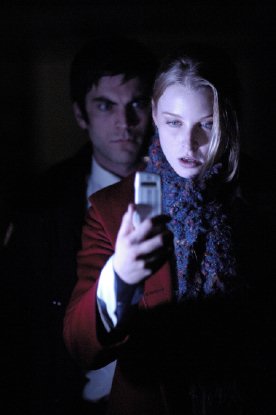
Stalking Via Your Own Cellphone!

(slightly off-topic but important information! EOPC)

Woman's Ex-Boyfriend Stalked Her for Years Using Software on Her Cell Phone

By LISA FLETCHER and COLE KAZDIN

Technology makes it easier to connect with the people in your life, but it can also enable others to connect to you without your knowledge.

People can learn all about your private life through your cell phone, and one woman said she was stalked for three years because of it. Susan, who asked that her real name be kept private because of worry over her safety, said her ex-boyfriend tormented her using only her cell phone to do it.

"He knew where I was all the time," Susan said. "If I was at dinner somewhere. He would text me and ask me how dinner was. I had no idea how he knew where I was."

Most people know that the GPS in a cell phone can track your every move, but that's just the beginning. Widely available software that can be installed on almost any cell phone can track not just your whereabouts but also your private conversations and personal information.

"I thought I was going crazy," Susan said. "It's just unnerving knowing that somebody 24/7 knows where you're at, what you're talking about, what's going on, everything about you."

At the time, Susan didn't know that her ex-boyfriend installed spying software on her phone when she wasn't looking. Once installed, he could be anywhere -- even in a different state -- and follow her every move.

But what was worse, it didn't just track her whereabouts. He could listen in on her phone calls, read her text messages and turn her personal cell phone into a bugging device. From anywhere, he could activate her speaker phone and listen to everything she was doing.

"He would text me, 'How was dinner? Was the date good?'" she recalled.

Susan's ex-boyfriend would also show up places where she was. She feared for her life and called the police, who put her in protective custody. When her ex-boyfriend violated the restraining order, he was put in jail on felony stalking charges.

"He had every intention of killing me," she said. "Within 20 minutes of getting out of jail, he was outside my hotel room."

Security expert Robert Siciliano says he gets countless e-mails from victims of cell phone spying.

"When somebody remotely activates your phone, you're not going to know it and they can use that phone to monitor the conversations in the room you're in," he said. "Your phone could be sitting next to you while you are watching TV, and somebody can actually log into your phone and can actually watch what you are watching on television."

Cell Phone Spying Software Affordable, Powerful
A 2009 report from the Department of Justice found that one-quarter of the 3.4 million stalking victims in the U.S. reported cyberstalking, and GPS technology and other forms of electronic monitoring were used to stalk one in 13 victims.

"GMA" found thousands of sites promoting cell phone spying software, boasting products to "catch cheating spouses," "bug meeting rooms" or "track your kids." Basic cell phone spying software costs as little as $50, but for a higher price the software enables anyone to do exactly what Susan's ex-boyfriend did.

"Someone can easily install a spyware program on your phone that allows them to see every single thing you do all day long, via the phone's video camera," Siciliano said.

"GMA" spent $350 to get the features that remotely activate speaker phones, intercept live calls and instantly notify you every time a call is made.

We installed the software on a colleague's phone, with her permission, and sent her out to see how it worked. We were able to intercept and listen in to a live phone call without her knowledge, and she didn't even have to be on the phone for us to spy on her. We could also turn her phone into a remote listening device no matter where she was. If the phone was on, we heard everything she said.

"This is no sci-fi flick," Siciliano said. "This is the real thing and it's happening to people right now."

It's perfectly legal to sell the software but not necessarily legal to use it, although that's in the fine print.

For people like Susan, the laws, which vary from state to state, haven't caught up to the technology. Police say there aren't specific laws on the books to address this type of stalking, as opposed to the physical stalking that led to the restraining order.

When it comes to cell phone spying, "The cops kept telling me there's nothing we can do," Susan said. "He's not breaking the law."

Protect Yourself from Cell Phone Spying
Susan changed her number 10 times, but it didn't help because the spyware was on the phone itself.

"I'd go and change my number at the cell phone store, and he would be calling me on my way home on my new cell phone number."

After three terrifying years, Susan realized the software was on her phone. She got a new one and it seems the nightmare has ended.

"You're never the same after this," she said. "I think you become a lot more aware of your surroundings, you're not as trusting. You just make it day to day and keep living."

Safety experts say that if you believe you've been the target of cyberstalking, trust your instincts and ask for help.

Indications that spyware might be on your cell phone:
  • The screen lights up for no reason
  • The flash on the camera goes off when you're not taking a picture
  • You notice ambient noise in the background when you're on a phone call
  • You repeatedly get strange text messages from an unknown origin

Tips:
Never let your cell phone out of your control -- spyware can be installed on it in as little as a few minutes.

If you think spyware is on your phone, security expert Robert Siciliano says you have two options: Get a a new phone or call your cell phone service provider. They will tell you how to reinstall the operating system. Reinstalling the operating system should wipe out the spyware.

original article here