UPDATE

AS OF JANUARY 1, 2013 - POSTING ON THIS BLOG WILL NO LONGER BE 'DAILY'. SWITCHING TO 'OCCASIONAL' POSTING.

Showing posts with label united kingdom. Show all posts

Monday, August 06, 2012

"CUCKOLD CASE" - Testing the Limits of the Internet

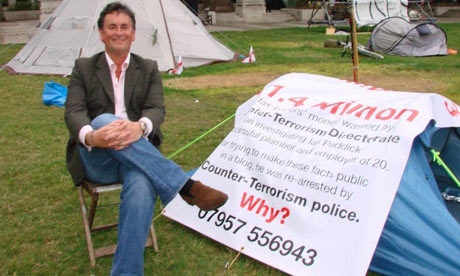
A plumber who used the internet to highlight his wife's affair with a director of one of the world's largest financial companies will appear in court on harassment charges. Lawyers believe the case could help define the limits of free expression on the internet.

Ian Puddick, 41, from east London, was incensed after learning that his wife had conducted a 10-year relationship with her boss, a director of Guy Carpenter, a reinsurance company that advises clients on risk management.

Puddick set up a series of websites, a Twitter account and a blog to draw attention to the affair, alleging that the director, who he named, was pursuing an affair with his wife on the company's time and expenses – a claim rejected by Guy Carpenter. The company maintains Puddick's actions forced the director to leave his position due to stress.

Puddick's legal team are expected to use the three-day hearing at Westminster magistrates court to examine the actions of the City of London police, which dispatched its serious crime unit to raid his home and office in search of evidence.

Puddick's legal team is seeking to summon a number of Guy Carpenter's executives to appear at his trial, a move that promises unwanted publicity for a company that likes to keep a relatively low profile. Internal Guy Carpenter emails obtained by Puddick's legal team and seen by the Observer show that the firm employed a subsidiary – Kroll, a global private investigation agency used by many blue chip companies – in its quest to establish that Puddick was waging a harassment campaign.

Kroll briefed Guy Carpenter executives that the police had "offered significant assistance" in dealing with Puddick, whom it believed might be "dangerously unstable". One Kroll director emailed several Guy Carpenter executives on 23 July 2009, following a meeting with City police. "They … warn that the penalties for harassment are not very severe, unless you reoffend, and that the prosecution will be out of our control once the police and the Criminal Prosecution Service agree there is a case to answer. We should remember Puddick may relish the prospect of a day in court."

The email continues: "The civil route has the advantage of us being able to cease the prosecution at any stage, and tougher penalties. However, if the police take this on we can avoid being seen to have any role in prosecuting Puddick, which also has advantages. One way to combine the two may be to talk to Puddick post arrest, and warn him of our options in the civil courts to stop him reoffending."

The case is likely to be watched closely by legal and media experts as the battle to regulate what is disseminated over the internet is waged in the courts. Recent cases involving new media and super-injunctions have also raised questions on whether regulating the net inhibits freedom of speech.

Michael Wolkind QC, representing Puddick, said his client intended to defend his actions. "This case is about Mr Puddick's right to express his feelings about another person's immorality. Ian Puddick dared to speak out about his wife's affair and it has cost the public £1m for the extraordinary investigation carried out by an unusually enthusiastic police alongside an elite security firm."

Puddick's legal team say his home has been burgled and files were stolen as well as some valuables. However, following a police investigation, there is nothing to suggest that Guy Carpenter or Kroll were involved in any illegal activity.

Puddick is now reconciled with his wife.

• This article was amended on 12 June 2011


original article here

As seen in the U.S.A.'s First Amendment decision on the Westboro Church ruling, Puddick would be covered by Free Speech in America. As long as one makes NO threats AND publishes NO personal information such as phone, address, city, children, spouse, jobs etc... they are covered in the U.S.A. by the First Amendment.

Saturday, January 21, 2012

The Shadow of Fear

fear:'( Pictures, Images and Photos

The shadow of fear that stalkers leave on their victims

by Grace Hammond


Jennifer Aniston recently had a restraining order issued against 24-year-old Jayson Peyton, who staked out her home for eight days and was found to have duct tape, dvds of her films and a sharp object in his car.

The story made the headlines and saw the former Friends star join the likes of Halle Berry, Mel Gibson and Gwyneth Paltrow, who have all been victims of stalkers.

But it is not just Hollywood A-listers who suffer what can be a terrifying experience. More than 1.2 million women and 900,000 men are stalked in the UK every year and in the worst instances, stalking can lead to violence, criminal damage, rape or even murder.

One of the most chilling cases in recent years involved German office worker David Heiss who murdered British student Matthew Pyke in a sustained and savage stabbing attack after becoming obsessed with his Yorkshire girlfriend, who he had met in the chatroom of a war game website.

Thankfully, such horrific cases are rare but for anyone who has been the victim of stalking it can be a traumatic ordeal. "People think stalkers are strangers lurking in the bushes, but research shows 50 per cent of stalking cases involve ex-partners," says Jane Harvey, from the charity Network for Surviving Stalking. "Anybody who deals with the public is more at risk – I was speaking to a teacher recently who was being stalked by the mother of a pupil."

Ms Harvey says stalking can have a huge impact on lives – making people feel panicked, depressed and lonely.

"It affects your relationships, your ability to trust people and to function as a normal human being."

At present, the only law against stalking is The Protection from Harassment Act 1997 and although the law in the UK doesn't define what stalking is, Harvey says it "could be someone phoning you repeatedly, emailing you, following you, sending you presents or other 'gifts'."

Experts believe the rise in reported stalking incidents over the last decade is, in part, down to the development of the internet and mobile phones which have made it easier for stalkers to prey on their victims. But while celebrity figures like Jennifer Aniston are quick to contact the police, research in the UK has shown that 77 per cent of victims didn't report they were being stalked until more than 100 incidents had happened.

The story of Jemma, whose name has been changed to protect her identity, makes for unsettling reading. She met a man on a dating website who shared her interests. She was excited but wary. "He was my first internet date and I'd arranged to meet him in a public place – just as you're supposed to do," she says.

After a couple of dates, she decided to end their relationship which is when the emails started. "They pleaded for another chance, saying we'd both regret it if we didn't try again, but the emails continued, becoming stranger and darker. It frightened me."

He kept phoning in the middle of the night and threatened to come round if she wouldn't meet him. It left her feeling vulnerable and frightened. "I was finding it impossible to concentrate on work."

She called the police and her stalker was finally arrested and given a restraining order. But the stalker posted a fake profile on the same dating site and got in touch with Jemma asking to meet. "I was horrified he'd invented a new identity to harass me again."

He was finally caught by police again and they fitted a panic alarm in her home. But the experience has left her shaken. "How many more people are out there, creating false identities and stalking their victims under the cover of websites?"

Jane Harvey says if someone is making you feel uncomfortable then you should trust your instincts and go to the police. "Victims themselves don't take stalking seriously. If someone walked up to you and punched you in the face, you'd go to the police. But stalking can happen more slowly, a few texts one day, a few the next week."

There are basic precautions that anyone can follow, such as limiting the amount of personal information they put on the internet and social network sites like Facebook.

But the advice is simple – never confront a stalker, and keep a record of any text messages, emails and letters as evidence to help the police.

For more advice and information in the U.K., visit the Network for Surviving Stalking, http://www.nss.org.uk

original article here

Friday, December 02, 2011

Over 200,000 in Britain Duped by Online Dating Scams


by Peter Walker

(U.K.) Number of unreported cases likely to be far higher as individual losses range from £50 to £240,000

More than 200,000 people in Britain may have been conned by fraudsters posing as would-be romantic partners on internet dating sites, according to the first study examining the potential scale of the problem.

Anti-fraud groups have warned for some time about scams, in which criminals create a false identity – often an army officer on active service, explaining an inability to meet in person – and develop a close online intimacy with a victim, who is then asked for cash to help their presumed suitor out of a crisis.

It had long been suspected that official figures for such crimes greatly under-represented their prevalence, largely because many victims feel too embarrassed or hurt to go to the police, or never realise they have been conned.

The study by the universities of Leicester and Westminster, working with the Serious Organised Crime Agency (Soca), found 2% of people surveyed personally knew someone who had experienced the crime. Extrapolating this to the online UK population means more than 200,000 potential victims.

Monica Whitty, a psychologist and professor of contemporary media at Leicester University, said that the pool of those targeted was likely to be greater still as it did not include people who realised what was happening before they lost money and those who still did not realise they had been conned.

The researchers had been "shocked" at the numbers involved, she said.

There has been an assumption that victims tend to be middle-aged women. However, said Whitty, targets were from both genders and all age groups.

Aside from the financial costs involved – Soca has tracked individual losses ranging from £50 to £240,000 – those conned also faced the heartbreak of discovering that the person with whom they had fallen in love was the invention of a skilled con artist, usually Nigerian or Ghanaian, and often not even of the same gender.

"A lot of people find it very hard to accept what has happened, even if they know the person involved is now in jail," Whitty said. We've had male victims who still refer to the other person as 'she', even though they now know it was a man. In a few cases they've found the relationship so therapeutic they keep it going, even if they know they've been conned."

The scams often begin with an online dating site profile carrying a notably attractive photo, taken from elsewhere on the internet, and a description of someone in a remote, hard-to-contact location – whether a military base in Afghanistan or, to tempt male victims, a UK or US nurse at a small foreign hospital.

The use of almost exclusively online communication – the criminals occasionally resort to phone calls but these are rare given the extra difficulty of explaining away an accent – can actually accelerate intimacy, Whitty said, allowing victims to project their own hopes and desires on to a warm and empathic correspondent.

"Email and instant messaging can have the effect of being hyper-personal. Lots of people get in touch with someone through a dating site, meet them a few weeks later and this person doesn't live up to their expectations. With an online relationship this never happens."

The faked romances can last for a long time – the longest the researchers heard of was five years – with each criminal juggling a series of parallel relationships. At some point comes the request for urgent financial assistance, often to help them out of supposed difficulty.

"They might test the waters by asking for a present, for example saying they've lost their mobile phone and need another one. If this happens, they'll ask for money. It's like a clever marketing ploy."

Very few cases are seemingly reported. A spokesman for the UK's National Fraud Authority said the agency had learned of 730 crimes over the past 15 months, totalling £8m in losses.

The survey, covering more than 2,000 people, found that just over half were aware that such romance scams existed.

While this was a positive sign, Colin Woodcock of Soca said, significant numbers of people remained at risk.

"The perpetrators spend long periods of time grooming their victims, working out their vulnerabilities and when the time is right to ask for money," he said. By being aware of how to stay safe online, members of the UK public can ensure they don't join those who have lost nearly every penny they had, been robbed of their self-respect, and in some cases, committed suicide after being exploited, relentlessly, by these criminals."


How to spot a dating scam

Soca has compiled a list of tell-tale signs for people to look out for if they suspect their internet suitor is a con artist.
• A distant location and/or a job in the military: by pretending to be serving in, for example, Afghanistan, or on an oil rig, the scammer has a convenient excuse for being unable to chat on the phone or in person. When men are targeted, the other party often tends to be a nurse working in a remote country.

• A fondness for Windows Messenger or similar applications: aware that dating sites are increasingly conscious of such cons, the perpetrators can be keen to continue their wooing elsewhere.

• A suspiciously attractive and/or rugged-looking photo: of course, not every good-looking person lurking on a dating site is a fraudster. But the con artists tend to select particularly alluring physical alter egos, which they borrow from elsewhere on the internet.

• A quick adoption of a pet name: if, by the second email, you are being addressed as "dearest fluffy bunny", beware – it could be a fraudster looking to establish instant intimacy.

• A predisposition towards financial or other misfortunes: it is perhaps the most obvious tip, but if a suitor you have never met suddenly crashes their car, or needs an expensive airfare or a lawyer, be on your guard. The same goes if they start alluding to gold bullion or suitcases full of cash they hope to bring to the U.K.

original article found here

Wednesday, May 12, 2010

Peter Berry: Romeo Rogue & Internet Seducer

By Angela Levin

Sara Terry claims she wasn’t really looking for someone to love when she agreed to her friends’ suggestions to try internet dating.

But when an email landed in her inbox from a man who seemed to be her mirror image, she admits her pulse began to race.

They had a similar view of life, enjoyed the same sports and both were dog owners with much-loved Labradors.

So it was no surprise that, when she met Peter Berry a few weeks later, his charm, wit, impeccable manners and soft green-blue eyes melted her heart.

What’s more, the feeling seemed mutual. ‘Wow!’ he texted her straight after they parted. ‘I cannot believe we have so much in common.’

Within a couple of weeks he had proposed marriage and moved in. ‘I felt I had met the right man,’ she says. ‘He was so warm and funny.’

Today, eight months later, she is alone, a stone lighter and £35,000 the poorer, a victim of one of the most prolific fraudsters ever to be dragged before the British courts.

For 20 years Peter Berry has made a specialty of preying on single women in their 30s and 40s.

Using newspaper adverts and internet dating
sites he seduced then fleeced them.


The total amount of money he has stolen is incalculable, much like the scale of emotional damage he has wreaked.

No one knows how many women he has conned, either, but the victims probably number in the hundreds.

So peculiarly unpleasant is his style of operation that most of them remained silent out of embarrassment.

He took £35,000 from his first wife and left his second, the mother of his child, bankrupt. She is now in hiding to avoid contact with his family.

Berry has helped himself to five-figure sums from fiancees in America and girlfriends in Europe, including £28,000 from a girlfriend in Tayside.

He has even taken £100,000 from his mother. Nothing, it seemed, could stop him, as he moved from city to city, country to country in search of fresh victims – until, that is, Sara Terry decided to take him on.

With the help of the police in Cornwall, she mounted a dogged pursuit of a man who also uses the names John Keady, Taz Keady and even sometimes calls himself ‘doctor’.

Last month, he appeared at Truro Crown Court pleading guilty to eight counts of deception and fraud involving eight separate victims, including Sara.

The investigating officers believe this is just the tip of the iceberg.
‘There could be hundreds more victims,’ says Detective Constable Derek Farrow, who led the case against Berry.

‘Many, who are high-powered lawyers, GPs, fund managers, senior civil servants and businesswomen, haven’t wanted to press charges in case it affected their careers.

‘I believe that Berry is an accomplished, cold and calculating villain who could easily have taken more than £1million.

‘He is just brilliant at gaining people’s confidence and creating an image of a successful, affluent man.’

So brilliant, in fact, that he even persuaded someone like Sara. An articulate and attractive 42-year-old divorcee, she would not seem an obvious ‘victim’.

Like many women of her age, though, she is fully occupied. She looks after her young children on the South Coast and works in a chandler’s.

So, like countless others, she found it easier to click on a dating website at a time which suited rather than attempt to meet suitable men in crowded bars or clubs.

This is how she found herself on a website called Fitness Singles in October 2008.
‘I love challenging sports and thought I would meet a more genuine person than someone who just wanted a date or two,’ she says with a rueful smile.

‘I didn’t upload any photographs on my profile but said I enjoyed sailing, horse riding and had a dog.

'Pete emailed that he was 40 – he was actually three years older – a very successful business consultant and interested in the same sports as me.

'He even had a photograph of him sailing on his profile.’

After weeks of increasingly chatty emails, Sara agreed on a date at nearby Langstone Harbour, along the coast from Portsmouth.
Physically he was no Casanova. ‘He was 6ft 2in, weighed about 20 stone and looked like the cartoon character Shrek,’ she says.

‘But he had such warm eyes, we had so much to talk about, he was so interested in me that, to my surprise, I found him very attractive.

‘He was attentive, flattering and very funny, which are all the qualities a woman likes.’

A second meeting, a walk on a beach with their two Labradors, went even better and on the third date he asked if he could come to her home, a detached property in a picturesque Hampshire village.

He also told her that although he was in Cornwall looking after his widowed mother, he was planning to relocate to Hampshire to be closer to London and his work.
‘I agreed because the children were spending the day with their father,’ she says.

‘Then, late in the afternoon, he told me he was asthmatic and having trouble breathing.

‘He said that he didn’t have very good lungs because he had fallen out of boats so many times and that if he went to hospital he knew from experience they would keep him in for at least a week, which would wreck a business deal.

'Nor was he well enough to drive five hours to Cornwall. He even started crying as he said “please don’t make me go”.’

She shrugs. ‘I agreed he could stay and for the next five days he had me running around after him. We shared a bed, but didn’t have sex.

'He also said he wanted to marry me and I felt really excited. We had so many common interests, I felt I had met the right man.’

Why did this remarkable turn of events fail to ring alarm bells? She has no ready answer, although it is possible that, in her heart, she really wanted to settle down, and shut her eyes to the danger signs.
'He also said he wanted to marry me and I felt really excited.’

She continues: ‘He then left for Cornwall but returned a few days later and just moved in. I didn’t question it because he overwhelmed me by organising one activity after another.

'I wasn’t working at the time and he said he was enjoying a break after several successful business deals so we spent lots of time sailing.

‘He taught me how to kayak, which I loved. He also said he wanted to buy a house for us and we went round looking at several £3million-plus properties.

'I admit that I was smitten and quite overcome.’

It was during this time that she slept with him. But shortly afterwards he began giving her mixed messages.
‘On the one hand he was tactile, but then told me he had a low sex drive and kept making excuses for us not to be physically together.

'He talked about his strong Catholic background, which I later discovered had been exaggerated, and also claimed his eczema was playing up and that it was painful to touch me.

'I didn’t like to make a fuss as there are more important things than sex, but I was also concerned as I didn’t want a non-physical relationship.

‘He began going out in the evening. He told me he was attending business meetings but I later discovered he was seeing other women.’

Just before Christmas 2008, she took her children on a family holiday with her former husband, a property developer, but agreed that Berry could stay in the house. Worse still, she lent him her credit card.
‘I had asked him several times what he wanted as a Christmas present but it was only late on Christmas Eve that he finally suggested a kayak.

I thought it was a brilliant idea but as I didn’t have time to sort one out suggested he did the research and put the cost on my credit card.’

Not only did he buy a kayak he also took out an annual subscription to Zoosk, another online dating site.
‘He also managed to work out details of my two bank accounts,’ she says.

‘He phoned the bank while I was away, pretending to be me, and put up my credit limit.
Because I use direct debit as much as possible I wasn’t in the habit of checking my bank statements, something I now realise was quite wrong.’

'I know not to sign something you don’t read but we were engaged and living together so I did.'

On her return, he became more daring, claiming he wanted to take her on an adventure holiday for her birthday.
‘He said I had to sign a personal liability disclaimer for the travel company but wouldn’t show me the details as he wanted to keep the destination secret.

'I know not to sign something you don’t read but we were engaged and living together so I did.

'I later discovered it was a loan application to the bank for £15,000.’ She is currently paying it off at £400 a month for 47 months.

In mid-April, her purse and credit cards went missing and she at last became suspicious.

On impulse she rang to check the balance on her current accounts and credit cards.
‘I was told that each of my two bank accounts was about £1,000 overdrawn and that I owed about £9,000 on my credit cards.

I felt my whole life had stopped. I immediately cancelled the cards and when the bank employee said, “What about the loan?” I replied, “What loan?” When they told me I could hardly speak.

'All I could think of was how was I going to feed my children. I then rang Berry who gave me a long explanation of a business deal that went wrong and how he would pay me back handsomely “any moment now”.

'I felt such a fool and for the next two months stayed at home feeling depressed and ill.

‘I gave him time because I thought if I kicked him out straight away I would have no chance of getting my money back. By mid-June I’d had enough.’

She then did what so few of his victims had dared to do before, and complained to the police.
‘I told them what had happened and arranged to call 999 when he next showed up,’ says Sara.

When he did, they came to arrest him and all he said when they marched him off was to ask me to look after his dog. I haven’t seen him since.

She then did some investigation of her own. ‘I got in touch with the people who had been with us on kayaking trips and all the friends on his Facebook account, and told them about what had happened.

Men and women came back to me and I discovered that at least three women were involved with him at the same time as me and had also lost money.’

He had, for example, taken nearly £15,000 from Mabel Arnhill, a 32-year-old businesswoman and member of his kayaking club.

Berry called himself Dr Teady and, promising to buy her a kayak, got her credit card details and emptied the account.

Sara found herself working alongside Detective Constable Derek Farrow in Saltash near Plymouth and it is thanks to his research and Sara’s bravery that Berry has finally been convicted.

Up until 2008 a few women had reported him to their local police.

But the complaints were treated as isolated incidents and, with Berry moving around, nothing was done – as Lynne Martin, Berry’s former girlfriend from Tayside, knows only too well.

She reported him after losing the best part of £30,000, but got nowhere.
Lynne, now 40, says: ‘He was a real seducer. He’s very good at it. But I think career women are more vulnerable.

'When men put a lot into their work and don’t have partners or children they are admired, whereas women feel under pressure to have it all and get anxious about finding a partner while they are of child-bearing age.

'If you say you are interested in something he, chameleon-like, says he is too.

‘I reported him to the police but here in Scotland they said it was a civil matter and took no interest.

'I took out a private prosecution which I won, but I haven’t been able to get my money back.

'I felt so awful that initially I was suicidal and lost all my trust in people. It has taken me a long time to recover, but I have finally found someone I believe I can rely on.’

Between 2008 and April of this year DC Farrow has been tracking Berry’s victims all round the world.

He has spoken to Berry’s sister – who has disowned him – and Berry’s mother, herself a victim of his fraud.

Much about Berry remains unfathomable, such as how he has spent the vast sums he defrauded, what has driven him to destroy the lives of those around him, or why it is women he chooses to humiliate.

No one from Berry’s family was willing to comment. But close family friends are mystified by his behaviour.

His upbringing is understood to have been warm and loving. Berry was born in Callington, Cornwall, and at six months was adopted by a naval medic and his wife.

On leaving school at 16 he got a job in the naval dockyards in Plymouth. But that was a brief stay, and he has never been able to hold down a regular job since.

There may be some light shed on this question when he is back in the dock for sentencing in two weeks’ time.

Berry might well be jailed, but it is unlikely to be a long sentence.

Although still suffering from anxiety, Sara seems to be recovering.
‘At first I was very cross with myself but I have fought against becoming bitter and untrusting,’ she says.

‘I admit I was naive, but there isn’t a law against that. He, not me, should feel embarrassed about what he has done.’

Although, she feels, there is little chance of that.
Monday, April 26, 2010

Stalking & Googling Someone 40,000 Times = 16 Weeks in Jail


By Arthur Martin

An ‘obsessive’ TV producer who stalked a former classmate for more than seven years was jailed for just 16 weeks on Monday.

Elliot Fogel, 34, subjected Claire Waxman to an ‘unimaginable’ ordeal by following her, breaking into her car and making hundreds of late-night phone calls to her home.

A search of his computer revealed he had Googled his victim more than 40,000 times in one year. But despite a judge ruling that Fogel’s actions had caused ‘mental harm’ to his victim, a police source revealed that he could be free in as little as six weeks.

Mrs. Waxman, 34, a complementary therapist from North-West London, attacked the sentence as too short and called for tougher jail terms in stalking cases.
‘I will get a couple of months’ respite at best, but I am under no illusion that he will be out of jail soon and the harassment will start again,’ she said. ‘What we are looking at here is an obsessive person who is highly likely to reoffend.

'There is currently not an appropriate sentence for stalking. This obsession started 20 years ago and it’s not going to suddenly stop after a few weeks in jail.’

Wood Green Crown Court in North London heard how Fogel – a freelance producer at Sky Sports News and Capital Radio – first developed an unhealthy interest in Mrs Waxman while they were students at a college in St Albans, Hertfordshire.

She repeatedly told Fogel to leave her alone and, after leaving college in 1993, heard nothing more from him. However, ten years later, she received a dinner invitation from him, which she declined.

A few months later, in December 2003, Fogel, from Isleworth, West London, was spotted jogging on the spot outside her home and also began to spend increasing amounts of time hanging around her workplace.

Mrs Waxman told the court she felt ‘like a sitting duck’ as Fogel continued to follow her and make phone calls to her home.

After his arrest, a police search of his computer revealed he had also managed to get hold of Mrs Waxman’s wedding photographs and had a Google Earth aerial map of her home.

Further investigation found that he had paid for background searches to be carried out on Mrs Waxman’s husband Marc and her father, and that he had posed as a prospective parent at the nursery her daughter attended.

Jailing Fogel for 16 weeks after he admitted breaching a restraining order, Judge Fraser Morrison said:
‘Mrs Waxman wants some peace from you because you weren’t able to take the hint that any relationship you wanted with her was not going to take place.

‘You’re not an unintelligent man but you didn’t take the hint. She wants you out of her life.’

In a 16-page written impact statement to the court, Mrs Waxman described how she had suffered a miscarriage, developed an eating disorder, and had to move home five times as a result of her seven-year ordeal.
He has nothing in his life and all he chooses to do is pursue me and my family,’ she wrote. ‘Though there has been no physical harm, the mental harm of all these years is getting too heavy to bear.

‘My life has been ruined by this man in so many ways and yet no one can help us nor protect us.

'Instead of preventing something terrible from happening, I feel like we’re being left like sitting ducks waiting for something to happen.

‘He has said time and time again that he will leave me alone and yet never does. He still feels he is allowed to do what he wants because he has no moral compass.

‘He has no respect for me, my family, the law and I feel not even himself. Fogel is mentally unwell and has an obsession with me – he needs medical attention.’

Police have been unable to take tough action against Fogel because he has not made any physical threats to his victim. It means that officers have been able to use only anti-harassment laws to curb his campaign.

Saturday, January 16, 2010

Snow in U.K. Boosts Website for Adultery!

Britons snowed in by the wintry weather have been flocking to an extra-marital dating site in the last 24 hours.

IllicitEncounters, which provides a platform for married people to conduct affairs, said on Wednesday it has seen an unexpected increase in visitors over the past 24 hours, and received a record number of new profiles on Wednesday morning.

The website said most new members are registering from areas worst hit by this week's extreme weather, including Hampshire, Berkshire, and the West Country, and the site has taken on several temporary staff members to cope with the rush.

"In light of these figures, I'd be interested to see how much work those 'working from home' have actually done," IlicitEncounters.com spokeswoman Sara Hartley said in a statement.

"Perhaps these wives and husbands have just been waiting for a time when they could join, away from the eyes of their work colleagues and, most importantly, their partners..."

The website said it has gained 2,567 new members in the last six days, suggesting that January will be its busiest month ever.

It says it has more than 350,000 members in Britain and that its aim is to create a safe and nonjudgmental environment where married men and women can meet each other.

Saturday, October 31, 2009

Cost of CyberCrime in the U.K. = £390million (U.S. $646Million)


Businesses have been warned that internet crime is costing Wales around £390m a year.

The revelation comes as about 400 business leaders and experts gather for a summit to tackle the growing problem.

The event, organised by e-Crime Wales, brings together the assembly government, experts and police forces.

It says cyber crime can hit unlikely victims, like Nefyn and District Golf Club in Gwynedd, which was targeted by hackers from the former Soviet Union.

Criminals from ex-Soviet bloc countries such as Latvia and Estonia set their sights on the club on the Lleyn peninsula last year.

"What they were trying to to is hack into the computer system and steal data," explained Simon Dennis, the club secretary.

"We were somewhat shocked that organised crime, which in essence is what is behind these types of attacks, would target somewhere like Nefyn and District Golf Club.

"Initially, we thought it was somewhat of a hoax, whereby groups of youngsters etc, would be trying to break in to the system.

"But once we were able to back-check and validate the addresses, we found it was [coming] from the former Soviet Union - and that's when we really took the threat quite seriously."

The golf club managed to fight off the cyber attacks, without its data being compromised.

Danger signs
But dealing with the e-criminals came at a price. The club had to hire a computer specialist to beef up its technical security, landing it with a bill of more than £10,000.

It was a classic example of what can happen in the speedy world of electronic communications, according to e-crime Wales.
“ People are aware that there are problems out there, but I don't think they ever truly believe it is going to happen to them ”
Acting Det Sgt Andrea Barnard, e-Crime Wales

"I think the issue with the internet is who is responsible for what, in terms of safety, in terms of security, in terms of ownership," argued Simon Lavin, e-Crime Wales' strategic planning manager, who put the estimated cost of cyber crime at about £390m.

"If you use the analogy of road safety, I think we've all got used to it over the last 100 or so years that the car has been around.

"In terms of the internet, that's not clear at all.

"If you went in to town on a Friday night, you wouldn't walk down a dark alley, you recognise a dark alley as being dangerous.

"In the field of e-crime people don't recognise the danger signs."

In the push to get its message over, this year's e-Crime Wales summit is attracting speakers from the FBI, Interpol, and computer giant Microsoft.

It is also an opportunity for Wales' first e-crime police team manager to offer her advice.

'Stay safe'
Acting Det Sgt Andrea Barnard of North Wales Police recently took up the post, becoming a point of contact for businesses, the police and the assembly government.

"I think people are aware that there are problems out there, but I don't think they ever truly believe it is going to happen to them," she explained.

"Therefore they don't act, they don't take measures to protect themselves from e-crime.

"I would just like businesses in north Wales to be aware that e-crime can happen to anybody.

"But having said that - for them not to be totally frightened by that. Come and seek advice.

"Come and have a chat to us and we can explain the fundamentals of e-crime and how to stay safe."

original post here

Saturday, October 24, 2009

Queen's Cavalry Officer is an Internet Predator

Internet Pervert Pictures, Images and Photos

By Mazher Mahmood

(United Kingdom)A Queen's Cavalry officer is today exposed as an internet pervert who hosts orgies in his royal barracks flat

By day Captain Tari Mundawarara proudly leads the Changing of the Guard as hundreds of tourists watch on Horse Guards parade.

But at night the soldier - who trained with Prince Harry - trawls sex sites, offering girls behind-the-scenes royal tours as bait.

Bragging that he's part of the Queen's bodyguard, seedy Mundawarara's chat-up line is: "How would you like to get ****** by a cavalryman in a royal guardroom?"

He's also prepared to INSULT the Queen - joking that she's "definitely not totally with it" - and BREACH SECURITY, giving away secret details of her movements to lure women.

But we caught the officer off-Guard after receiving a tip-off about his activities on the internet from a site user.

He had boasted to her: "I'm an attractive well built and sexy professional black male, 32 years old and good in bed. I'm open to the idea of playing with couples . . . if you're lucky I might wear my uniform."

Mundawarara sent snaps of himself in Life Guards uniform - including one on his horse - to impress her before offering her sex in the royal guardroom.

Then he asked the girl to bring along another blonde friend for a threesome. "I have not had two blondes before. I've had a brunette and a blonde," he bragged. He said he had to have his romps where he worked so he could be on call "in case the Queen comes".

He arranged a meeting with our undercover reporters, posing as swingers, in the Clarence pub in Whitehall on Wednesday after his last parade. Downing white wine, the polo-playing Zimbabwean mouthed off about his royal duties with the Household Cavalry.
"We are the Queen's bodyguards. We're going to Windsor next week because the President of India is coming," he said. "We'll pick up the Queen and whoever it is and take them to Buckingham Palace."

"She's in the Palace today and she's going to Windsor on Friday," Mundawarara added, leaking her itinerary. The disloyal guardsman then gave his verdict on his employer: "She's definitely doddery - definitely not totally with it."


He told our couple he trained to command tanks alongside Prince Harry three years ago - and said he even warned him to curb his drinking because driving a tank "is not so easy with a hangover". Mundawarara then led our reporters through the famous Horse Guards arch towards his flat in an imposing building. "You see the top floor, that's my bedroom," boasted Mundawarara. The officer took our reporters to the stables where he posed with his horse, York.

Before long they reached the front door of his flat which carried a gold plaque saying Captain The Queen's Life Guard. Inside the walls were adorned with paintings of horses and officers.

Mundawarara took our couple into his bedroom where his red tunic was on a stand beside his riding boots and near his white plumed helmet. But our reporters made their excuses and left. Later an Army spokesman told us: "We are investigating this incident. A Buckingham Palace spokesman said: "We will investigate any issues relating to the security of The Queen."