UPDATE

AS OF JANUARY 1, 2013 - POSTING ON THIS BLOG WILL NO LONGER BE 'DAILY'. SWITCHING TO 'OCCASIONAL' POSTING.

Friday, August 17, 2012

WHY PEOPLE SEEM ANGRIER ON THE INTERNET

By Makini Brice

When the internet saw its rise in prominence, many worried that people would retreat to their own corners, surrounded by people who believed exactly the way that they did. To a large extent, that has happened, as evidenced by Fox Nation and Daily Kos. But the internet also gave rise to the "troll," so-called for internet users who spout views contrary to the site's readers. And with that has come cyber-bullying.

This week, a 17-year-old teenager was delivered harassment warnings due to his harassment of Olympic diver Tom Daley. Tom Daley stated that he wanted to win the gold medal to honor his father, who died of brain cancer last year. When Daley failed to medal, the 17-year-old tweeted, "You let your dad down I hope you know that."

There has been a lot of analysis of the victims of the cyber-bullying that can run rampant on various internet websites. It has been well-documented that victims suffer from decreased self-esteem. But very little seems to be concluded about the perpetrators themselves. Who are trolls? And why do they do it?

Alan Manevitz, a clinical psychiatrist at New York City's Lenox Hill Hospital, theorizes that people feel a freedom of speech that they cannot feel elsewhere, where there are few, if any, consequences. Indeed, the vast majority of people who shout venomous words in all caps on the internet do not face any repercussions. When schools, for example, try to dole out punishment for perpetrators of cyberbullying, some are met with cries of foul play.

Some trace "trolling" to the anonymity of the internet. Maybe that is true to an extent, but certainly not completely. This week, the Real Housewives of New Jersey Facebook page was littered with comments on how much they hated Milania Guidice, the five-year-old daughter of a Real Housewives cast member. All of the vitriol came from people whose names were attached to their Facebook accounts.

Many psychologists believe that the level of attacks is increased when a person cannot see the face of the person that they are attacking. One recent study found that contestants on a game show were more likely to criticize fellow contestants if they were in a different room rather than in the same one. Robert Milgram's 1950s-era experiments shed light on people who were more likely to give people potentially lethal doses of electric shock when they could not see them. Later replications of Milgram's studies found that his conclusion was less likely to be true if people identified more strongly with the student receiving the shocks.

Simon Rego, the director of psychology training at New York City's Montefiore Medical Center and Albert Einstein College, explained to Health magazine that our brains are hard-wired to take into account non-verbal cues, like body language, tone, and facial expressions. On the internet, all of those cues are removed, heightening many people's response and level of discourse.

Rego suggests pausing before sending an angry email, or to envision the person on the other side. After all, many states have cyberbullying laws in place – and no Twitter exchange can be worth ending up in handcuffs.

Thursday, August 16, 2012

ONLINE TARGETING & HARASSMENT


by Aidan Maconachy

(excerpts)

Most internet harassment goes on in chat rooms, messageboards and newsgroups, also via email. Internet law has tightened up since the early free wheeling days when there were very few controls in place. For example it's become a federal crime in the US to anonymously "annoy, abuse, threaten, or harass any person" via internet or other telecommunication systems. So it's on the books, if people choose to go after the bullies.

Depending on the stealth method used, you might be able to acquire additional info about the source of the attack. Legitimate services such as "nslookup" and "tracert" enable users to track hosts, IP addresses and MAC addresses. There are also professional services you can enlist that use the information you provide to dig for additional info. Make sure they operate within the law, as some are little more than hackers-for-hire.

As in any ordinary case of harassment, it's important to build the case and gather the evidence. Don't release any of this material to the person you suspect is behind the abuse, until and if you are prepared to go the distance.

If you are concerned about your privacy and reputation, it may be advisable lower your profile. Often disengagement and non-reaction stops harassment because most cyber trolls and bullies get their jollies from the belief that they are ruining your life.

If there is no hidden history or baggage you are anxious to keep confidential i.e. criminal record or criminal activities, then continue to put your best foot forward.

It really comes down to the individual in the end. If you've nothing to hide - you have nothing to fear except fear itself.


OUR VICTIMS WHO HAVE POSTED THEIR EVIDENCE
(all long but WELL WORTH A READ)

(because they have nothing to hide! their Cyberpaths do!)

Lissa Daly is a Cyberpath

Doug Beckstead: Predator

Masks of Sanity

Jason Capozello


(NOTE: What is really sad is that the Cyberpaths REFUSE to read these sites, or only come to EOPC to 'gather evidence' against their victims or apologize & own their behavior. They refuse because it conflicts with the twisted, whitewashed version of things they want to present to the world.


A blog by an exposed harasser:
CLICK HERE

Wonder who is telling the truth? Ask yourself -- what do the Victims above have to gain by admitting they got sucked in & used? Who tells the SAME story over & over - and WHO keeps rewriting, repositioning and revising their "versions of history?" And what do the Cyberpaths have to lose if the truth is out there?)

Wednesday, August 15, 2012

88% ADMIT TO CYBERSTALKING THEIR EXES

by Lesley Ciarula Taylor

It’s way more than "complicated".

A University of Western Ontario masters’ thesis has found a full 88 per cent of people after a breakup stalk their exes on Facebook.

Jilted lovers signed on to friends’ account to spy on the one who dumped them. They deleted pictures of those happier times. They pored over old messages or wall posts. They clicked agonized fingers on the guy or girl who replaced them.

“It’s so interesting right now, so different from before this technology existed. Once you broke up in the past, it was over,” media studies graduate student Veronika Lukacs told the Star after successfully defending her thesis.

Not entirely. “Stalking isn’t really new. It used to involve parking your car outside their house,” her mother told the 25-year-old.

Still, this groundbreaking analysis of Facebook and broken hearts does have serious implications, Lukacs said.

“Nearly everyone is participating in these behaviours, it’s very very common,” she said.

“At the end of the day, Facebook does present very serious challenges for people getting over a breakup. It’s a much more serious issue than a lot of people think.”

Surveillance of someone on Facebook, or “creeping,” didn’t follow the patterns Lukacs expected.

“I had expected people who were not Facebook friends with their ex-partners would be less distressed.

“We found the opposite was true. People who had unfriended their partners had higher levels of distress. Based on interviewing people, I’m thinking that people who are the most distressed are the ones who delete their partners.”

Less surprisingly, the dumped partners who were most upset were also the most avid stalkers and the dumpers were the least upset.

Lukacs surveyed 107 people over age 18 who had experienced a breakup in the previous 12 months. Three-quarters of them were Western students. She interviewed 10 of them.

“A lot of people who I had interviewed talked about their surveillance behaviour and how they knew it wasn’t good for them and yet somehow they were doing it anyway. Rationality didn’t play a role for them.”

One man confessed he had hacked into his ex-girlfriend’s Facebook account. “He never thought he was the kind of person who would do that. He was really embarrassed.”

Among Lukacs’s findings:

• 86.2 per cent agreed or strongly agreed that Facebook is part of their daily routine.

• 70 per cent would use a friend’s account to keep track of a former girl or boyfriend secretly after deleting them on Facebook.

• 65.5 per cent updated their profiles once a month or more. Their number of friends ranged from 69 to 1,800 with 484 as the mean.

• 64 per cent reread or overanalyzed old messages or wall posts from their ex.

• 61 per cent were asked about the breakup when their relationship status changed.

• 50 per cent deleted an ex-partners pictures.

• 38 per cent altered their privacy controls on their Facebook accounts.

• 33 per cent changed their Facebook status to quote a song or lyric about the ex-partner.

• 31 per cent posted a picture in an attempt to make the ex jealous.

• 5.6 per cent posted a slanderous comment.

Lukacs is hoping to explore more aspects of Facebook and relationships with her thesis adviser, Anabel Quan-Haase, but will move her studies in the fall to occupational therapy from media studies.

“I’m interested in well-being. I was always interested in more of the social science side of media studies.”

Tuesday, August 14, 2012

How True Love or Tragedy is Only a Click Away


The Dangers of Online Relationships & Stalking:
How True Love or Tragedy is Only a Click Away

The Story of Kerry Kujawa
Author Raymond Chan was a classmate of Kerry Kujawa's for several years in Sugar Land, Texas. Kerry's tragic story serves as a poignant example of the dangers of online relationships with offline consequences.

An Unexpected Phone Call
Late last April I got a phone call one afternoon from a good high school friend of mine who attended Texas A&M University. Not expecting the call, I good-naturedly asked how things were going.

It was not a social call. There was no good news, and things were not going well.

Earlier that day police had identified the body of Kerry Kujawa, a fellow A&M student and an old classmate that we had gone to school with for years. Kerry's body had been found, badly decomposed and unidentifiable, in a field on a remote ranch in the Texas hill country. The story around Kerry's tragic death would come out over the next day, and its nature shocked all of us who had known him.

Kerry had been having an online relationship with whom he thought to be a young woman under the screen name 'kelly_mc'
, meeting and communicating through an online chat room. Her real name was "Kelly McCauley", and seemed to be a nice pre-law student who was trapped in a destructive relationship, and Kerry was one of those people who wouldn't let her stay in such an emasculating position. They seemed to grow closer and closer over the months, and eventually Kerry started to ask Kelly to meet face to face, so that he could help her. He apparently grew insistent on helping her, and on April 7th, 2000, Kerry left campus to meet her in San Antonio.

A week or so later Kerry's family and friends received an email from Kerry saying that he was ok and would be staying with Kelly for a little longer. Online, Kelly had been telling others in the close-knit chat room that she and Kerry were engaged and would be getting married soon.

In the end, this fairy tale fantasy would prove to have been a terrible tragedy. A couple weeks later Kerry's friends started to worry about his continued absence from school and field a missing-persons report. Just the day before, police had discovered Kerry's body, but had not yet been able to identify it. The news came as a crushing blow to Kerry's family, friends, and all those who had known him.

Who was 'kelly_mc'?
Kerry's online love interest, 'Kelly', was not who he or anybody else thought she was. By interviewing the operators and frequent participators of the chat room, police obtained the phone numbers and addresses that the person had given out to contact her at. Authorities were also helped by carefully examining the computers Kerry had used to send and receive emails from 'kelly_mc'. 'She' was actually 31 year-old, 6' 2" Kenny Wayne Lockwood, a former McDonald's assistant manager who lived with his parents in an upscale neighborhood in San Antonio. He had no felony convictions and described by one neighbor as being the "last [person one would assume] for being involved [in the murder]." Others neighbors described him as "quiet, a real computer geek."

It would later come out that Lockwood had used the persona of 'Kelly' to talk with other young men in addition to Kerry, luring them with an appealing story and pictures of an attractive young woman to further the ploy. To conceal his identity, Lockwood met Kerry under the pretense of being Kelly's brother, then shot and killed him and disposed of his body. To delay the discovery of the murder, Lockwood sent the email purporting to be Kerry and continued to assume the persona of 'Kelly' in the chat room and furthering the story of the two supposedly in love.

Remembering Kerry
To those of us who had known and grown up with Kerry, the news of his death came as a terrible shock. The story of his murder, however, came as an even greater surprise. Kerry was a smart, highly intelligent, and computer-savvy individual. He was not the stereotypical 'computer geek' who spent his entire social life in front of a monitor and kept indoors or a 'jock' who would have been ignorant and not understanding of computers and the inherent risks. Instead, he was a sociable individual, an avid track athlete, and a notable engineering student.

Having talked with him on an almost daily basis throughout high school, I can say that Kerry was not a soft hearted, idealistic, or romantic individual. Furthermore, he was one of the brightest minds at my high school, ranked high in the class and one who took a challenging schedule of AP courses and extra-curricular activities. I would never have guessed that Kerry would be one to be tricked into such a deep and deceptive ploy by someone else; if anything, I can recall some of the joking pranks that he had played on others. All of us who previously had read or heard stories of failed online relationships in the media and dismissed them now had to rethink our beliefs. We had to re-examine our online lives and our hollow belief that we were somehow invulnerable to the situations that these stories presented.

Kerry's death forced all of us in the community and schools to rethink our notions of the Internet and the online world. It is too easy to think of the Internet as a collection of web pages and dot.coms, a resource of information and services that exist in a space parallel but separate from the "real world." However, the Internet is as much a community of people as it is a collection of pages and files, and those people very much exist in the same world that we do. The difficulty one finds in trying to categorize and potentially control the content of static pages becomes exponentially more complicated when applied the mildly analogous realm of miscellaneous interpersonal communication online.

As the idiom goes, on the Internet nobody knows you're a dog.

The World of Online Stalkers
Online chat has become increasingly popular in recent years, offering a way for individuals to meet and talk with others in an environment that seems anonymous and open. As Kerry's story illustrates, it's both easy to meet new people online and easy to forget that these people can come from all walks of life. While people are reluctant to chat with a random person on the street, it tends to be considerably easier for people to talk freely and openly online, under the context of being essentially anonymous. However, a certain danger arises when this sense of security lulls online participants into divulging into their real-life worlds.

A common sentiment among the non-tech savvy in the early days of the Internet was that the online world was disproportionately populated with socially deviant individuals; a seamy underground world best to be avoided. As the online presence has grown, people have come to realize that the online population tends, in a general sense, to mirror the general one. However, the real power in the network is its power to connect individuals who previously had no opportunity for meeting in any real life context. The power to connect those with like interests, but also the power for those with socially deviant desires to seek and stalk their prey more easily and to confide in others who would never admit to their tendencies offline. Online stalkers harass and follow those they meet online, sometimes, as in Kerry's case, with tragic real world consequences.

As with all other aspects of the Internet, anonymous people online should be considered with the same suspicion and regard that is accorded to content.
Given the ease by which anyone can publish content online, the source of information is often closely analyzed and critiqued before being considered seriously. Likewise, anyone can log on to the Internet and enter a chat room - it is always prudent to know when to trust and distrust another online.

The Scope of the Problem
While it is easy both to under- and over-state the problem, the truth remains - online stalking occurs with enough prevalence to justify caution and preventive measures among the online public. Statistics, given the uncoordinated nature of the Internet, are few, but an August 1999 study on cyberstalking by the US Attorney General for the Vice President paints a disturbing picture on the ease and seriousness of the problem. Given the severity of offline stalking - the report states that one out of every twelve women have been stalked at some point in their lives - the implications of online techniques are troubling. Even lacking direct quantitative measurement, the report cites anecdotal evidence from law enforcement and ISPs to show that "cyberstalking is a serious - and growing - problem." In addition, while it is tempting to dismiss cyberstalking as merely harassing emails and messages that can be easily ignored, it is a serious crime that can often be a prelude to offline offenses. Also, given the growing integration of online services into daily life, stalkers can interfere more and more with everyday activities such as email and online transactions.

Conclusions

Stalking is an issue of considerable concern in the offline world; the Internet serves to broaden their reach and accessibility. People who would normally have to self control to not harass others in public might not think of online interaction in the same vein. Furthermore, this new level of accessibility to questionable and illegal content poses another pressing problem - addiction to online sexual content.

Monday, August 13, 2012

YOU ARE NOT GOING CRAZY!

In the introduction to the 25th Anniversary Edition of her book, Women and Madness, Phyliss Chesler, M.D. writes:

We now understand that women and men are not "crazy" or "defective"when, in response to trauma, they develop post traumatic symptoms,including insomnia, flashbacks, phobias, panic attacks, anxiety,depression, dissociation, a numbed toughness, amnesia, shame, guilt, self-loathing, self-mutilation, and social withdrawal.
Oppression causes bodily changes. These changes make you think you are going crazy. There is a difference between a mental illness and a psychological injury.

Victims of abuse are not mentally ill, they have been injured.

ORIGINAL POST

ONLINE PREDATORS/ CYBERPATHS CAUSE EMOTIONAL TRAUMA!! Serious mental & emotional distress. Many of them ENJOY causing you pain.


Do not let others minimize what has happened to you! Telling you things like "get over it; move on; it was a game; it was just online" etc, is FURTHER ABUSE! - EOPC

Sunday, August 12, 2012

Aftermath: EMOTIONAL RAPE SYNDROME

Emotional rape can be defined as: Emotional abuse characterized by patterned and purposeful behavior which purpose is to undermine and control the victim. It is an attack on the victim's personality rather than their body.

The term "emotional rape" implies a horrific crime, and that is exactly what the victim is going through. In sexual rape, the term "without consent" refer to the victim having not agreed to sex. Emotional rape is the abuse of someone's higher emotions - love, compassion, affection - without consent.

Experts agree that emotional rape is far more complex than verbal abuse. While the latter tends to be erratic and direct response to specific situations, emotional rape is, quite simply, a systematic destruction of someone's personality.


source: Cosmopolitan magazine - September 2001
(DOWNLOAD THE FULL ARTICLE BY CLICKING HERE)

Almost of the targets we have spoken to (some have opted not to put their Online Predator here yet) suffer from some degree of EMOTIONAL RAPE SYNDROME as well as Post Traumatic Stress Disorder (PTSD).

These are both very REAL syndromes that can affect physical health as well as mental wellness. Sometimes permanently with illnesses like Adrenal Insufficiency, Fibromyalgia, Chronic Myofascial Pain, Multiple Sclerosis, Diabetes, Migraines, Sleep Disorders and so on. (Hopefully laws can be changed to hold these predators RESPONSIBLE for doing this to their victims! If the target is able, suing them civilly for "INTENTIONAL INFLICTION OF EMOTIONAL DISTRESS" would be a good start!)

The targets/victims were NOT stupid. They were good trusting, people who gave their GENUINE love, compassion and/or trust to a Cyberpath who was cruel, inhumane and abusive to them. These people had no idea they were being used or manipulated - sometimes by people they'd known for a number of years or had no reason to believe they were predators. Naive - yes, stupid - NO.

Below are excerpts from Dr. Mike Fox's wonderful book
THE EMOTIONAL RAPE SYNDROME. - EOPC


What is Emotional Rape?
Emotional rape has many similarities to physical rape, particularly date rape. Date rape involves the sexual use of someone's body without consent. In a like manner, emotional rape is the use of someone's higher emotions, such as love, without consent.

However, in the case of emotional rape the lack of consent is contained in what the perpetrator doesn't say... his or her hidden agenda.


Emotional rape can happen to both men and women. Both forms of rape can be very devastating and require specialized programs for recovery.


Several major obstacles are encountered in recovery from emotional rape. The first is that the victim knows that something bad happened, but doesn't know what or why. And as in date rape, a big issue is that of trust. Victims often feel that they will never be able to love or trust anyone again.


Other obstacles to recovery, again similar to date rape, are the re-victimization of the victim by friends, family, and society ("you were stupid", "how could you let this happen", "...told you they were bad news", "you were naive", "you should have known", "just move on/ get over it", etc.) and the subsequent tendencies toward self-blame and silence about what happened.


It Could Happen to Anyone

Shara, who died after jumping from a freeway overpass into rush hour traffic (because of emotional rape trauma), was exploited by a rapist who could accurately be described as armed and dangerous; an accomplished deceiver who had raped before.

Without exception, victims describe two predominant characteristics of their rapists:
  • They are charismatic, ostensibly attractive personalities, likely to be widely admired, but with a naturally manipulative nature.
  • They can completely conceal their true selves.
(A SOCIOPATHIC type - EOPC)

These two observations draw attention to one of the central features of such behavior:
  • Emotional rape can happen to anyone. The widely varying backgrounds and personalities of those who have already become victims demonstrate the danger in thinking otherwise; in believing "It could never happen to me."
  • It is sometimes difficult to believe that no moral responsibility rests with the victim - because he or she was weak, naive, or otherwise "to blame" - but that it lies with the rapist, whose ability to conceal his or her true self is such that almost anyone could be deceived.
The focus here is mainly on the rapist, examining what it is that makes an individual capable of this form of psychological aggression.


Colliding Emotions

It is no exaggeration to describe emotional rape as the most underrated trauma of our age; the effects are powerful and potentially destructive.

Victims are forced to cope with a tangle of conflicting emotions, experiencing all the traumatic after effects of both rape and loss.

This confused pattern of emotional responses is very similar to that experienced by victims of sexual rape.

It's a pattern commonly identified as post-traumatic rape syndrome, although victims of emotional rape will be unaware that this is what is happening to them.

These colliding emotions become so entangled that it is extremely difficult - and would be a serious misrepresentation - to attempt to categorize them individually. They are inseparable.

However, it is possible to identify certain generalized feelings which characterize the emotional aftermath. Principally, these are:
  • Denial
  • Isolation
  • Feeling 'Had' or 'Used'
  • Loneliness and Despondency/Depression
  • Rage and Obsession
  • Inability to Love or Trust
  • Loss of Self-Esteem
  • Confusion
  • Erratic Behavior
  • Hidden and Delayed Reactions
  • Fear and Anxiety
(Cyberpaths who continue to smear, carry on harassment & hate campaigns only contribute to this trauma and should be held accountable for doing so!)

Each of these is considered in detail... as are the typical physical and material after effects, so victims will understand that what they are going through is normal, that they are not alone, and that they are not insane.

Saturday, August 11, 2012

NET ABUSERS ARE PATHOLOGICAL


IT'S OFFICIAL: NET ABUSERS ARE PATHOLOGICAL
By Evan Schuman, TechWire


Another yardstick of success will be achieved by the Internet community: It will be awarded its first official mental health disorder.


The newly identified disorder will be dubbed Pathological Internet Use (PIU) and will be christened during the presentation of a major medical paper at the annual convention of the American Psychological Association in Chicago.

The term is being coined by Dr. Kimberly Young, an assistant professor of psychology at the University of Pittsburgh at Bradford, in Bradford, Pa. With her paper's presentation, the APA will classify excessive Internet use as addictive, in the same way that drugs (including alcohol), gambling, video games, and some types of eating disorders are today officially considered addictive.

Like those other ailments, Internet addiction starts when the rest of the person's life starts to fall apart, the paper stated. The Internet is a fine hobby or work tool, until it causes problems with social partners, work, or school, Young said.

Young studied 396 cases of PIU-afflicted people and drew some overall conclusions.

Net marketers need not fear, as traditional Web surfing accounted for only 7 percent of the Internet addicts and even more information-oriented tools (gophers and FTP sites, for example) represented only an additional 2 percent.

"Upon examination, traditional information protocols and Web pages were the least utilized compared with more than 90 percent who became addicted to the two-way communication functions: chat rooms, MUDs [Multi-User Dungeons], newsgroups, and E-mail," Young said. "This makes the case that database searches -- while interesting and often time-consuming -- are not the actual reasons Dependents become addicted to the Internet."

Young said one surprise in the results was the lack of high-tech people among the addicted. "While it is a common perception that those addicted to the Internet are computer savvy individuals, these demographic results show that only 8 percent came from high-tech jobs," she said. "Compare this to the 42 percent who indicated having no permanent jobs and the 39 percent who worked in low-tech fields. It is typically newbies who become excessive Internet users."

Among the jobs that she classified as low-tech were secretaries, bank tellers, teachers, advertising executives, and journalists.

The report said that the attraction of the Internet revolves around its perceived anonymity, where people feel comfortable acting out in ways they would never consider in real life.
"The ability to enter into a bodiless state of communication enabled users to explore altered states of being that fostered emotions that were new and richly exciting," Young said. "Such uninhibited behavior is not necessarily an inevitable consequence of visual anonymity, but depends upon the nature of the group and the individual personality of the online user."

"For those who felt unattractive, it was perceived easier to pick up another person through cybersex than in real life," she said.

But beyond sexual issues, newsgroups and chat lines allow people to literally create and secretly test new personalities before trying them out in the real world. "Beyond amusement, reinventing oneself is a way to fulfill an unmet need. The loss of a social identity online allows one to reconstruct an ideal self in place of a poor self-concept," Young said. "Those who suffer from low self-esteem, feelings of inadequacy, or frequent disapproval from others are at the highest risk" of becoming Net addicts.

She quoted one participant in the survey as telling her,
"By day, I am a mild-mannered husband, but at night I become the most aggressive bastard online."

The addiction can become a problem when the new emotional creation makes inroads into real lives or when the time spent in the virtual life takes away from responsibilities in the real life.

The addicted Internet user will spend an average of 38 hours per week online dealing with nonemployment/nonacademic efforts, compared with "nonaddicts" in the survey who averaged eight hours. Almost half of the participants diagnosed with PIU reported that they get less than four hours of sleep per night due to late log-in sessions.

Another reason for some of the addictions is the sense of community that some newsgroups create. "With routine visits to a particular group (chat area or newsgroup, for example), a high degree of familiarity among other group members is established.

Like all communities, the cyberspace culture has its own set of values, standards, language, signs, and artifacts, and individuals adapt to the current norms of the group," Young said.

"One can easily become involved in the lives of others almost like watching a soap opera and thinking of the characters as real people," she said.

Young's report said that this is especially attractive to people who might find it difficult to establish other social circles. "Homebound caretakers, the disabled, retired individuals, and homemakers have limited access to others," she said.

Internet addiction centers have already been created at facilities ranging from the University of Maryland at College Park to Proctor Hospital in Peoria, Ill., to Harvard affiliate McLean Hospital.

The test group broke down into 157 men and 239 women; the average age for the males was 29, and the average age for the women was 43 .

WHAT CONSTITUTES PATHOLOGICAL INTERNET USE?
Do you:

* feel preoccupied with the Internet (i.e., thinking about the Internet when offline)? * feel a need to use the Internet with increasing amounts of time in order to achieve satisfaction? * have an inability to control your Internet use?

* feel restless or irritable when attempting to cut down to stop Internet use?

* use the Internet as a way of escaping from problems or of relieving a poor mood (i.e., feelings of helplessness, guilt, anxiety, or depression)?

* lie to family members or friends to conceal the extent of involvement with the Internet? (i.e. online sexual interaction with anonymous persons, online relationships your family/friends know nothing about, having an online life that only you know about?)

* jeopardize or risk the loss of significant relationship, job, educational or career opportunity because of the Internet?

* after spending an excessive amount of money on online fees (such as for online gambling, porn or shopping), often return another day?

* go through withdrawal when offline (e.g., increased depression, anxiety, etc.)?

* stay online longer than originally intended?

Individuals who met four or more of these criteria during a 12-month period were classified as dependent.

Friday, August 10, 2012

The Red Flags Of An Online Relationship


Know what to look for...
by Jennifer Good

In a medium where faith in a potential partner is being put at an all-time high, it is important to know if you're stepping blindly. If you're considering an online relationship, or are currently in one, there are a few things you should be prepared to look out for. While each situation is unique, and it is important to go by your instinct, the following list should help you spot any red flags you might encounter.

RED FLAG #1: Won't show you current or full body photos.
While looks may not be important to you, your partner's ability to tell the truth should be. If you doubt the sincerity of any photo your interest has sent you, send a disposable camera with a self-addressed, postage ready envelope with instructions to take pictures and send the camera back to you. This way you can develop the film yourself.

Also see if it's a RECENT photo and if they have cropped someone out (spouse, child, romantic partner)

RED FLAG #2: They do not have any solid contact numbers.
You've progressed to telephone contact, but the problem is you can't ever contact them! If any of the following situations sound familiar, be prepared to further investigate the possibility of a spouse, live-in, or other situation you may not be aware of.

You have to page them for them to call you back. Or they will only give you a cell phone or work number.

They use a separate line. If so, try calling their main line at random times.

You can only call during certain periods of time. Again, if this applies to you, try calling at different time periods to see who answers the phone.

They will only call, therefore not allowing you to call them.


RED FLAG #3: Reality VS. Fantasy


There are many different viewpoints towards a relationship founded through the Internet. To save future hurt and embarrassment, make sure you know your potential partner's philosophies. Do they view an Internet relationship as a real relationship, or is it a way to live out a fantasy life? If it's the later, be careful to avoid being their latest cyber fling.


RED FLAG #4: Asks for money.


Avoid getting into financial trouble by following a simple rule; don't send money. EVER.


RED FLAG #5: You're the only one making an effort or altering your lifestyle to have this relationship.


This is a telltale sign of things to come if you develop an off-line romance. No relationship should be solely one person giving and the other taking. If you find this happening to you, talk about it to your partner and ask them to meet you half way in your efforts.


RED FLAG #6: Your potential partner is overly insecure about your off-line or online activities.


Just as in any relationship, a person who is overly insecure about something can end up being an emotionally draining experience.


Or they are ALWAYS asking that make sure the chats and photos are deleted. Don't delete anything!


Take a step back, and really look at whether this is something you're willing to put up with if the relationship happened to last two to three years. If not, move on and find someone more independent.


ORIGINAL ARTICLE HERE

Thursday, August 09, 2012

REVENGE.COM: HOW THE INTERNET FUELS THE BATTLE OF THE EXES

by Katy Guest
Famous people do it in the press, but the rest of us have always had to seek revenge on errant lovers in the courts, or by cutting up their clothes. Not any more. The internet is providing the perfect means for ordinary men and women to strike back at their exes.

Several websites have been set up to exploit the taste for vengeance, the latest of which is (now defunct) myexwifesabitch.com.

"Demonic, resentful and spiteful" is how one man describes his former partner during a lengthy rant about access to their daughter, who is named. He also describes his ex as "vindictive, malicious, mean and a cheat".

Most revenge sites are for women. But myexwifesabitch. com has been set up for men by Dave Schofield and Bryan Sibbald from Bristol.

"I went through a divorce and it ended up costing me over pounds 20,000," says Mr Schofield. "You end up financially stuffed and the worst thing is you are forced by law and by an angry ex-partner not to see your daughter.

"We wanted to help people get through the situation."

For a fee of pounds 25, members tell their own stories and look for friends in similar positions. "It's not anti-women," the site insists - although women may disagree. "In a world when the legal system penalises men and the world kowtows to women this is a great opportunity for men to stand up for themselves," it claims.

Mr Schofield is unrepentant about the name: "Every woman I have told the title to so far has laughed. My ex probably wouldn't, though."

Abused as she is, his ex-wife is at least allowed anonymity unlike the stars of www.cheated-on.com. The site was set up in June by Susan Hughes, 29, from Devon after she discovered that her dashing RAF pilot boyfriend had made like the hero of the song "Soldier, Soldier, Will You Marry Me?", and already had a wife.

So she got even, and created a forum for her fellow victims of infidelity. In the Cheats Gallery, devious exes are named and shamed. "For six quid for the bus fare he let my pet lizard lick Marmite from his nuts," writes one ex with admirable nonchalance, beside a named photo of the guilty man. "Revenge is a very natural human emotion," says Paula Hall, a relationship therapist with Relate. "How you decide to act on that varies. It can be constructive, very destructive or even illegal. But when it's done purely to hurt, one repercussion is the damage done to the self-esteem of the person doing the hurting."

Damaged self-esteem was not the only repercussion suffered by Paul Clarke when he took revenge on his unfaithful girlfriend. He created a website that showed videos of them making love, and told friends, family and colleagues. "I don't know who's seen this website," said his ex, Cara Whitehouse, in court. "My life is ruined." Clarke was jailed for three months.

So it may be worth thinking twice before visiting www.calastrology.com/spells and buying a "Retribution Spell" for your partner, or selling your "unwanted gift from a low-life rat" on eBay, like Sam Jones did when her partner denied paternity of her baby. But Thea Newcomb, of www.soyouvebeendumped.com thinks she has a better answer.

"SYBD is about positive revenge," she says. Since the site was set up, Ms Newcomb has helped dozens of cheated partners sell their stories to newspapers and magazines, and they have made a fortune.
"She went to university and from then on she started cheating on me. She is one of those girls that always gets her way and then gets away with all the bad things she has done. She even had sex with me after we broke up and was apparently in love with somebody else ... I can only imagine the stuff I haven't heard about her from my circle. Have I mentioned how much I hate her?"
A Welsh dumpee tells www.is-a-cheat.com about "Gemma":
"He had three long-term girlfriends (that we know of) at once, spanning three years. None of them knew about the existence of the others. Two lived with him at different times in his flat. He spoke of marriage and children with all three of us! His explanation for periods of separation was his dedication to looking after his elderly grandmother."
A member of (now defunct) cheated-on.com dishes the dirt on Jason from Hampshire:

GETTING EVEN
Laura Milnes, 40, above, from Maltby, south Yorkshire, became involved with a married man when they met up again through the website Friends Reunited. Earlier this year she found he was cheating on her with several different women he had met on internet dating sites. Laura went to see his wife. Together, they worked out the password to his email account and Laura forwarded his intimate emails to everyone in his address book.
"I had it all ready to send but I was scared at first. I felt like I'd wasted a whole year of my life, being devoted to him, and it was all a sham. I thought, nobody will write back, nobody will say anything. So I sent it. But then I got all these emails saying, `How awful for you' and `Good for you' for doing it. I just wanted them to see that he was not the honest, nice family man that they thought; he was actually a pig."He didn't get back in touch until a week later. He wasn't angry or anything, he just said, `Why did you do it?' I said, `Impulse. I was just so angry with you.'
"He says he doesn't hate me. But we're not in touch.

"I'm glad I did it because when somebody does something bad to you, you get all chewed up and angry and bitter and you've got to release it. It's like when you have a big argument; you clear the air.

"It's ironic how our relationship started on the internet, and that is also how I got my revenge. I think it's called poetic justice! I would recommend it, it's very satisfying."
ORIGINAL ARTICLE

CHECK: SAVE 'THE PSYCHO EX-WIFE AND THEIR FIRST AMENDMENT BATTLE

Wednesday, August 08, 2012

Hundreds of Victims of Romance Scams


Almost 400 Canadians complained they were victims of international ripoff schemes involving "romance" last year, according to the Canadian Anti-Fraud Centre.

Victims reported losing almost $3.5 million, with more than a third of the money lost by victims between the ages of 40 and 49. One octogenarian victim reported losing $20,000.

"It's the kind of scam that's not reported," said Cpl. Louis Robertson of the fraud centre.

Robertson said 586 people complained to the fraud centre that they had been approached in a romance scheme, with 390 reporting they lost money.

The corporal said that likely reflects only a tiny portion of actual victims, perhaps as few as five per cent of people swindled by Internet romancers.
He said that given the nature of the crime, many feel too embarrassed to come forward.

Tuesday, August 07, 2012

STOP PUTTING YOUR CHILD'S PHOTOS ON FACEBOOK

A Canadian woman called police when she found an online ad offering her baby for sale based on photos she'd posted on Facebook.

The unidentified woman in the central British Columbia town of Fort St. John called the Royal Canadian Mounted Police when she spotted the ad in an online buy-and-sell site, the Canadian Broadcasting Corp. reported.

RCMP Sgt. Steve Perret told the broadcaster the ad had been removed this week and electronic forensic investigators had a suspect.

"To me, this looks like a case of somebody's twisted or perverted sense of humor, by posting these types of ads trying to sell somebody else's child," he said. "Additionally there was an ad where he was trying to sell a dead dog."

The woman had posted pictures of her baby on Facebook, which were copied for use in the ad, the CBC said.

Perret said the mother hadn't adjusted her Facebook privacy settings, meaning anyone could view her online wall.

"Unfortunately, all too often people put too much information on the Internet
, which can result in things like identity theft," he said.

Monday, August 06, 2012

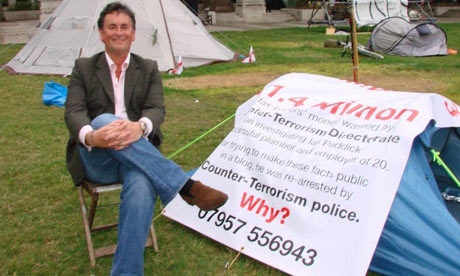
"CUCKOLD CASE" - Testing the Limits of the Internet

A plumber who used the internet to highlight his wife's affair with a director of one of the world's largest financial companies will appear in court on harassment charges. Lawyers believe the case could help define the limits of free expression on the internet.

Ian Puddick, 41, from east London, was incensed after learning that his wife had conducted a 10-year relationship with her boss, a director of Guy Carpenter, a reinsurance company that advises clients on risk management.

Puddick set up a series of websites, a Twitter account and a blog to draw attention to the affair, alleging that the director, who he named, was pursuing an affair with his wife on the company's time and expenses – a claim rejected by Guy Carpenter. The company maintains Puddick's actions forced the director to leave his position due to stress.

Puddick's legal team are expected to use the three-day hearing at Westminster magistrates court to examine the actions of the City of London police, which dispatched its serious crime unit to raid his home and office in search of evidence.

Puddick's legal team is seeking to summon a number of Guy Carpenter's executives to appear at his trial, a move that promises unwanted publicity for a company that likes to keep a relatively low profile. Internal Guy Carpenter emails obtained by Puddick's legal team and seen by the Observer show that the firm employed a subsidiary – Kroll, a global private investigation agency used by many blue chip companies – in its quest to establish that Puddick was waging a harassment campaign.

Kroll briefed Guy Carpenter executives that the police had "offered significant assistance" in dealing with Puddick, whom it believed might be "dangerously unstable". One Kroll director emailed several Guy Carpenter executives on 23 July 2009, following a meeting with City police. "They … warn that the penalties for harassment are not very severe, unless you reoffend, and that the prosecution will be out of our control once the police and the Criminal Prosecution Service agree there is a case to answer. We should remember Puddick may relish the prospect of a day in court."

The email continues: "The civil route has the advantage of us being able to cease the prosecution at any stage, and tougher penalties. However, if the police take this on we can avoid being seen to have any role in prosecuting Puddick, which also has advantages. One way to combine the two may be to talk to Puddick post arrest, and warn him of our options in the civil courts to stop him reoffending."

The case is likely to be watched closely by legal and media experts as the battle to regulate what is disseminated over the internet is waged in the courts. Recent cases involving new media and super-injunctions have also raised questions on whether regulating the net inhibits freedom of speech.

Michael Wolkind QC, representing Puddick, said his client intended to defend his actions. "This case is about Mr Puddick's right to express his feelings about another person's immorality. Ian Puddick dared to speak out about his wife's affair and it has cost the public £1m for the extraordinary investigation carried out by an unusually enthusiastic police alongside an elite security firm."

Puddick's legal team say his home has been burgled and files were stolen as well as some valuables. However, following a police investigation, there is nothing to suggest that Guy Carpenter or Kroll were involved in any illegal activity.

Puddick is now reconciled with his wife.

• This article was amended on 12 June 2011


original article here

As seen in the U.S.A.'s First Amendment decision on the Westboro Church ruling, Puddick would be covered by Free Speech in America. As long as one makes NO threats AND publishes NO personal information such as phone, address, city, children, spouse, jobs etc... they are covered in the U.S.A. by the First Amendment.

Sunday, August 05, 2012

Technology Used by Criminals to Track or Find Victims


by Tom Smith

Instead of lurking in bushes or hiding in the shadows outside of homes, stalkers have gone high-tech, using cell phones, computers and the Internet to hunt and track their victims.

"I know of some cases where people were stalked by e-mail or through Facebook or another social networking site," said Bryan Oakley, an agent with the FBI's Huntsville office who specializes in Internet crime.

He said technology is so advanced that tracking software can be added to telephones, cell phones or laptop computers.

"(Cyberstalking) is something that five years ago would be difficult to do, but there are more people using technology every day," Oakley said. "A lot of people use Twitter or Facebook to file what they are doing and where they are doing it, every minute of the day.

"People put out information about where they're traveling, where they work, pictures of their car, their friends, or themselves. They put out all the information someone stalking another person would need to know."

According to statistics released by the Rape, Abuse and Incest National Network (RAINN), in Washington D.C., there are 3.4 million stalking victims each year. Of those, one in four victims said they have experienced a form of cyberstalking.

Alexis Moore said most people are naive about the problem.

"They have the mindset of 'it's not going to happen to me.' It does; it happened to me," said Moore, a California resident who was stalked by a former intimate friend.

"He was opening and closing my bank accounts," she said. "He never went as far as stealing from me, but I was not able to cash a check because he was making it where I was overdrawn all the time," she said. "He was going online, paying my bills on my accounts with money I didn't have, trying to ruin my credit."

She said the actions were not classified as crimes, but it was a nuisance.

"I never thought something like this would happen to me," Moore said.

To put a stop to the problem, Moore "shut down everything and lived off cash for a while."

"It was a sinister game to him, just trying to drive me crazy," she said.

Phil Bridgemon, instructor and chairman of the Criminal Justice Department at the University of North Alabama, said cyberstalking is the new wave of crime.

"People need to take this very seriously," he said. "Knowing this should cause everyone who uses a computer to manage their online identity better and more closely. There are no secrets; there is no modesty."

He said would-be stalkers search social networking sites, profiling people in hopes of finding a victim.

Katherine Hull, vice president of communications for RAINN, said people need to be aware of what they are putting online.

"People get online, and they think their activity is anonymous, but it isn't," she said. "They post things, get in a chat room and say something that leaves themselves wide open to becoming a victim of cyberstalking.

"Technology is a wonderful thing, but it opens us up to be vulnerable."

Bridgemon agrees.

"Because of the information that we put out there on the Internet, stalkers can follow someone around and never leave their home," he said.

Parry Aftab, a spokeswoman for Wired Safety, an online safety group, said people need to be taught digital hygiene.

"They have to be taught how to use the Internet and social networking systems in a safe manner," she said. "Unfortunately, that's something that people never think of before it's too late.

"Not only do they not see this coming, but they don't know they need to see it coming," Aftab said.

"We have got to do a better job in educating the public about this growing problem."

Michelle Collins, an official with the National Center for Missing and Exploited Children, said her agency has had a cyber tip line for 12 years in an effort to learn more about cyber crimes.

"Last year, we received 120,000 calls," Collins said. "Many of those were about cyberstalking."

She said cyberstalking often leads to physical assaults.

Collins said there was an incident in Wyoming where an ex-boyfriend put a posting online claiming his ex-girlfriend had a rape fantasy and needed people who would fulfill that fantasy.

"They actually showed up at her house and raped her," Collins said.

Franklin County District Attorney Joey Rushing said there is no one definition of a cyberstalker.

"They come in all shapes, sizes, ages and backgrounds," he said. "They patrol Web sites looking for an opportunity to take advantage of people."

He said in Alabama cyberstalking falls under the stalking law, which is a felony.

Sheffield Police Chief Greg Ray said a few years ago his department worked on cybercrimes trying to catch people who were using the Internet to prey on underage girls. He said in setting up sting operations, three people, two from other states, were arrested.

"What they were doing was basically stalking these children or the profiles of these children," Ray said.

Hull said RAINN tries to stress the importance of being careful with information put on the Internet.

"We are living in an age where people are living a vast part of their lives online. That's why we encourage folks to think twice about what kind of information they put on the Internet," Hull said.

"Criminals take advantage of any tools they can, and (the Internet) is just another new tool at their disposal," Oakley said.

Moore said there have already been too many victims of cyberstalking.

"It's an invisible crime, one where the victim is usually not beat up or one where we can see the criminal," Moore said. "The answer is education, starting at the younger ages, teaching school-age children how to use technology the right way - the safe way."


Saturday, August 04, 2012

Are You A Victim of Sweetheart Fraud?


  • Do you believe that someone (even online) has used your love and trust in order to steal your money?

  • Did they claim they loved you, would marry you, take care of you, start a business with you - and all you had to do was provide the financing for everything?

  • Did they disappear overnight or just walk out on you after you ran out of money?

  • Did they refuse to pay back any of the money they received, claiming that you gave it to them willingly as a gift?

  • Did you learn after they left that they were involved with another person at the same time they were promising you the world and taking your money?
Then you are the victim of a sweetheart scam - a growing epidemic of fraud that is fueled by the anonymity of the Internet and the laxity of law enforcement to prosecute when a "friend" steals from a friend.

CUFF (see link below) helps victims of sweetheart scams obtain justice by providing information that can be used to prosecute or sue the thief. We have worked with thousands of victims, some of whom have successfully convinced the police to issue criminal charges against the person who stole from them.

Some of the victims we have worked with have learned how to sue the thief pro se (representing themselves in court), have obtained civil judgments and have collected their money by levying the thief's bank account, garnisheeing paychecks or having the sheriff seize personal property.

Some of the victims have been able to gain the emotional strength to fight back through e-mail and phone support from CUFF victims who have volunteered to share their experiences and time with other victims.


Your journey to justice may be rocky and at times very discouraging, but there is justice if you persevere.

CLICK HERE FOR MORE INFORMATION

Friday, August 03, 2012

Psychological torture as damaging as physical torture


By Jonathan M. Gitlin

The subject of torture has been in the news a lot lately, what with extraordinary rendition, secret prisons in Poland, detainee abuse, Iraqi torture facilities, and the fight between the US Congress and the White House over just what you can and can't do to a prisoner. Everyone is pretty much on board with the idea that causing physical pain, a la the TV show 24, is verboten. But in this brave new world, the techniques being employed are more sophisticated than such trusty old standbys like beating the soles of the feet or inserting and then breaking glass catheters.

Practices that have evolved from the men who stare at goats now aim to break down subjects through psychological means that leave no visible scars, and as a result they are far more palatable with the general public. Sleep deprivation, stress positions, sensory deprivation and the like are dismissed by pundits and defense lawyers as nothing like torture.

But the aftereffects of such treatment are at least as damaging to those on the receiving end, such as having teeth pulled out, being burned, or being electrocuted. Those are the findings of a new report in the Archives of General Psychiatry. The study, carried out by Dr. Metin Basoglu and colleagues from King's College London and Clinical Hospital Zvezdara, Belgrade, Serbia, involved interviewing 279 torture survivors from the former Yugoslavia. Their experiences were cataloged, and they rated each event on a scale of zero to four for distress and for loss of control, and whether or not they suffered from post-traumatic stress disorder.

The researchers identified seven categories of torture: "sexual torture; physical torture; psychological manipulations, such as threats of rape or witnessing the torture of others; humiliating treatment, including mockery and verbal abuse; exposure to forced stress positions, such as bondage with rope or other restrictions of movement; loud music, cold showers and other sensory discomforts; and deprivation of food, water or other basic needs." Physical torture rated between 3.2 and 3.8, and this figure was matched by 16 other practices, such as sham executions, rape, threat of rape, isolation and fondling of genitals. There was no lesser incidence of PTSD in those who had not been physically tortured. Dr Basoglu concludes that
the psychological practices which are in vogue right now " do not seem to be substantially different from physical torture in terms of the extent of mental suffering they cause, the underlying mechanisms of traumatic stress, and their long-term traumatic effects."

---------------------------------

contrary to what some mentally disturbed persons say about EOPC online, we:

  • do not harass or hack anyone or anyplace for any reason
  • do not impersonate people online
  • do not collect personal data or money, this site makes no profit
  • do not 'diagnose' online
  • do not intervene in exposures - we merely report (we do not fabricate - what we post comes from the victims, not us -- we can post our opinions only)
  • If you are harassed or stalked online, EOPC can & will not intervene - please see the link in the column at right for help. This site is informational only.

Thursday, August 02, 2012

Beauty Queen's Stalker and Cyberharasser is Jailed


A BEAUTY queen cried “my nightmare is over” as her obsessed stalker was sent to prison yesterday.

Chloe Hopkins, 20, was the victim of a two-year hate campaign after spurning the advances of Anthony Mantova, 34.

Multiple sclerosis sufferer Mantova spread cruel lies online about the 2010 Miss Prestatyn — and even turned up at one of her beauty queen events to make jibes at her.

Chloe told Prestatyn Magistrates’ Court she feared going out in case Mantova — who admitted harassment earlier this month — was waiting.

Jailing him for 18 weeks, chairman of the bench Sanjay Bhalla called his actions “entirely unprovoked”.


Wednesday, August 01, 2012

ONLINE STALKING & VULNERABILITY


by Greg Voakes

The Internet is typically our go-to destination for gathering information about long lost friends, family, even ourselves. We know our friends and foes do it too, but we tend to think "stalking" in non-threatening ways. Maybe we’ll reconnect with an old friend or co-worker. Perhaps someone we didn’t like in grade school will be jealous of our accomplishments. The truth is that we never think about the dark side of sharing online – identity theft.

Just consider the vast amounts of personal data that gets posted online every day:

  • Status updates on Facebook and other social sites
  • Tweets about our favorite activities, vacation plans, professional conferences, and other plans
  • YouTube videos taken inside and outside our home, about our kids, friends, pets and property
  • Our comments on blogs and newspaper websites, where we log in using our Facebook accounts
  • LinkedIn profiles about previous jobs and schools
  • Every Google+ comment ever made, and link ever posted
  • Online petitions you’ve signed
  • Wedding gift registries
  • White page listings for every address you’ve ever lived at


When you add it all up, this is a pretty comprehensive list of sources where a hacker could find almost any piece of personal information. If you are Facebook friends with your mother, even her maiden name is easy to figure out. Take a moment to search for yourself, and you’ll see that all of this information is online, accessible in seconds.

Why does any of this matter? It matters because we have consistent online habits that hackers love to exploit. We use the same passwords for many websites because we are too lazy to remember unique ones every time. All it takes is one website with weak security and our passwords can become public. Once a hacker has your email address and password, they can gain access to your social media accounts, steal from your bank accounts, scam your friends and relatives, and do some real damage to your life. Identity theft isn’t something you want to experience.

More than 400,000 Yahoo passwords were leaked online a few weeks ago. If it happened to you, even if you’ve changed your Yahoo password, the bad guys – hackers, thieves, criminals and stalkers – can use that same password to break into other accounts. Last month it was 4 million LinkedIn passwords. Last year it was Sony and eHarmony. Data is never 100% safe, no matter how secure websites claim to be.

We need to be more careful about both our personal security and the information we share. Once we post it, it stays online forever. We can’t use passwords and security codes that include addresses, our kids’ or pets’ names, important dates, favorite movies, hobbies, or other things can be easily figured out based on personal information. We also have to make sure that our offline lives, including our homes, cars, and offices, are protected by a reliable security company. All it takes is one careless website to cause a major security breach in our lives, one which can be exploited by criminals online and in the real world. Even though we know our acquaintances will harmlessly stalk us online, we need to make sure hackers and thieves can’t get access to the important data that could be used against us.